
MADISON, WIS. – The Wisconsin Elections Commission voted 5-1 on Monday to refer two complaints against Elon Musk to the Brown County district attorney’s office, finding probable cause that the billionaire violated state law when he offered $1 million in payments to Wisconsin voters ahead of a 2025 state Supreme Court election.
The commission’s motion stated it found probable cause that Musk “broke Wisconsin law by making a social media post offering $1 million to people who voted in the Supreme Court election ‘in order to induce them to vote in that election.'” Wisconsin’s election bribery statute prohibits offering anything of value to a voter to induce them to participate in an election. The commission concluded that Musk’s phrasing satisfied the statutory definition.
Three Wisconsin voters received checks from Musk during the campaign. Two of them collected their payments in person at a Green Bay rally he held in the days before the April 2025 election. Musk’s political action committee ran a parallel operation offering $100 to registered Wisconsin voters who signed petitions opposing what the campaign messaging called “activist judges,” a formulation aimed at the liberal candidate Susan Crawford.
The 5-1 vote was bipartisan, a detail that lends the referral a degree of institutional weight a party-line outcome would not have carried. The commission referred the matter to David Lasee, the Republican district attorney for Brown County, who under Wisconsin law has 40 days to decide whether to file criminal charges. ABC News reported the commission’s spokesperson Emilee Miklas confirmed the referral. The decision now rests with a Republican prosecutor in a county that backed Trump, who campaigned alongside Musk.
The lottery structure was not accidental. Rather than promising payment for a specific outcome, Musk framed the offer as a prize for someone who had already voted, an arrangement his advisers argued insulated the payments from bribery statutes by severing any direct transactional link between the money and the vote. The commission’s probable cause finding rejected that distinction. The commission concluded that the post’s own language, offering the money “in order to induce” voting, placed it within the statute’s reach regardless of how the offer was formally packaged.
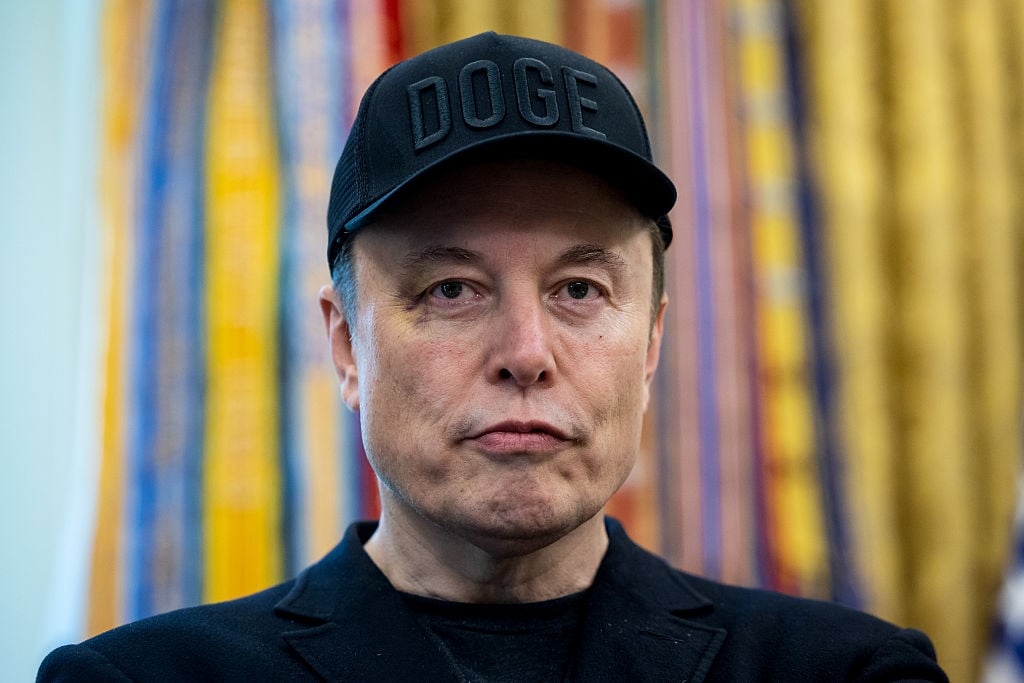
The Wisconsin Supreme Court race was one of the most expensive judicial elections in American history. Musk spent more than $20 million backing Brad Schimel, the conservative candidate, who lost to Crawford in a race that drew national money on both sides and determined the court’s ideological balance on abortion access, redistricting, and labor rights. The lottery offer attracted immediate national attention and legal scrutiny when Musk announced it days before the April vote.
The referral arrives at an unusual moment for Musk politically. His DOGE appointment positioned him as a central figure in Trump’s second administration, and his relationship with the president shifted dramatically in mid-2025 during the dispute over the “One Big Beautiful Bill,” a collision that publicly fractured what had appeared to be a stable alliance. That feud receded but did not disappear, leaving a complicated political context for any Republican official deciding how aggressively to pursue Musk. Trump in that episode had threatened Musk directly, which illustrates how volatile the relationship between them remains.
What happens next is entirely Lasee’s to decide. He can file criminal charges, decline to prosecute, or take additional investigative steps within the 40-day window. There is no indication yet of how he intends to proceed, and Wisconsin law does not require him to explain his decision if he declines. A Republican district attorney in a Trump-leaning county pursuing criminal charges against a figure who spent $20 million backing the Republican judicial candidate would represent a significant act of institutional independence. That is not a prediction. It is the context within which Lasee will decide.
The commission found probable cause. It did not determine whether a prosecution would succeed or even occur. The lottery framing that Musk’s team designed to avoid bribery exposure now sits with a prosecutor who will weigh it under the same statute the commission found it probably violates. Whether the legal distinction between “inducing” a vote and “rewarding” one that has already been cast is sharp enough to survive prosecutorial scrutiny is precisely the question Wisconsin law has now assigned to a Republican DA with 40 days to answer.