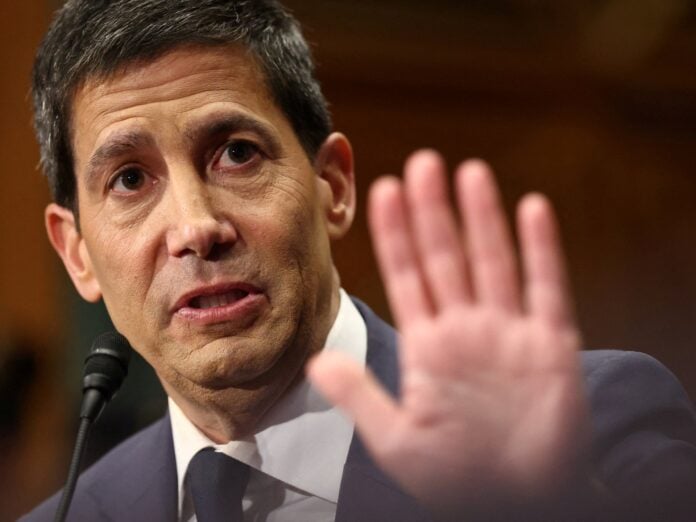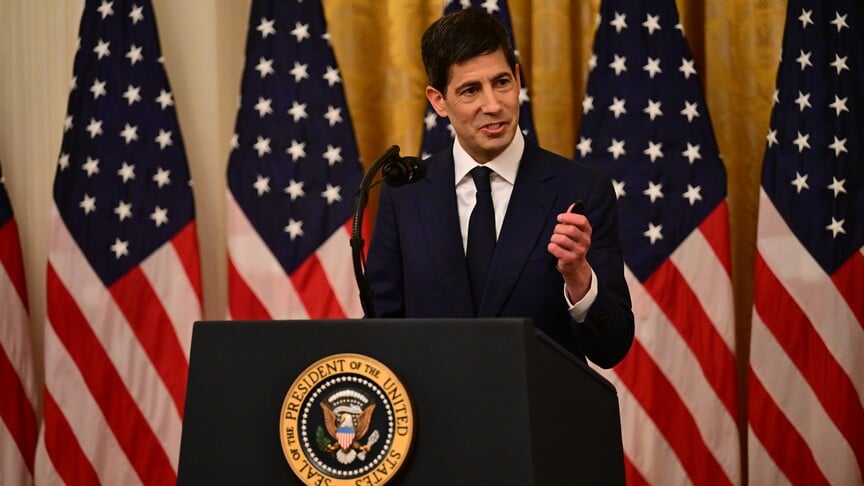

WASHINGTON – The first question facing Federal Reserve Chairman Kevin Warsh when he sat down before the House Financial Services Committee on Monday was not about interest rates. It was about credibility: whether the central bank that allowed inflation to reach multi-decade highs before acting had genuinely gotten the problem under control, or merely delayed its consequences.
Warsh’s semiannual testimony on monetary policy before the full committee, mandated by federal law, offered his most extended public accounting yet of where the Fed stands as it tries to return inflation to its 2 percent target. For American households still paying elevated prices for food, housing, and services, Monday’s hearing was less a policy briefing than a progress report on a problem that has defined the past five years of economic life.
“The members of our committee have no tolerance for persistently elevated inflation,” Warsh told lawmakers gathered at the Rayburn House Office Building. “High inflation has been an undue burden on American households and businesses.” His commitment was categorical: “If we get policy right, and we will, the inflation surge of the last five years will be a thing of the past.”
What Warsh did not offer was a timeline. The Federal Open Market Committee held the benchmark federal funds rate in a target range of 3.5 to 3.75 percent at its June meeting, unchanged from earlier in the year, and the chairman gave no indication that a July adjustment was under consideration. He cited the need for continued progress on prices before adjusting policy, standard language from a central banker unwilling to be pinned down on the next move.
The testimony arrived against a backdrop of sustained political pressure. President Trump, whose administration nominated Warsh to lead the Fed, has publicly lobbied for lower interest rates, viewing cheaper borrowing as essential to economic growth and his political standing. That pressure has sharpened scrutiny of whether the central bank’s independence from White House influence would hold under a chairman whose appointment was so visibly political.
Warsh addressed those questions without flinching. Asked how he would respond if the administration attempted to interfere with the Fed’s policymaking, he replied: “I would continue to do my job.” He framed institutional independence not as a privilege of central bankers but as a structural feature that makes the Fed’s commitments credible in markets and with the public. According to Anadolu Agency, Warsh characterized independence as complementary to accountability rather than in conflict with it, a formulation calibrated to reassure markets without provoking confrontation with the White House.

Warsh announced five internal task forces he has established since assuming the chairmanship: one on communications, another on balance sheet management, a third on data sources, a fourth on productivity and employment analysis, and a fifth on inflation frameworks. The range of the initiative suggests a chair intent on structural renovation rather than incremental adjustment. He offered no details on membership, timelines, or how findings would feed into the rate-setting process.
On the broader economy, Warsh described conditions as resilient. Labor markets remain stable, layoffs are limited, and wage growth is holding up. He noted substantial business investment in artificial intelligence infrastructure, while carefully avoiding any claim that AI’s productivity benefits had already materialized in the economic data. That distinction matters: corporate AI spending is accelerating without obvious near-term output gains, and premature optimism about its effects could justify leaving policy too loose for too long.
Consumer prices rose 3.5 percent year-on-year in June, according to Labor Department data, driven in part by a sharp drop in gasoline prices that softened the headline reading even as core services inflation remained sticky. The figure represents real improvement from post-pandemic peaks but sits nearly double the Fed’s two percent target, and Warsh made plain that meeting the target fully, not merely approaching it, would be the standard for easing monetary policy.
Markets had priced in a more accommodative Fed at various points over the past several months. Earlier signals of easing inflation pressure had sent risk assets sharply higher, bitcoin included, on the premise that rate cuts were drawing nearer. Monday’s testimony offered nothing to sustain those expectations. Warsh provided no conditional language, no policy threshold, no pathway to lower rates. Whether his reticence reflects genuine uncertainty about the inflation trajectory or a deliberate strategy to rebuild the Fed’s credibility is something the hearing could not settle.
The session produced one particularly sharp exchange. A Republican committee member suggested the Fed’s two percent target was itself too low, an argument that would make the current 3.5 percent level more acceptable by redefining what acceptable means. Warsh declined to endorse any upward revision to the target. The chairman appeared fully aware that raising the target publicly, even hypothetically, would permanently recalibrate inflation expectations in ways that could make the underlying problem harder to solve.
What the testimony ultimately could not provide is the answer to the question that matters most for households, businesses, and investors: how long. The five task forces were named but not elaborated. The definition of sufficient progress toward two percent was invoked but never articulated. Warsh spoke with conviction about eventually restoring price stability, but the committee, the markets, and the Americans paying elevated prices were left without a clearer picture of the timeline, the conditions, or the steps that would take inflation from 3.5 percent to the central bank’s stated goal.