
TOKYO – The quiet after the blast was worse than the blast itself.
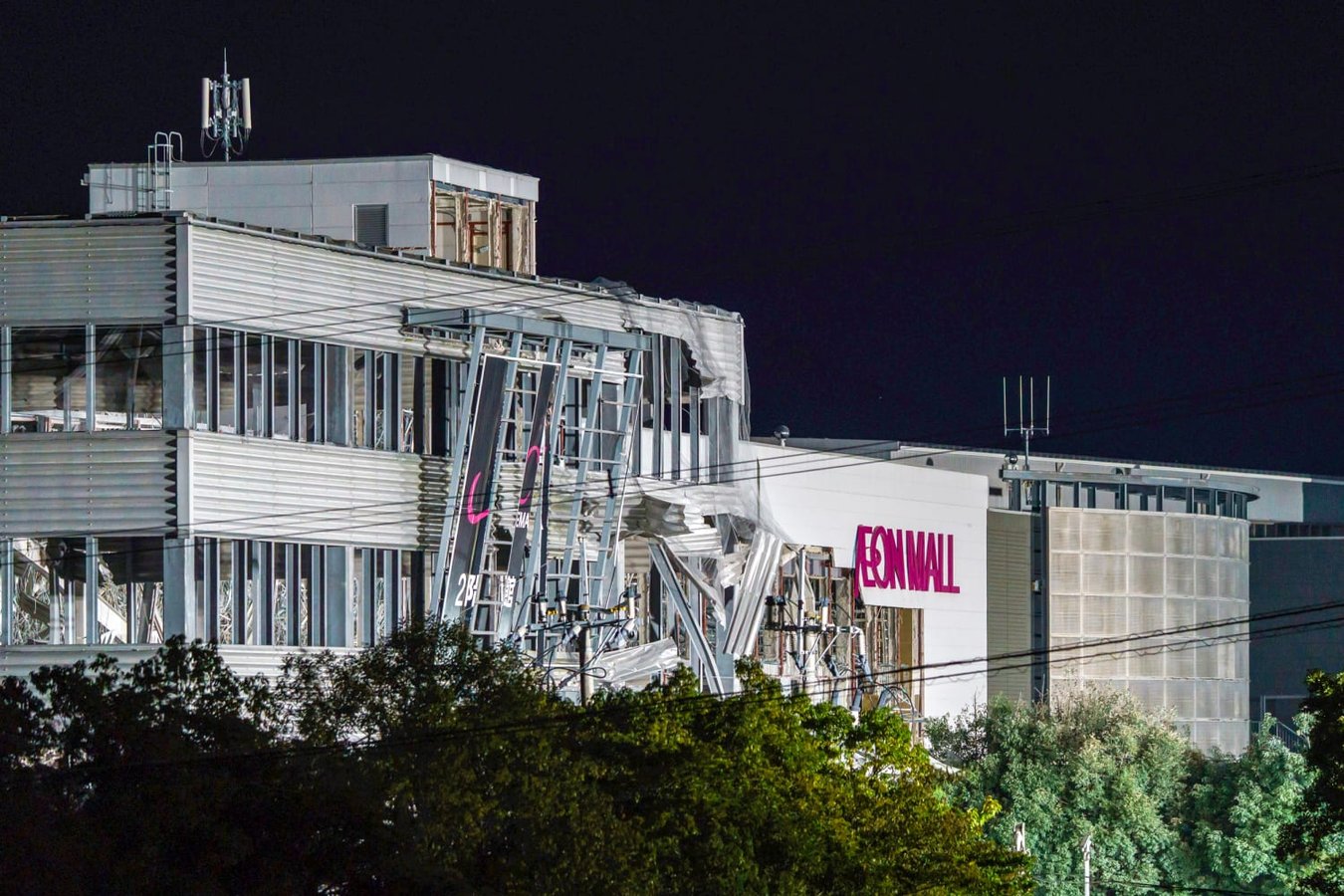
Five days after an explosion ripped through the Aeon Mall in Kashima, triggered by what investigators believe was a gas leak that ignited following a magnitude 7.1 earthquake in Kumamoto Prefecture on July 30, Japanese search teams concluded their operation on Saturday, NBC News reported. They had extracted five people from the debris. They had also retrieved seven bodies.
That the rescue ended was not a surprise. That it ended with five survivors was.
The earthquake struck Kyushu, Japan’s southernmost main island, in the predawn hours of Tuesday morning, and proved the most powerful to hit the region in a decade. It killed 34 people across the prefecture and injured at least 103. It destroyed more than 180 homes, damaged nearly 3,500 buildings, and left approximately 70,000 homes without running water. More than 9,000 people remained in emergency shelters as of Saturday, with the Japan Meteorological Agency warning of continued aftershocks.
The human toll was complicated almost immediately by an industrial one. A chimney collapse at the Nippon Paper Industries factory in Yatsushiro, a separate structure that fell in the same minutes the ground shook, trapped eleven employees inside. Nine of them died. Two were rescued.
Prime Minister Sanae Takaichi, who has overseen the recovery operation from Tokyo, directed emergency response teams to leave “no one behind” and visited Kumamoto on Thursday. Whether the resources she committed were adequate was, by Saturday, still unanswered.

What could be stated more clearly was the earthquake’s secondary damage: not structural, but economic, and felt far beyond Kyushu’s prefectural borders.
Among the facilities damaged in the earthquake was an Aisin plant in Kumamoto, a manufacturing site operated by one of Toyota Motor Corporation’s largest and most critical components suppliers. Aisin makes door frames and other body parts for multiple Japanese vehicle lines, and its Kumamoto facility sits in the middle of one of the most concentrated manufacturing zones in the Asia-Pacific region. When it went offline after Tuesday’s quake, the effects moved through the supply chain within hours.
Toyota, Nissan, and Mitsubishi Motors announced production suspensions at multiple domestic facilities. Honda followed. Daihatsu, Toyota’s small-car subsidiary, also halted output. By the end of the week, the automotive sector’s shutdown had extended to Lexus production lines, making the disruption among the broadest the Japanese auto industry has faced since the 2011 Tohoku earthquake and tsunami.
The timetable for resuming operations remains unclear. Aisin has not announced a restart date for its Kumamoto facility, according to Nikkei Asia.
Renesas Electronics, Japan’s largest chipmaker by revenue and a critical supplier to the same automotive supply chain, suspended production at its Kyushu fabrication plant. The company supplies microcontrollers and power semiconductors used in vehicles built by Toyota, Honda, Nissan, and most other Japanese manufacturers. Renesas began a phased restart by the end of the week, but production levels had not returned to pre-earthquake output. The company’s joint-venture semiconductor assembly facility in Sanand, Gujarat, which began commercial operations in early July, is focused on chip packaging rather than fabrication and is not positioned to substitute for Kyushu capacity.
Japan’s Meteorological Agency reported aftershocks above magnitude 3 still registering in Kumamoto Prefecture as of Saturday evening, more than four days after the initial event. What that means for structural reassessments at damaged industrial sites, including Aisin’s Kumamoto plant, had not been publicly addressed.
Finance Minister Katsunobu Kato said Friday the government was monitoring the “supply-side impact” of the earthquake and had not yet changed its economic forecasts. What that monitoring would produce, and when, remained an open question.
The earthquake arrives at a moment when the pressures on Tokyo’s economic managers were already unusual. The yen has been under sustained pressure throughout this year, requiring the US Treasury to buy Japanese yen directly this week, the first time Washington has intervened in currency markets on Japan’s behalf in roughly 15 years. A production shock in the country’s most export-intensive manufacturing sector answers none of the underlying questions, and makes all of the choices more difficult.
Overseas buyers of Japanese vehicles will not immediately feel the impact. Supply chains connecting Kyushu factories to dealerships in the United States, Europe, and Australia operate on timelines of months, not days. But the longer Aisin’s Kumamoto plant remains offline, the shorter the available buffer becomes.
At the mall in Kashima, the teams who spent five days working through collapsed concrete and the remains of a second-floor structure no longer there packed their equipment on Saturday. The search was over. The exact sequence of events from gas leak to explosion to collapse remained under investigation. The five people pulled out alive had been transported to hospitals by then. The seven who were not lay in the quiet that followed five days of searching.