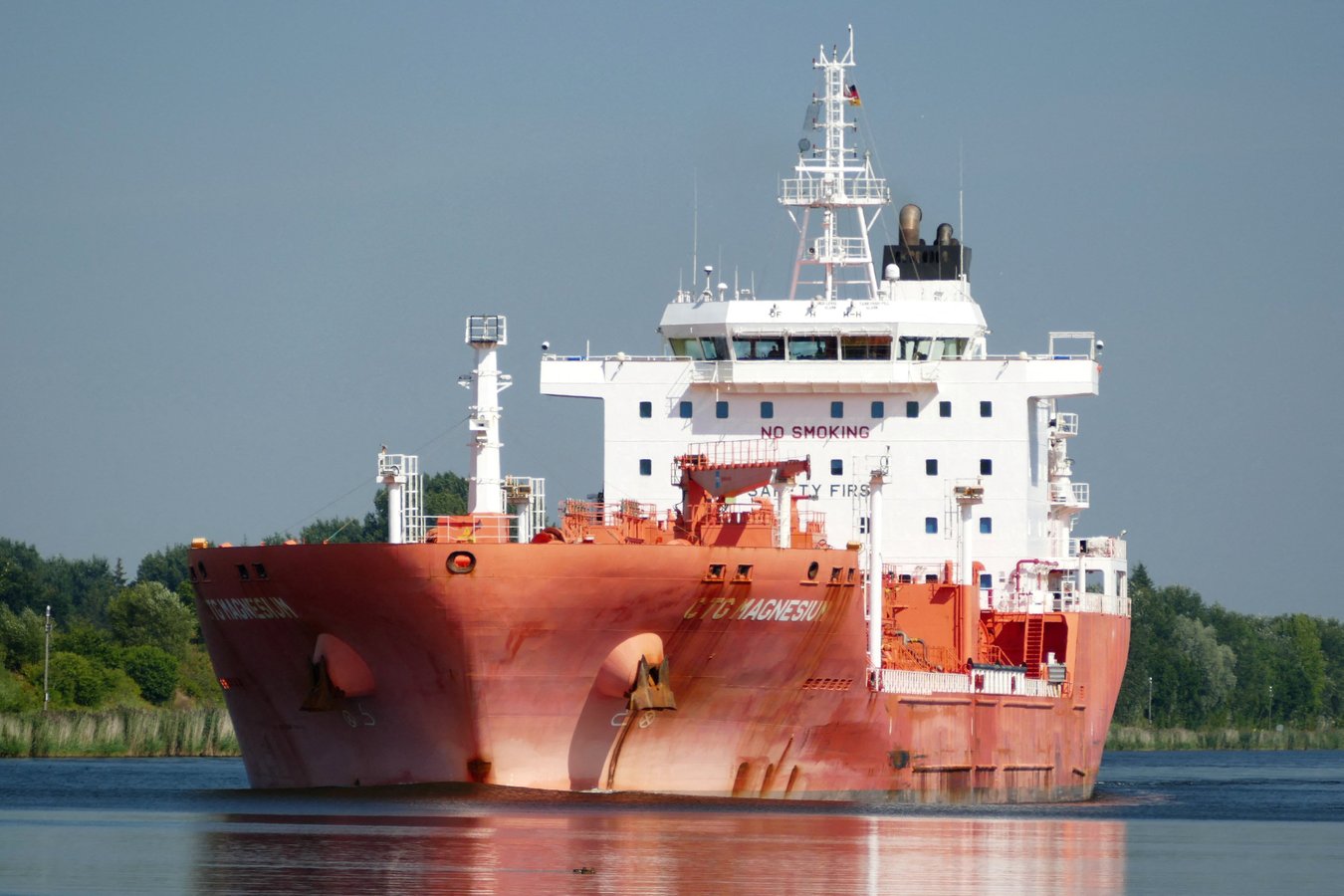

MUSCAT – The Norwegian chemical tanker Stolt Magnesium was struck by an unidentified projectile in the Gulf of Oman early Tuesday, triggering a fire in its engine room and becoming the first of three commercial vessels targeted off the Omani coast in an assault that left six crew members injured and three missing across the day’s strikes.
Stolt Tankers, the vessel’s Oslo-based operator, said the strike occurred at approximately 00:40 local time when the Stolt Magnesium was sailing some 40 nautical miles northeast of Qalhat on the Omani coast. The company described the cause as “the explosion of an unidentified external device,” expressed gratitude that all crew were safe and accounted for, and said it was “working to provide all necessary support.”
The UK Maritime Trade Operations (UKMTO), the Royal Navy unit that coordinates maritime safety advisories in the region, offered a starker description: the vessel had been “hit by an unknown projectile on the starboard side engine room.” The UKMTO urged masters of vessels in the area to proceed with caution and report suspicious activity. No armed group claimed responsibility for the attack.
The ship was struck in the Gulf of Oman, not the Strait of Hormuz, a geographic distinction that carries weight. Most of the tanker attacks documented since the US-Iran maritime conflict began in June have centered on the Strait, the narrow chokepoint through which roughly a fifth of the world’s crude oil passes. An attack 40 nautical miles northeast of Qalhat places the Stolt Magnesium in open water considerably beyond that chokepoint, in territory closer to the Arabian Sea proper.
That reach changes the risk calculus for commercial ship operators, underwriters, and naval planners trying to define the conflict zone’s borders. War-risk premiums, rerouting decisions, and naval escort schedules have all been calibrated around the Strait. If attacks can be sustained farther out in the Gulf of Oman, those calculations require revision.
Oman’s Maritime Security Center confirmed the broader scale of the day’s strikes. Three vessels were attacked in separate incidents off the Omani coast, Anadolu Agency reported, citing the Center. A Liberian-flagged tanker hit near Musandam left six of its 21-member crew injured. A UAE-owned oil tanker, the Al Bahyah, was struck roughly nine nautical miles off Musandam; 18 crew were evacuated, but three remain missing. The Stolt Magnesium was the first of the three vessels targeted.
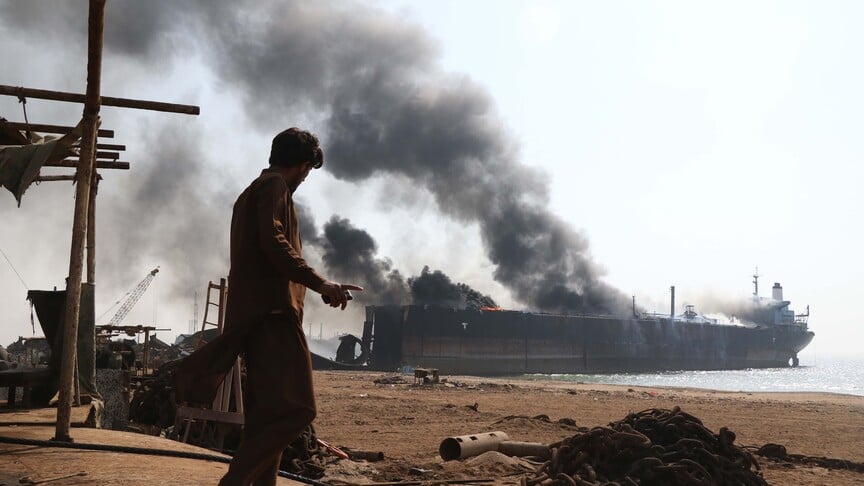
The scale of the day’s attacks marked one of the most sustained assaults on commercial shipping in these waters since the US-Iran maritime conflict began. Iran did not comment on any of the incidents. The pattern has accelerated sharply since the June ceasefire between Washington and Tehran collapsed in early July, the South China Morning Post reported.
The Stolt Magnesium is a parcel chemical tanker, a vessel type that carries an assortment of liquid chemicals in segregated stainless-steel tanks rather than a single bulk cargo. Chemical tankers transport industrial acids, alcohols, vegetable oils, and petrochemical feedstocks, making an engine-room fire a more complex emergency than on a dry-bulk carrier. In this case, the blaze did not spread to the cargo spaces, and the crew managed the situation without casualties.
Stolt Tankers is a unit of the Stolt-Nielsen group, a Norwegian conglomerate with operations spanning tanker shipping, aquaculture, and logistics. The company operates one of the world’s largest fleets of parcel chemical tankers and did not disclose the specific cargo aboard the Stolt Magnesium at the time of the strike.
The attack fits the wider arc of a conflict that has made the approaches to the Arabian Gulf some of the most hazardous waters for merchant shipping since the Iran-Iraq tanker war of the 1980s. Since the June 17 ceasefire collapsed, the UKMTO has issued dozens of incident advisories covering drone attacks, missile strikes, and small-boat harassment on commercial vessels throughout the region.
Donald Trump’s announcement last week that the United States would become the guardian of the Strait of Hormuz raised expectations of expanded US naval protection for merchant shipping. Whether that commitment extends to the Gulf of Oman, where the Stolt Magnesium was hit, has not been clarified. Vessels operating beyond the Strait face a difficult choice between absorbing higher war-risk premiums, waiting for escort availability, or rerouting via the Cape of Good Hope at significant added cost.
The immediate commercial impact depends on the extent of the engine-room damage, information Stolt Tankers had not yet made public as of Tuesday. The crew’s survival removes the worst outcome, but a vessel knocked out of service represents a disruption to chemical supply chains that depend on parcel tanker availability. The Stolt Magnesium is one of dozens of specialist tankers serving trade routes between the Gulf, South Asia, and East Africa that flow through these waters.
What is not yet established is whether the strike was deliberately aimed at the Stolt Magnesium, perhaps on the basis of its cargo or flag state, or whether it was an opportunistic attack on a vessel transiting the area at night. No intelligence about the weapon used, the launch platform, or any communications from those responsible has been made public.
The silence following the attacks is itself notable. In other incidents, Iran-aligned groups have used tanker strikes as messaging tools, announcing them to assert leverage or signal the cost of continued US pressure. That no group claimed responsibility as of Tuesday morning leaves open questions about who acted and why. It also raises something larger: whether the day’s three-vessel assault represents an escalation in the scale and geographic reach of the maritime conflict, or the beginning of a new chapter in a war that keeps rewriting its own boundaries.