NEW YORK — The promise was vivid and specific. Roki Sasaki threw a perfect game at age 20, striking out 19 batters in the Japanese Pacific League. Jackson Holliday hit .323/.442/.499 at 19 while drawing 101 walks. Jasson Dominguez — nicknamed “The Martian” before he was old enough to drive — signed a $5.1 million bonus with the Yankees at 16. The hype machine does not do nuance.
Baseball has a way of humbling even the most credentialed arrivals. Paul Skenes and Corbin Carroll made it look easy. Most do not. Midway through the 2026 season, ESPN analyst David Schoenfield took a post-hype inventory of a dozen young players still searching for the performance their résumés promised — and the results ranged from quietly encouraging to genuinely unsettling.
The most compelling name on the list is Sasaki, and not for reassuring reasons. The Dodgers signed him after the 2024 season on the strength of upper-90s velocity and a splitter described as perhaps the best in the game. Through 11 starts this season, he carries a 4.59 ERA over 51 innings. The problem is his fastball: it clocks in at 97 mph but travels in a straight line, and hitters have slugged .597 against it. Sasaki has experimented with a slider to supplement the splitter, giving him a different look, but as long as the fastball is that hittable, he profiles as a back-end starter at best regardless of how dominant his off-speed stuff remains. He is 24 years old. Whether he becomes an ace, a closer, or something more ordinary is genuinely unresolved.
Holliday’s trajectory is the most sobering. The first overall pick in 2022 — who sat atop every prospect list in baseball two years ago — now draws scouting grades that have fallen two ticks from his peak. His bat speed last year was well below average, and pitchers attacking him with fastballs when ahead in counts found consistent success despite his advanced plate discipline. After fracturing his hamate bone in spring training, he has only just returned to the Baltimore lineup, hitting .231/.340/.385 in 14 games. He is still just 22 years old, and the organization continues to project forward onto the baseball bloodlines he inherited from his father, former major leaguer Matt Holliday. But the ceiling that once said All-Star now reads, more quietly, as potential solid regular.
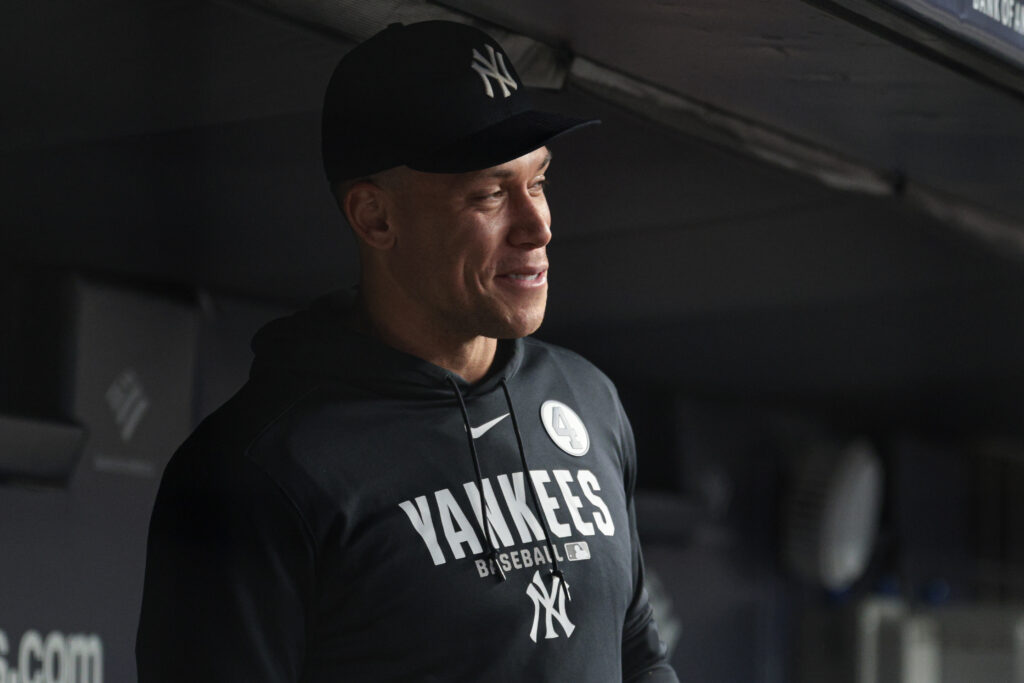
For Dominguez, the obstacle has never been talent — it has been continuity. The Yankees optioned him to Triple-A to open 2026 after Trent Grisham accepted a qualifying offer and Cody Bellinger re-signed, leaving him without a roster path. He hit well enough at Scranton to earn a recall in late April, then immediately collided with the outfield wall making a catch and sprained his shoulder. He is back on the injured list. In nine major league games this season he has hit .200/.250/.367 with one home run — a development Eastern Herald covered when the injury first emerged. The likely scenario is that Grisham departs after this season and Dominguez inherits left field. He will be 24 at the start of 2027. The window is narrowing but has not yet closed.
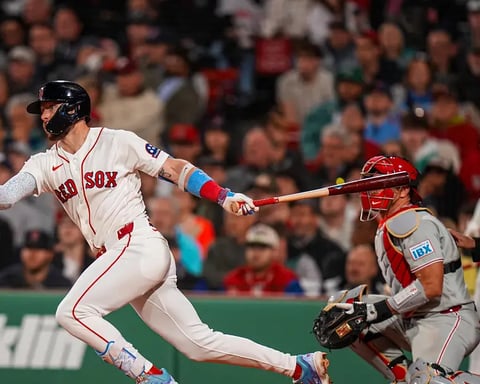
Marcelo Mayer, the Red Sox shortstop prospect who fell to fourth in the 2021 draft despite being considered the best talent in the class, offers a different kind of frustration. He has played more than 100 games in a professional season exactly once in five years. Injuries have eaten his development time; this season he largely served as a platoon player at second base while veteran Trevor Story held shortstop. With Story sidelined for a hernia, Mayer has been getting shortstop reps — a positional shift Eastern Herald covered last month. His slash line through 55 games reads .222/.283/.296 with two home runs. Exit velocity ranks south of 250th among qualified batters. The bat speed is 80th percentile. The hard contact simply is not materializing.
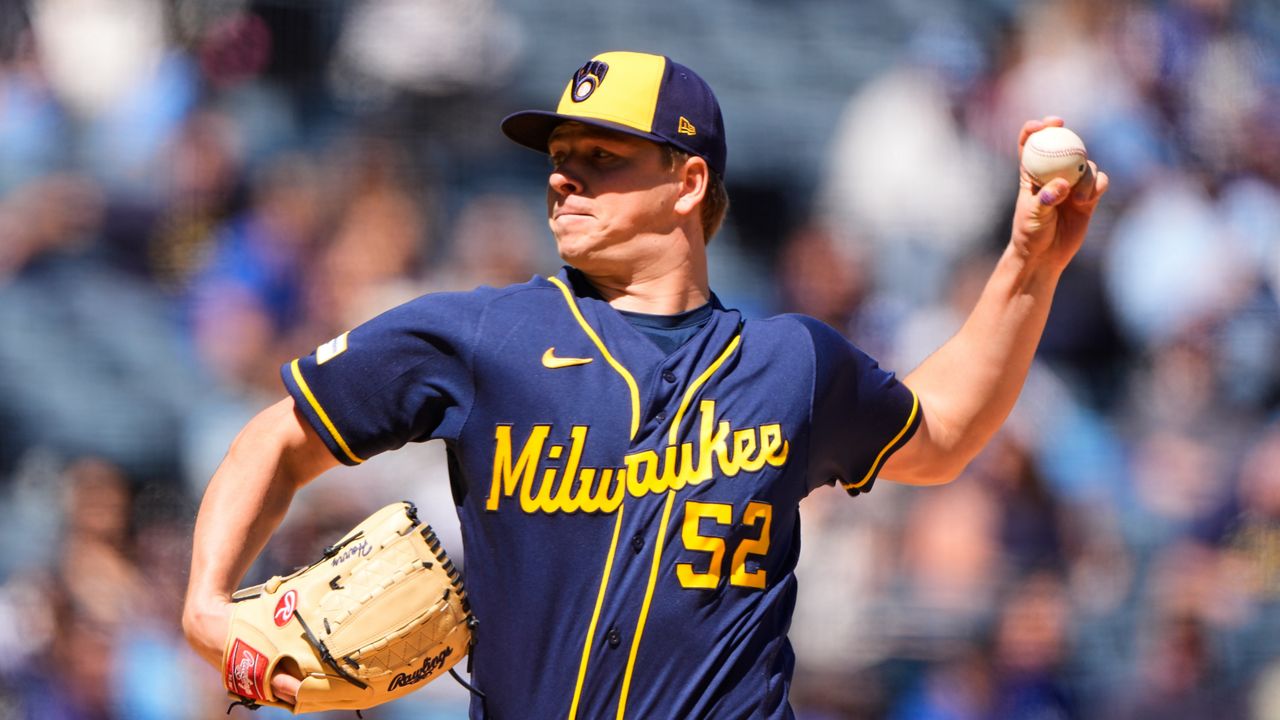
Against that backdrop of underperformance, Kyle Harrison stands as the kind of reclamation story that makes prospect evaluation feel worth caring about. The Milwaukee Brewers acquired the left-hander from the Red Sox in the Caleb Durbin trade this past offseason, and Harrison is currently 7-1 with a 1.57 ERA over 57⅓ innings. His fastball velocity has climbed from 92.6 mph to 95, his arm angle has risen nine degrees to 33 — which has given his delivery more consistency — and the run values on both his fastball and slurve rank in the 95th and 96th percentiles respectively among all big-league starters. The Brewers have now done this twice in consecutive offseasons: they acquired Quinn Priester from Pittsburgh under similar circumstances a year ago, and Priester broke out. The pattern is hard to ignore.
Elsewhere on the list, the Rangers’ Evan Carter (.171/.291/.331 in 59 games) remains in an adjustment period after fewer than 700 career plate appearances, complicated by significant injury absences. The Padres’ Jackson Merrill, who produced 4.8 WAR as a 21-year-old rookie in 2024, is hitting .207 with a spike in strikeouts and a declining slugging rate against fastballs. Jac Caglianone of the Royals (.245/.319/.396) shows elite bat speed and a 99th-percentile hard-hit rate but struggles to elevate — a gap that analysts compare, not unfavorably, to Bobby Witt Jr.’s pre-breakout profile in his second big-league season. And Cam Smith of the Astros (.216/.307/.351) carries tools that look undeniable on a radar gun but has been hitting below .200 since mid-April, a reminder of what happens when elite athleticism meets a breaking-ball education in the big leagues.
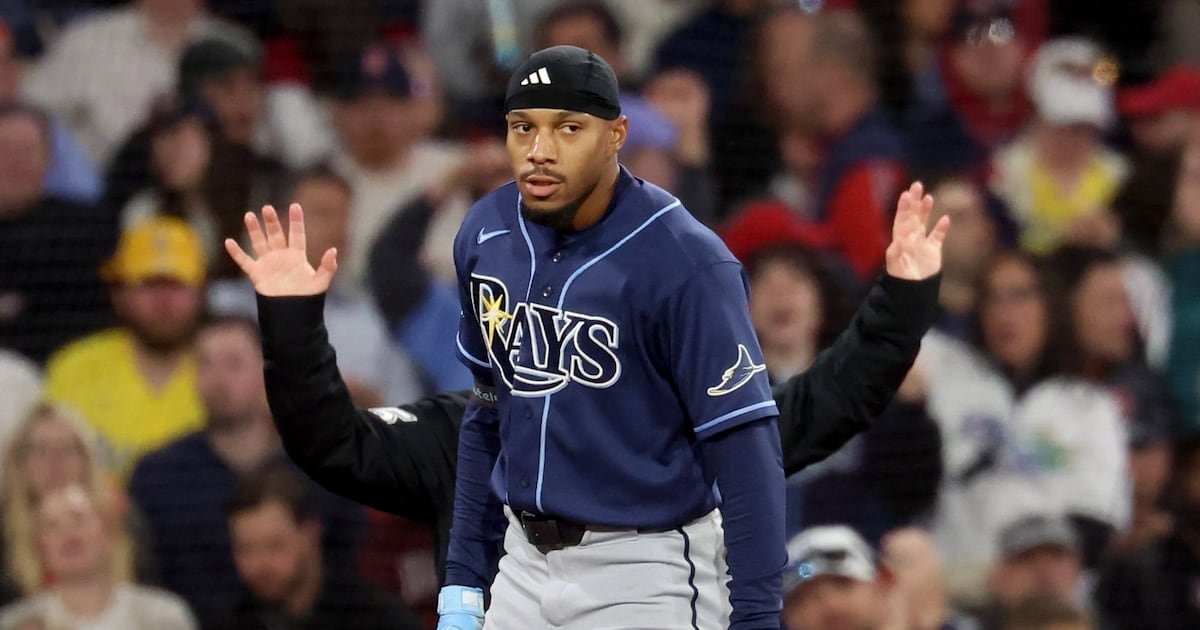
Tampa Bay’s Chandler Simpson is the wildcard. He has no power and does not walk much, traits that do not age well in modern baseball. But his contact rate is among the highest in the sport, his baserunning is exceptional, and his defensive metrics in left field after a rough rookie year in center have been outstanding. He produced 0.9 WAR through the end of May — a fine-line player who looked genuinely valuable in April and merely functional in May, not unlike other young talents who have forced the league to recalibrate expectations this season. Which month reflects the real Chandler Simpson may define whether he becomes a productive regular or a late-inning specialist.
The through line connecting most of these names is not failure. It is time. Jordan Walker, once a similar subject of check-in anxiety, finally broke out in his fourth major league season — and is still only 24. The players struggling most on this list are 22, 23, or barely 24. Sasaki is the outlier: his problem is mechanical, not developmental, and the Dodgers need answers from their rotation sooner than a long-term patience argument allows. For the rest, the question is less whether they will arrive than whether the version that eventually arrives resembles the prospect that was promised.
Baseball, as one fictional manager once noted, is supposed to be hard. The hype rarely survives contact with it intact.