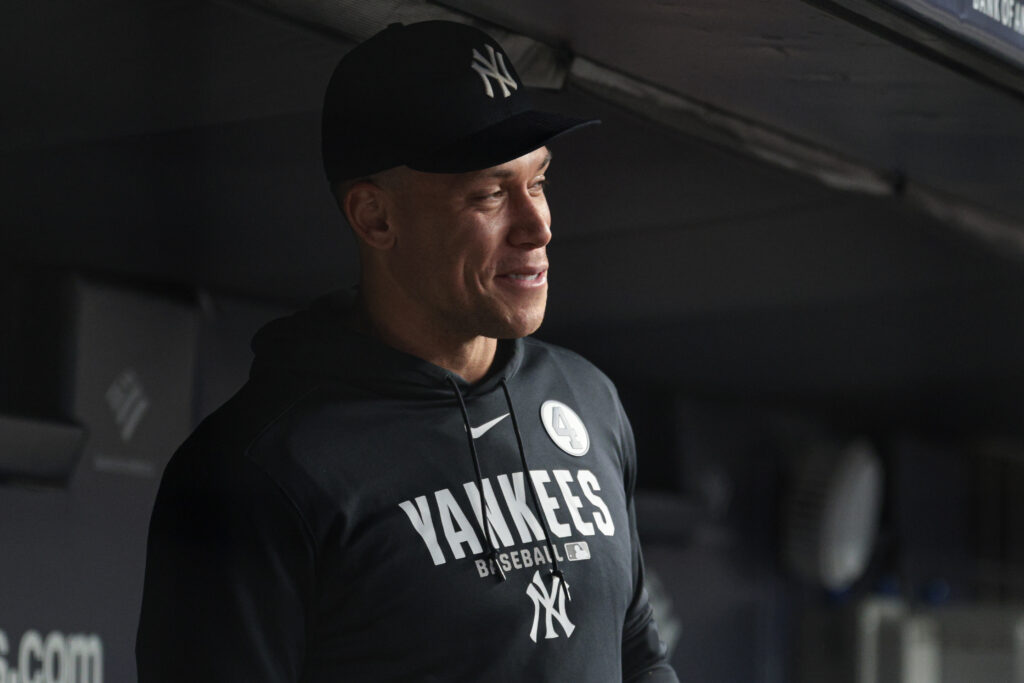

NEW YORK — The discomfort Aaron Judge had been managing through May was not a bone bruise. It was not a shoulder problem. And it was not thoracic outlet syndrome, the nerve condition that would have ended his season entirely.
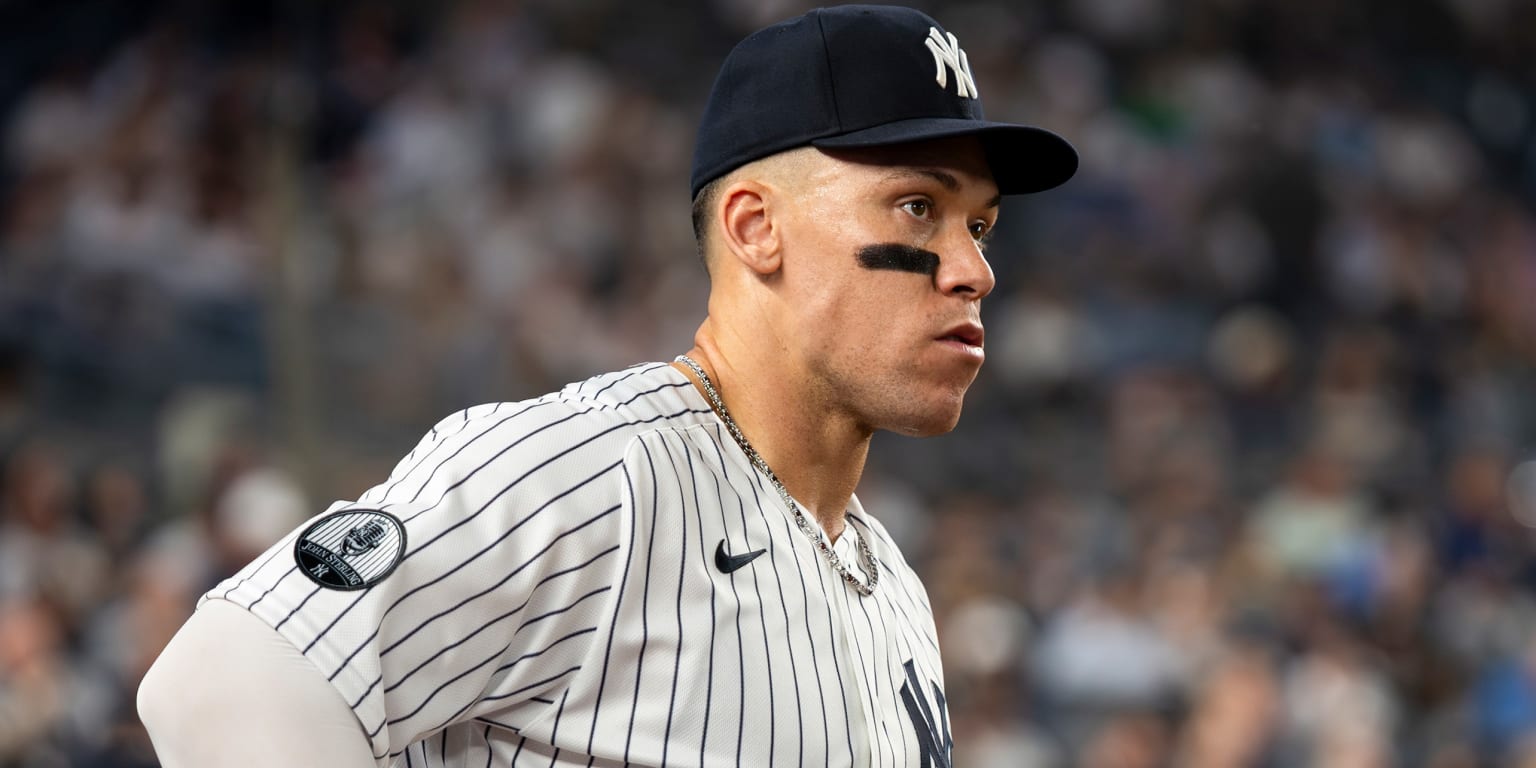
It was, the Yankees confirmed Thursday night, a stress fracture in the first rib on Judge’s right side — the same rib, in the same player, that fractured during a diving catch attempt in September 2019 and was not even diagnosed until the following spring. He will not be re-evaluated for four to six weeks. A return before August is essentially impossible.
New York placed Judge on the 10-day injured list ahead of Friday’s series opener with the Boston Red Sox. The team said he is expected back before the end of the season — a formulation that offers little precision but rules out the worst. A transfer to the 60-day IL appears likely once the club is ready to formally absorb the loss.
The 2019 episode matters here. That fracture was sustained in the final week of the regular season and was not discovered until March of the following year. The COVID shutdown that erased the 2020 spring meant Judge never missed a game because of it. This time there is no such grace period. The Yankees hold a half-game lead over Tampa Bay in the AL East, and they will play the next two months of that race without the three-time Most Valuable Player at the center of their lineup.
Judge himself could not pinpoint when the fracture began. Manager Aaron Boone said the captain reported increasing discomfort while swinging over roughly the past two weeks but identified no single swing, no single play, as the moment it broke. Stress fractures accumulate; they do not announce themselves. The Yankees’ medical staff initially diagnosed the problem as a bone bruise near the right rib cage. Judge underwent an MRI earlier this week at the direction of Dr. Gregory J. Pearl of Dallas, a specialist in thoracic outlet syndrome management, before additional X-rays and a CT scan refined the picture further. Edema — swelling — around the injury had complicated the initial read.
Thoracic outlet syndrome, a nerve condition that can be career-altering in hitters, was the outcome Yankees fans had most feared. That possibility has now been ruled out. A rib stress fracture is painful and debilitating — Judge’s production in May made clear something was deeply wrong, with his OPS dipping below .800 after sitting north of 1.000 in April — but it is not the kind of injury that rewrites a career.
What it rewrites is a pennant race. New York enters this weekend’s Red Sox series without Judge, without Giancarlo Stanton (a calf strain, approximately two weeks from return), and without Jasson Domínguez, who is taking batting practice and could begin a rehab assignment shortly. The Yankees’ outfield will lean heavily on Spencer Jones, the top prospect recalled from Triple-A Scranton/Wilkes-Barre, alongside utility players José Caballero and Max Schuemann, who have been making do in right field since Judge first sat out Tuesday’s game.
The rotation, for whatever it’s worth, remains elite. As Gerrit Cole noted after Thursday’s 2-1 victory over Cleveland, injuries are structural to a baseball season. “As a team, you’ve got to figure out how to step up in those situations,” he said, in the way that players are trained to say such things, though the logic beneath it is sound: New York led the major leagues in scoring in May despite Judge’s diminished production in the second half of the month. Ben Rice and Cody Bellinger are having legitimate seasons. Paul Goldschmidt, back in the everyday lineup because of the Stanton and Domínguez absences, is hitting as well as he has in years.
None of that is the same as having Judge. His April — 12 home runs, an OPS above 1.000 in 59 games, the unmistakable gravitational pull that warps opposing pitchers’ decisions three at-bats before he steps in the box — is the version of Judge that makes the rest of the lineup hum. The version that hit .243 in May with five home runs was clearly playing through something. That something now has a name.
The real question the Yankees cannot yet answer is what the re-evaluation in four to six weeks will actually show. That imaging window tells them whether the fracture is healing; it does not tell them when Judge can swing a bat in live competition again, how many days of batting practice he will need to rebuild timing, or whether a rehab assignment is feasible before the stretch run. The club will not know until the bone tells them. And the bone, on this particular rib, has been unreliable before.
For a full breakdown of the Yankees’ roster situation amid multiple simultaneous injuries, see Eastern Herald’s earlier report on Spencer Jones and the Domínguez injury scare. The broader implications for New York’s trade-deadline calculus were explored in this analysis of the AL landscape.