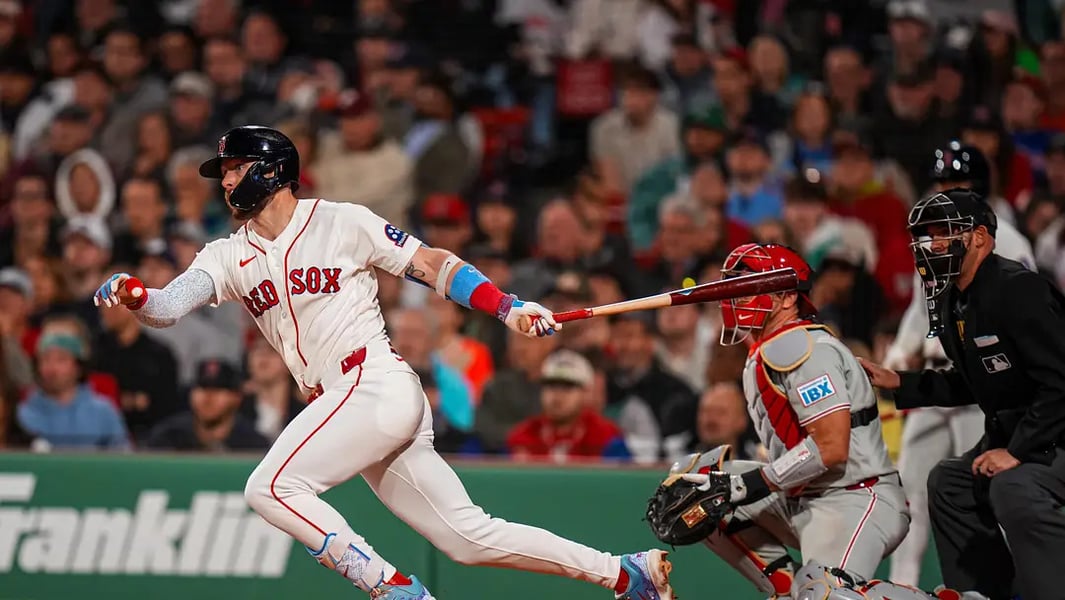

The Boston Red Sox have begun a significant infield transition after veteran shortstop Trevor Story underwent sports hernia surgery, forcing the club to elevate top prospect Marcelo Mayer into a full-time shortstop role while also reshaping its bench depth with utility infielder Nick Sogard joining the roster.
Story’s procedure is expected to sideline him for several weeks, adding another setback to Boston’s increasingly unstable 2026 campaign.
This latest injury continues a broader trend of disruption that has defined the Red Sox season, where roster continuity has repeatedly been broken by injuries and sudden lineup changes.
A key example of Story’s recent season volatility came earlier when tensions escalated in a matchup that led to a dramatic benches-clearing moment after he was hit by a pitch in a heated exchange involving Framber Valdez.
That incident is documented in coverage of the explosive game that saw Valdez ejected after hitting Trevor Story, a moment that underlined how frequently the veteran shortstop has been central to high-intensity situations this season.
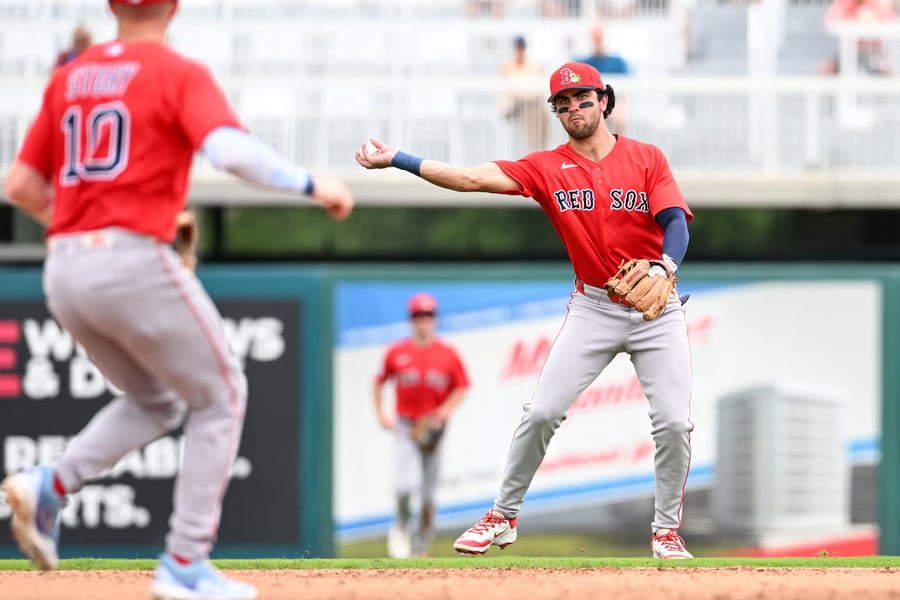
Marcelo Mayer takes over at shortstop amid Red Sox uncertainty
With Story unavailable, Boston is turning to 21-year-old Marcelo Mayer, one of the organization’s most highly regarded infield prospects, to handle shortstop duties on a full-time basis.
Mayer’s promotion reflects Boston’s growing reliance on internal development during a season increasingly defined by injuries and instability across the roster.
That instability has already been visible across multiple storylines this year, including the broader collapse narrative surrounding Boston’s 2026 campaign.
One of the clearest examples of this downward spiral was documented in the report detailing how Roman Anthony injury forces Boston into another crisis, highlighting how quickly the team’s long-term plans have been disrupted.
Trevor Story’s injury deepens Boston’s infield concerns
Story’s absence creates an immediate gap not only at shortstop but in the middle of Boston’s defensive structure.
Before going down, he had already been battling inconsistency, and his injury now adds to a growing list of roster issues that have weakened Boston’s competitive position in the AL East.
Sports hernia procedures like Story’s are common among baseball infielders and typically require multi-week recovery periods depending on severity and surgical method.
The Red Sox have repeatedly been forced into reactive roster management this season, with injuries creating a ripple effect across both the lineup and defensive alignment.
Nick Sogard called up to stabilize infield depth
To compensate for Story’s absence, the Red Sox have recalled Nick Sogard from Triple-A Worcester.
Sogard’s versatility gives Boston a flexible infield option capable of covering multiple positions while Mayer settles into the starting shortstop role.
Utility infielders like Sogard are increasingly valued across MLB for their defensive flexibility and roster efficiency, particularly in injury-heavy seasons where depth becomes critical.
Red Sox continue youth-driven transition under pressure
The decision to install Marcelo Mayer at shortstop signals a deeper shift in Boston’s roster philosophy, where young talent is being accelerated into key roles due to necessity rather than long-term planning alone.
The broader instability surrounding the franchise has been widely documented throughout the season, with multiple reports describing how quickly Boston’s expectations have unraveled under injury pressure and inconsistent performance.
What comes next for the Red Sox infield
The Red Sox are expected to continue evaluating infield combinations as Story recovers.
Depending on his return timeline, Mayer’s extended role at shortstop could influence Boston’s long-term infield structure moving forward.
For now, the Red Sox remain in a phase defined by adaptation, with roster flexibility becoming more important than continuity.