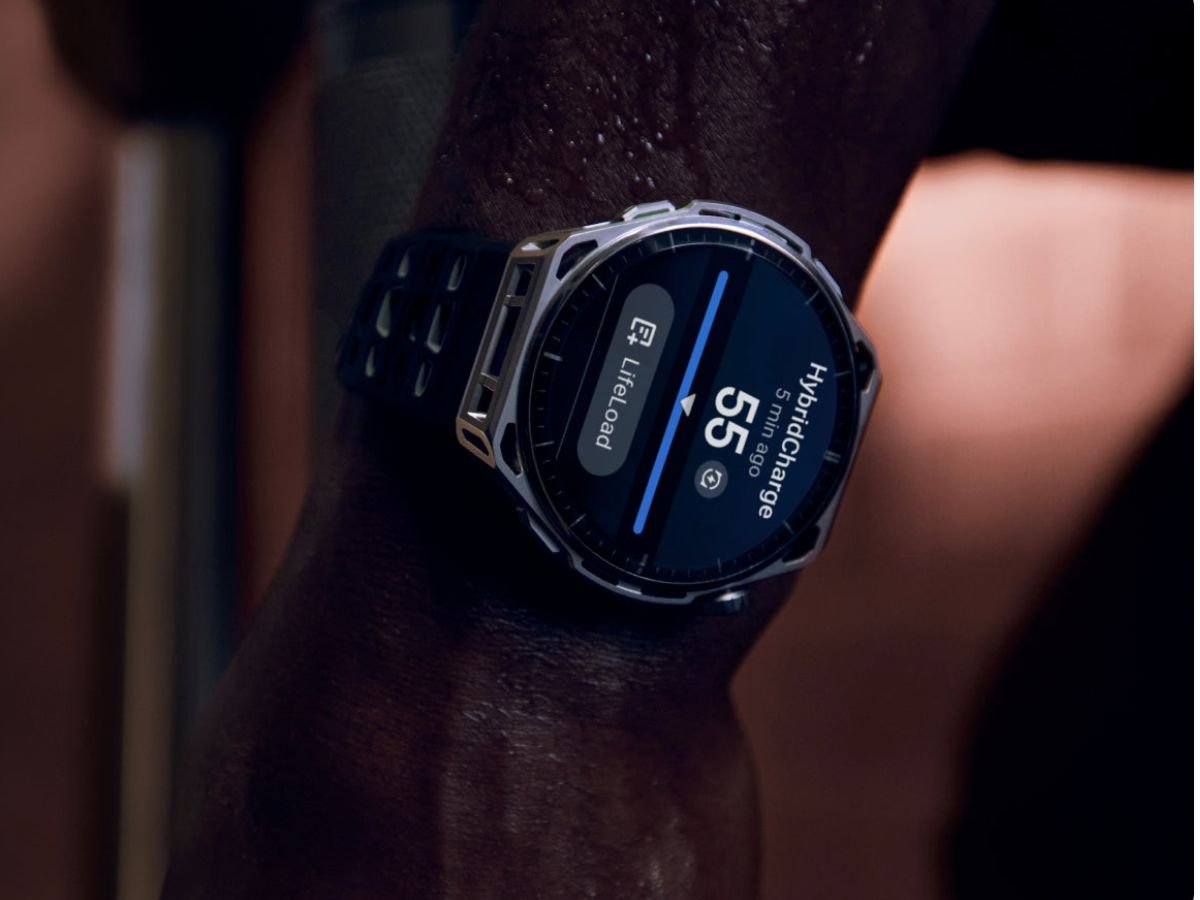
When most fitness watches calculate how ready you are to train, they read your heart rate variability overnight and call it done. Amazfit’s new Balance 3 takes a different approach. Arrived at the gym after a red-eye flight and two drinks at the airport? Log it. The watch adjusts. That is the premise behind HybridCharge, the readiness system sitting at the center of Zepp Health’s most significant product launch in years.
The Amazfit Balance 3 and Balance Ultra went on sale June 2, starting at $369.99 and $599.99 respectively. They are the first devices to run Zepp OS 6, a platform update that Zepp Health has confirmed will eventually reach ten more of its existing smartwatches. The Balance 3 Titanium, a $449.99 version with a grade 5 titanium chassis, is listed as coming soon.
Zepp Health is pitching the new lineup at what it calls the hybrid athlete — someone who mixes running, cycling, gym work, and functional fitness in the same training week rather than specializing in a single discipline. That is a growing segment of the fitness market, and the product strategy reflects it. Balance 3 includes HYROX Race Mode, freediving support down to 45 meters, and more than 180 workout modes. Balance Ultra layers on HYROX Simulation and a 780mAh battery that Zepp Health claims runs for up to 30 days under typical conditions.
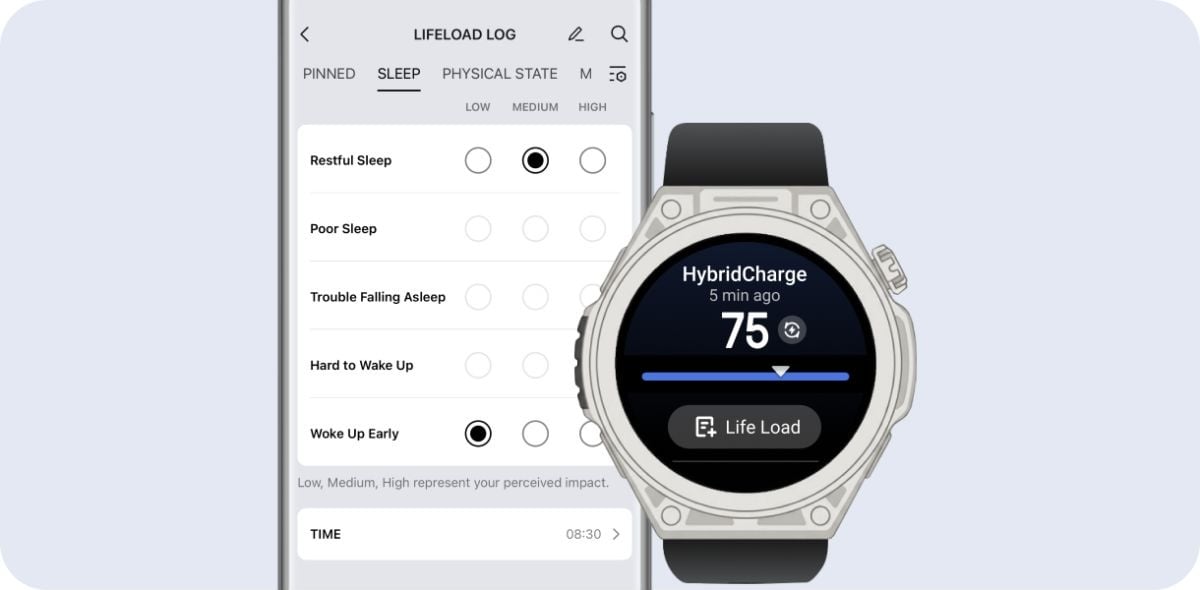
HybridCharge is the feature that earns the most scrutiny. The system builds on the older BioCharge by combining three distinct inputs: biometric recovery data from the BioTracker 6.0 sensor, LifeLoad — a user-filled log for stress factors like illness, travel, and alcohol — and Training Load derived from completed workouts. Together, they produce a readiness score designed to reflect conditions that a wrist sensor alone cannot detect. The idea is sound. The limitation is unconfirmed: Zepp Health has not specified whether Training Load data from a companion device, such as the Amazfit Helio Strap, crosses into the Balance 3’s HybridCharge score. If it doesn’t, the readiness figure is incomplete for anyone using multiple Amazfit devices.
That gap is instructive. The Balance 3’s new Multi-Device Activity Sync, which arrived with Zepp OS 6, currently consolidates steps, calories, standing time, and distance across devices through the Zepp app. It is a meaningful step. Garmin’s equivalent system, TrueUp, first launched in 2016 with the same scope. Garmin extended it in 2018 with Physio TrueUp, which brought training load, recovery time, VO2 max, and power zones into cross-device sync. Amazfit’s physiological sync layer has not yet been confirmed. The company is good at shipping feature updates quickly — but users who own a Helio Strap alongside a Balance 3 are right to ask the question before buying.
Hardware upgrades from the Balance 2 are substantial. The case grows from 47.4mm to 51.4mm. An aluminium alloy frame gives way to stainless steel or grade 5 titanium. The display brightens to 3,000 nits, storage doubles to 64GB, and four physical buttons replace two. Dual-frequency six-satellite GPS arrives, alongside onboard full-color contour maps with automatic rerouting and turn-by-turn navigation. A built-in flashlight — red and white modes — adds a practical outdoor-training tool that the balance line has not previously carried. The BioTracker sensor itself remains the 6.0 generation, unchanged from Balance 2 on paper, and water resistance holds at 10 ATM.
Balance Ultra is the more interesting device for serious athletes. The grade 5 titanium case, five titanium buttons, and 780mAh battery are the headline differences. In GPS mode, the Ultra claims up to 50 hours — nine more than the standard Balance 3. The Ultra also carries exclusive HYROX Race and Simulation modes and ships with two straps rather than one. Its case measures 51.8mm compared to 51.4mm on Balance 3, and it is slightly thicker at 15.5mm with the sensor.
The pricing positions the Balance 3 directly against the Garmin Venu 4, which retails at $549. For the same feature set — AMOLED display, long battery life, recovery tracking, and daily life awareness — Amazfit undercuts Garmin by $180 on the base stainless steel model. The titanium variant and Balance Ultra push into Garmin territory, where the competition grows sharper from Coros, Polar, and Suunto as well.
Zepp OS 6 also introduces Grade-Adjusted Pace, Running Lactate Threshold estimation through guided or automatic detection, and LTHR-based heart rate zones. The LTHR method anchors zone thresholds to a physiologically meaningful number rather than a rough maximum heart rate calculation, which is a genuine improvement for serious runners. A Training Calendar, a Daily Briefing with morning and evening summaries, indoor cycling sensor support, and automatic gear tracking for shoes and bikes round out the platform release.
The HybridCharge rollout extends beyond the Balance 3 and Balance Ultra. Zepp Health has confirmed through a Reddit post from a company representative that the Active 3 Premium, Balance 2, Cheetah 2 Pro, Cheetah 2 Ultra, T-Rex 3, T-Rex 3 Pro, and T-Rex Ultra 2 will receive the feature in June 2026. The Bip Max is scheduled for June or July, the Active Max for July or August, and the original Balance for late 2026. The updated LifeLoad log — the component that makes HybridCharge meaningfully different from a standard readiness score — is central to each of those updates.
How the LifeLoad data is actually used will determine whether HybridCharge matters in practice. Recovering athletes and multi-sport competitors who train across disciplines will test it hard. A readiness score that accounts for jet lag but ignores a heavy gym session done on a companion strap is not a complete picture. Zepp Health has not answered that question, and it is the one worth asking.
The Balance line has always been Amazfit’s approachable all-rounder — long battery life, health tracking, a design that works outside the gym. Balance 3 keeps that identity but sharpens it considerably. The new tools, the tougher hardware, and the Ultra model move the range much closer to a serious sports-watch category where it will be tested by athletes who track every variable of training load. Whether the ecosystem can sync all of it, across all devices, is a question wearable users increasingly ask before committing to a platform.
Amazfit Balance 3 Stainless Steel ($369.99) and Balance Ultra ($599.99) are available now. Balance 3 Titanium ($449.99) is listed as arriving soon. Pre-orders are open on Amazfit’s website, with shipping starting mid-June. The fitness wearable market now has a credible sub-$400 answer to Garmin’s health-tracking lineup, and the rollout schedule for HybridCharge will tell athletes whether it can close the gap on what matters most: knowing when to rest and when to push.