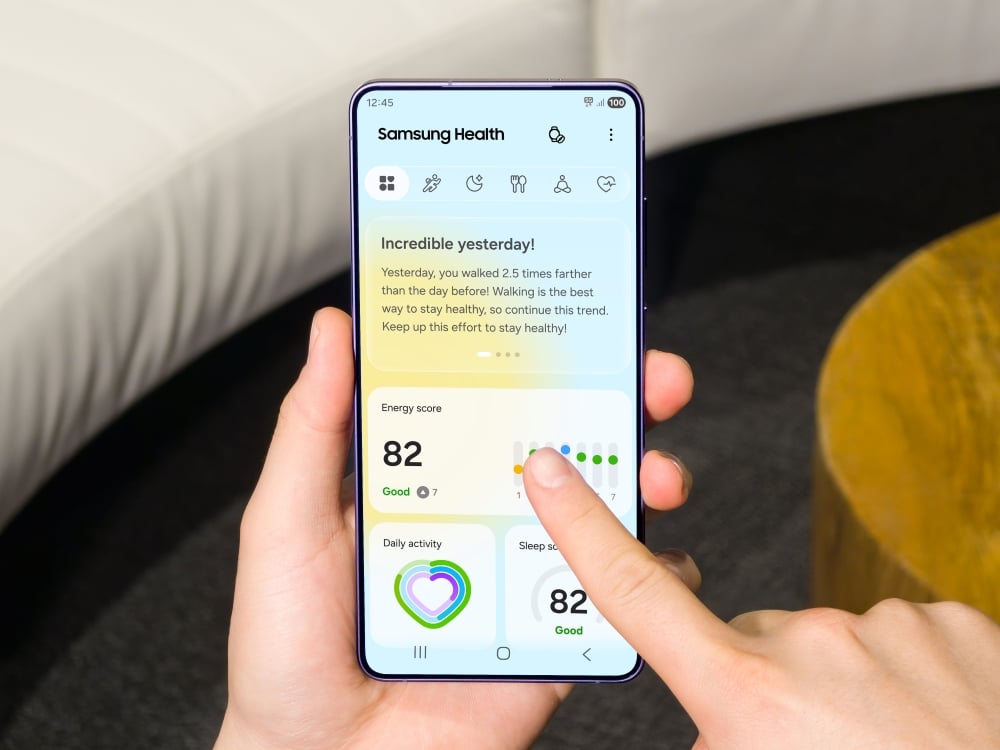

SEOUL — The Samsung Health app has spent years accumulating data. Heart rate here, sleep score there, a stress graph nobody checks after the first week. Starting June 8, Samsung is trying something structurally different: a system that decides, on your behalf, when any of it actually matters.
The update, announced Thursday and set to roll out alongside the company’s upcoming Galaxy Watch 9, introduces a feature called Vitals that monitors five overnight biosignals — heart rate, heart rate variability, respiratory rate, skin temperature, and blood oxygen — and compares each against what it determines to be the user’s true resting baseline. The key word in Samsung’s announcement is “meaningful.” The system sends a notification only when it detects meaningful deviation, not just any deviation. The intent, the company says, is to distinguish between data and signal.
That distinction is worth sitting with. Most wearable health apps operate on the opposite principle: show the user everything and let them decide what to worry about. The result, for anyone who has worn a smartwatch for more than a month, is a gradual habituation to numbers that pulse and shift for reasons that are never quite explained. Samsung is betting that less is more — that a system trained to recognize your specific baseline can do the interpretive work that users consistently fail to do themselves.
Hon Pak, Samsung’s Senior Vice President and head of the Digital Health Team, said the update is designed to “connect health data measured by Galaxy Watch with AI-based insights, enabling users to understand their physical and mental condition more easily and intuitively.” That language is relatively standard for a product announcement. The Vitals architecture is less standard.
The update also introduces a Heart Health Score, a single daily figure that consolidates what the company previously called Vascular Load — a metric tracking vascular stress across sleep, activity, and stress — and layers in body composition data. Samsung introduced Vascular Load last year as part of a push toward longitudinal cardiovascular awareness. The Heart Health Score is that push made visible in one number. Whether a single composite score actually changes user behavior is a question Samsung has not answered, but the design choice reflects a clear hypothesis: that unified scores drive action better than separate metrics.
Two fitness-oriented additions round out the core update. Daily Cardio Load calculates the cumulative cardiovascular strain a user has accumulated through the day, then recommends a training target and rest window based on that load and a calculated maximum training capacity. Fitness Index takes a broader view, benchmarking heart rate variability alongside VO2 max and daily step count against peers, breaking down results across five categories: strength, flexibility, endurance, cardio, and body composition.
The redesigned app organizes all of these functions into five pillars — Sleep, Activity, Nutrition, Mindfulness, and Vitals — with the home screen surfacing the AI-powered Energy Score alongside daily wellness prompts. The goal, as Samsung describes it, is to remove the guesswork from morning health checks. Whether most users find the new layout intuitive or find it yet another dashboard to scroll past is something only the rollout will reveal.
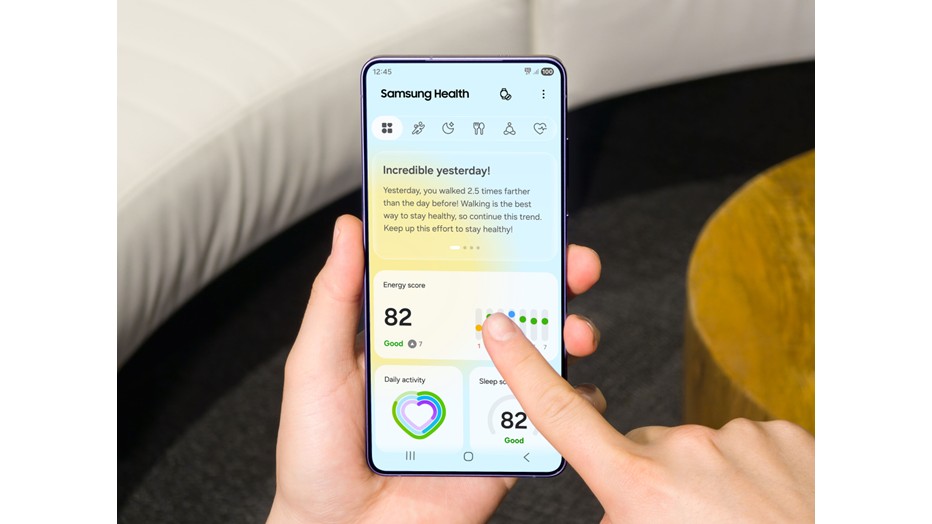
Samsung has also updated two existing features running in the background. The Antioxidant Index, which estimates nutritional status, gains trend charts and daily history logs linking dietary choices to physical responses over time. The AGEs index, which tracks how lifestyle choices accumulate in the body, shifts to automatic overnight measurement, removing the manual interaction it previously required. A new Hearing Health feature, integrated across the Galaxy device ecosystem, monitors ambient noise levels via the watch and provides analytics on cumulative sound exposure.
The announcement comes roughly six weeks before Samsung is expected to unveil the Galaxy Watch 9 at its next Unpacked event, widely anticipated for late July. The app update is framed explicitly as a preview. Samsung describes the features as a “glimpse into the future of Samsung Health” that will be “fully realized with the launch of Samsung’s next generation of Galaxy watches.” The company’s announcement does not specify which additional hardware capabilities the Watch 9 will introduce beyond what the app currently enables.
The broader context here is competitive. Apple’s watch has spent two years accumulating health credentials — sleep apnea detection, atrial fibrillation history, blood oxygen sensing — while Google relaunched its Fitbit-derived health platform last month with its own AI-centric positioning. Samsung’s response is not a new sensor. It is a bet on interpretation: that the biometric hardware most mid-range Android users already carry on their wrists has been underutilized because the software surrounding it has never been smart enough to filter noise from signal.
That bet could prove correct. It could also prove that users simply do not engage with health apps regardless of how much interpretive work the app performs. Samsung will find out starting Sunday, and the Galaxy Watch 9 launch — whenever it arrives — will settle whether the hardware can sustain what the app is now promising.