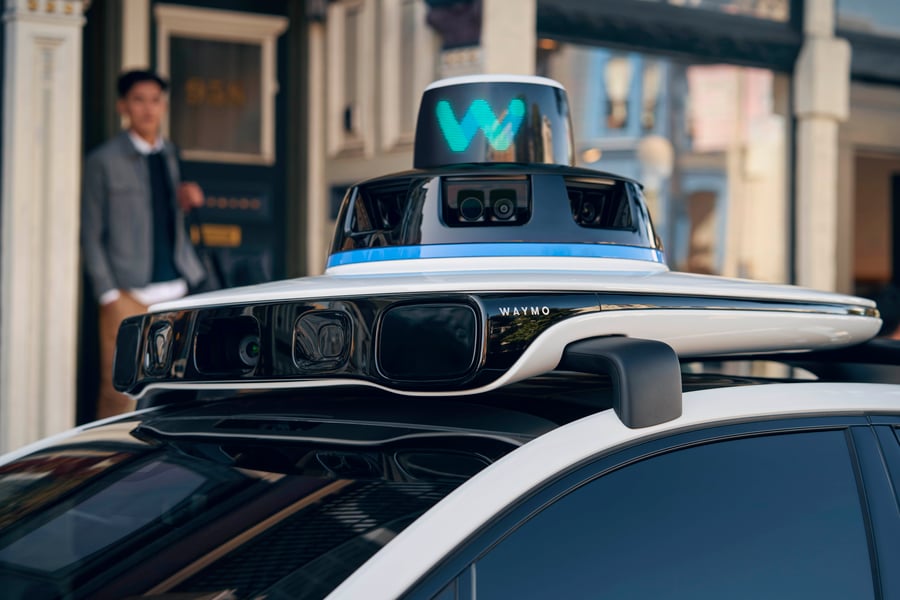

SAN FRANCISCO — Someone in Sacramento who can’t drive, or prefers not to, gained a new option on Friday afternoon.
The California Public Utilities Commission voted to expand Waymo’s commercial ride-hailing authorization to Sacramento and San Diego, adding two cities to a service that until now reached only San Francisco, Los Angeles, Phoenix, and Austin. The approval also broadens Waymo’s permitted zones across 18 Bay Area and Los Angeles counties — covering suburban areas that had been outside its operating boundary even though the company had run vehicles nearby for years.
The approval is the broadest single regulatory authorization Waymo has received in California in its eleven-year commercial history.
The company announced no launch dates for either city. The expansion into Sacramento and San Diego would be “gradual and guided by our safety framework,” Waymo said — the kind of language that signals a phased entry contingent on internal readiness rather than a commercial launch with a fixed date. The CPUC grants permission to operate in California; when Waymo’s driverless cars actually appear in those cities depends on how quickly the company can map the roads, stage vehicles, and complete whatever internal safety reviews it runs before entering a new market.
Two months before Friday’s vote, Waymo recalled 3,847 robotaxis — nearly all of its California fleet — over a software flaw that caused vehicles to enter freeway construction zones closed to traffic. No collisions resulted from the specific incidents that triggered the recall, but the scenario it revealed was precise: an autonomous system that was performing well in familiar conditions had encountered a specific road configuration and failed to recognize it correctly. The software fix was deployed remotely over the air. Waymo has not released updated safety incident data for the eight weeks since the patch went out, which means the performance of the repaired system in active commercial operation is not yet quantifiable from public information.
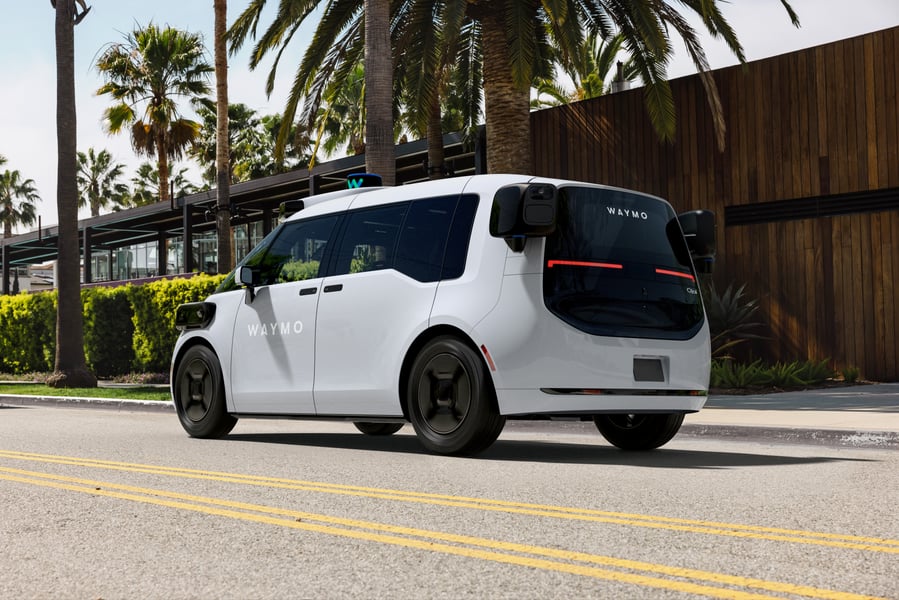
The CPUC had that recall in front of it when it voted. Its decision to expand Waymo’s California authorization in the same quarter suggests California’s largest utilities regulator reached a judgment about Waymo’s overall safety record that the June incident did not fundamentally change. As Fox Business reported, the commission reviewed the expansion application and voted to proceed.
The regulatory environment in California has shifted significantly since October 2023, when state regulators suspended Cruise’s operating permits after one of its vehicles struck and dragged a pedestrian in San Francisco. That incident hardened legislative and regulatory attention on autonomous vehicles across the state. Waymo’s trajectory since — a proactive safety recall rather than a forced permit suspension, no comparable collision incidents — is the record that made Friday’s decision possible. The Cruise situation defined what California regulators would not tolerate; Waymo’s record has been used, since then, to define what they will.
Waymo is owned by Alphabet AI expansion into long-cycle bets that the company’s investors have been waiting on for years. The company currently operates commercially in four US cities. The CPUC decision governs only California, where Waymo holds both a California DMV driverless permit — obtained in 2025 — and now the expanded CPUC ride-hailing authorization that operationalizes that permit at scale. The two regulators cover different dimensions of the same approval: the DMV authorizes the technology; the CPUC authorizes the commercial service.
Sacramento and San Diego will test something San Francisco and Los Angeles settled over years: whether riders in a new city will use a driverless robotaxi often enough to make the unit economics work at scale. San Francisco’s early adopters spent three years building a comfort level through regulatory uncertainty and the constant friction of being the first market where autonomous vehicles and human drivers shared roads commercially. Sacramento and San Diego riders arriving in Waymo’s service will be starting from scratch — in cities with more sprawling road networks, more highway driving, and fewer of the dense urban corridors where Waymo’s system has accumulated its deepest operational data.
California’s approval arrives as autonomous vehicle competition enters a denser phase. Earlier this week, Aurora Innovation and Kodiak Robotics received California self-driving vehicle permits for autonomous freight truck testing on state highways — a separate AV category with its own regulatory track. In Europe, Uber and Pony.ai announced plans to deploy 2,000 robotaxis across four cities, representing the most ambitious global robotaxi expansion outside the United States.
Waymo remains proprietary: its own hardware, its own software, its own fleet. That keeps its per-unit economics favorable but limits the pace of expansion to what the company can build, deploy, and maintain itself. Friday’s CPUC vote removed the largest external obstacle. What it did not answer is what Sacramento and San Diego will eventually answer on their own: whether Waymo’s technology performs as reliably on suburban California roads as it does on streets it has been mapping and testing for the better part of a decade.