MOUNTAIN VIEW, Calif. — For the past three years, the trucks that moved freight autonomously in the United States have done it in Texas. The state had no ban, and the companies building the technology had the roads. California, where both Aurora Innovation and Kodiak AI are headquartered, told them to go there and do it where the lawyers could not catch them.
On Thursday, that changed. The California Department of Motor Vehicles issued Kodiak the first permit under rules approved in April that lifted the state’s ban on autonomous heavy-duty vehicles operating on public roads. Aurora received a parallel permit, allowing both companies to run test trucks with a human safety operator aboard on California asphalt for the first time under a formal regulatory framework. As TechCrunch reported, both permits arrived Thursday.
For Kodiak, the permit was immediate and practical. The company has already started running “a handful of test trucks” in California, according to its statement, primarily near its Mountain View office. Kodiak’s founders built the company in California, tested on California roads in the pre-ban era, and then watched the regulatory door close. The permit does not end that chapter so much as it reopens a window that was sealed.
Don Burnette, Kodiak’s founder and chief executive, described California’s expanded autonomous vehicle rules as “a major unlock for freight innovation.” The formulation was careful: unlock implies something that was contained rather than absent. The commercial operations Kodiak launched in January 2025, starting in West Texas’s Permian Basin before expanding to a Dallas-Houston route, are the proof of concept. California gets to observe what Texas already permitted and evaluate it under a different regulatory apparatus.
Aurora has run more miles. The company launched commercial driverless truck service between Dallas and Houston in May 2025 and has since expanded to Fort Worth-El Paso, El Paso-Phoenix, Fort Worth-Phoenix, and Laredo-Dallas, a network that now spans some of the highest-freight-volume corridors in the American Southwest. Its California permit follows the same structure as Kodiak’s: a human safety operator required, no operation on roads with speed limits below 25 miles per hour except on direct routes between destinations.
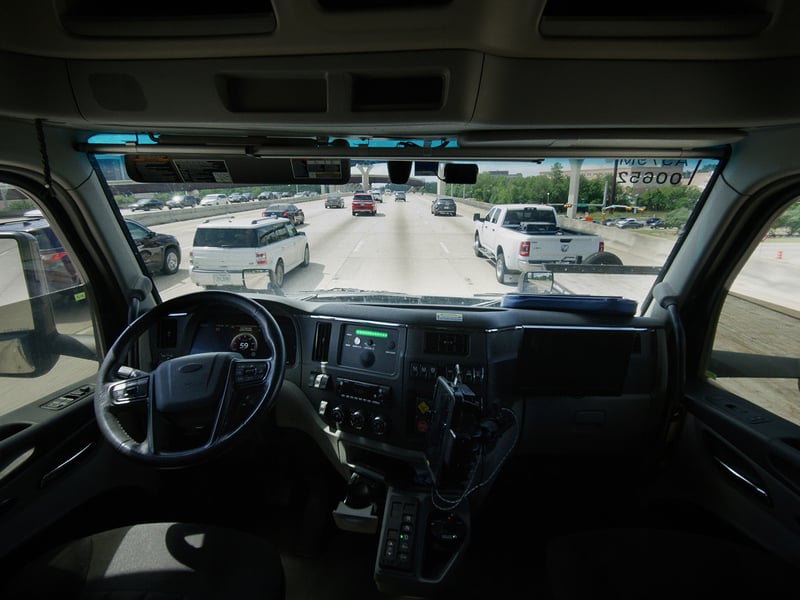
The restrictions reflect the California DMV’s conservative stance. The April 28 rule update opened the door to testing; it did not open the door to the unsupervised commercial freight operations both companies already run in Texas. That gap, between a safety-operator permit and a true driverless operating permit, is where the regulatory conversation in California sits.
The Teamsters California sued the DMV in state court over the new rules, alleging the agency failed to conduct a required environmental review covering economic impacts and safety risks to motorists. The suit asks a judge to vacate the April regulation, which would eliminate the permit authority under which both companies just received their approvals. A timeline for the litigation has not been set, and the testing that began this week can continue while the suit proceeds.
That tension between operational momentum and legal challenge is familiar to anyone who has followed autonomous vehicle policy in California. The state also sued Waymo’s predecessor through the court system, delayed Tesla’s robotaxi ambitions through the DMV, and forced Cruise, General Motors’ now-shuttered autonomous vehicle unit, to suspend operations in 2023 after a pedestrian injury incident. California has historically given autonomous vehicle companies permission to test and then found reasons to complicate that permission afterward.
For Aurora and Kodiak, arriving in California with two years of commercial driverless data from Texas changes their position in that historical pattern. They are not asking California to accept a hypothesis; they are asking it to evaluate a record. San Francisco’s mayor called for national autonomous vehicle rules in July after Waymo’s Fourth of July service disruptions created gridlock, a signal that city officials are watching the sector’s growth and its failure modes simultaneously.
The question California’s regulators will now have to answer is whether the Teamsters’ lawsuit succeeds in freezing the permit program, or whether the testing data accumulates fast enough to make the driverless commercial permit, the next step after the supervised testing phase, a defensible regulatory position. As federal regulators have indicated, the national framework for autonomous vehicle oversight is still being written. California’s decisions about Aurora and Kodiak will land inside that unresolved national debate.
What Kodiak and Aurora demonstrated in Texas is that autonomous heavy-duty trucks can operate commercially without a driver, accumulate millions of miles, and generate revenue for clients who own the trucks. The transition from that model to a full California presence depends on proving it again, in a different state with different roads, regulators, and political conditions, and doing it without the safety incident that ended Cruise’s California chapter before it ever reached profitability.
Both companies declined to specify test routes beyond the Mountain View reference in Kodiak’s announcement, or indicate when they would apply for a driverless permit in California.