
SAN FRANCISCO – Rose Peterson was inside a Waymo when it drove over a lit firework.
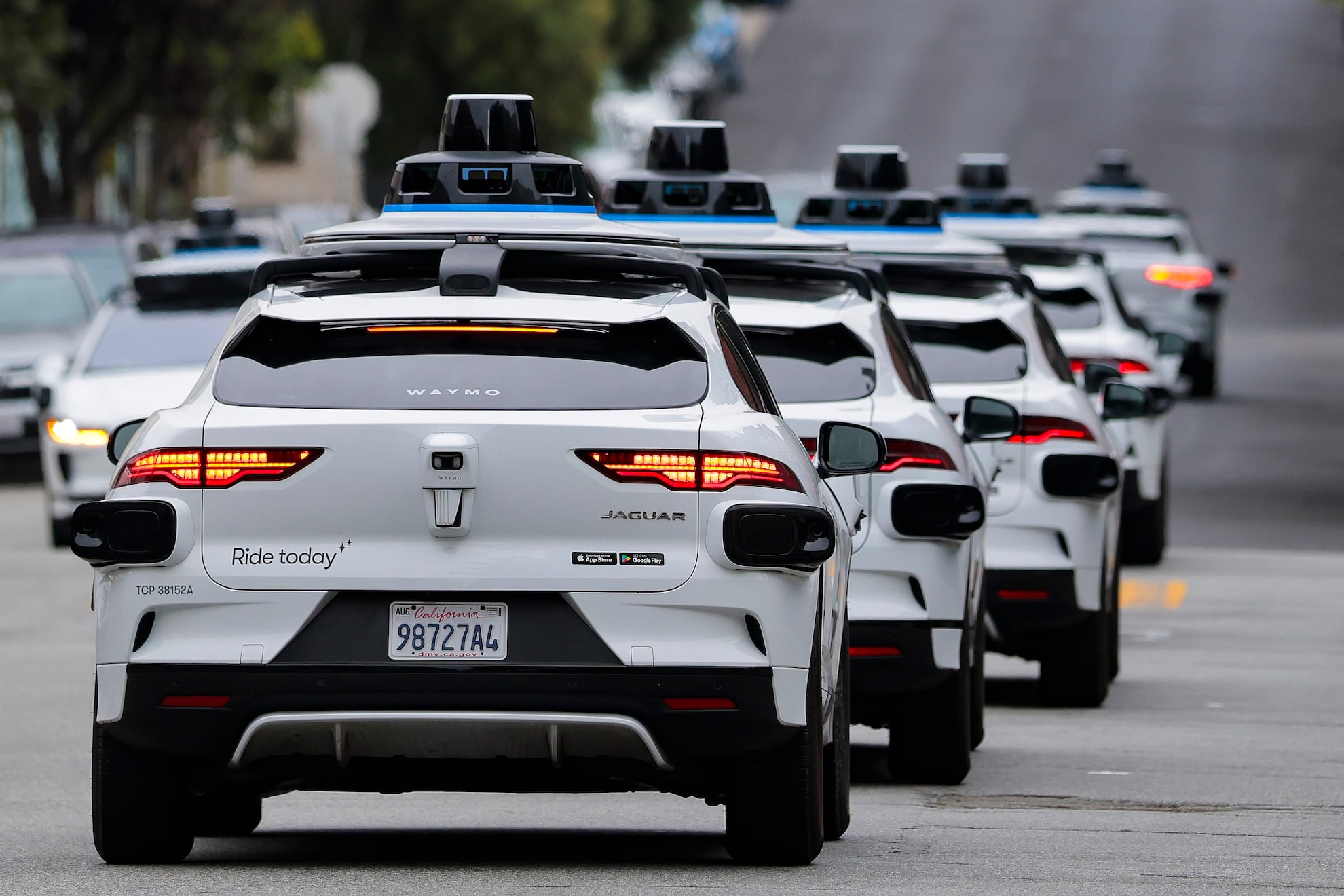
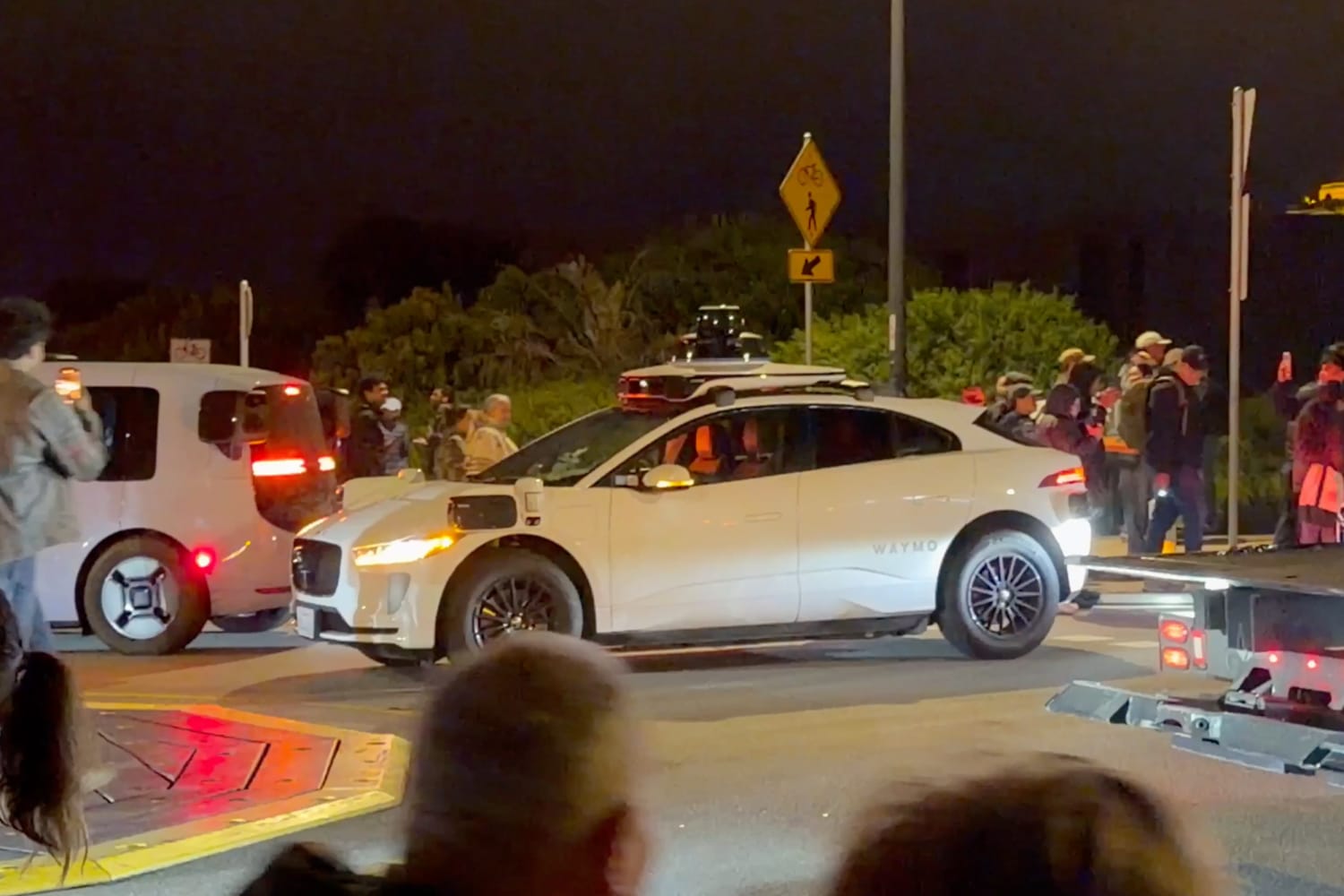
It was the night of July 4, and Peterson’s autonomous vehicle had been idling near San Francisco’s Presidio district for some time, caught in the gridlock that follows a major fireworks show when more than 100,000 people try to leave the same neighborhood at once. “We were pulling up to a four-way stop and this guy was shooting off a firework,” she later told NBC News. The Waymo kept moving. No injury was reported, but the moment captured something that has been quietly accumulating in federal safety data: autonomous vehicles designed to navigate controlled conditions with remarkable consistency do not always know what to do when the real world stops cooperating.
Peterson was not alone that night. At least a dozen Waymo vehicles stalled across the Presidio neighborhood, their batteries depleted by hours of gridlock the cars could not exit independently. Some required towing. Unplanned road closures near the Golden Gate Bridge fireworks show compounded the congestion, cutting off routes that Waymo’s remote assistance team would have used to recover vehicles one at a time. When hundreds of passengers are stranded simultaneously and cell service collapses under the load, a fleet of a few dozen human remote operators cannot reach everyone at once.
Four days later, Jonathan Morrison, the administrator of the National Highway Traffic Safety Administration, sent a letter to every autonomous vehicle developer operating in the United States. “An automated vehicle that cannot safely interact with first responders is a danger to the general public,” the letter read. NHTSA gave the industry until the end of the month to submit its solutions or face enforcement action.
The directive did not arrive without precedent. Morrison’s letter cited a documented pattern, identified through the agency’s own data, of autonomous vehicles driving into active emergency scenes, blocking ambulances and fire trucks, and failing to recognize flashing lights, cones, flares, and smoke. “Emergency scenes are not rare or extreme ‘edge cases,’” Morrison wrote, language aimed directly at a talking point the industry has long used to contextualize similar failures. TechCrunch’s earlier investigation documented multiple prior conflicts between Waymo vehicles and San Francisco emergency responders, incidents the company attributed to software limitations in recognizing non-standard road conditions.
Waymo, which operates the largest robotaxi fleet in the United States across Los Angeles, Phoenix, and San Francisco, acknowledged the July 4 incident and said its roadside assistance team worked overnight to clear vehicles. The company described “major traffic disruptions, a high volume of travelers, and unplanned road closures” as contributing factors, adding it was “evaluating ways to strengthen Waymo’s resilience in major traffic disruptions.” NBC News reported that San Francisco Supervisor Bilal Mahmood has separately announced a formal inquiry into autonomous vehicle impacts on the city’s transit and emergency services.
The business picture complicated further this week when Uber disclosed it was ending its robotaxi partnership with Waymo in Phoenix, the city where the two companies had worked together since 2023. Uber’s partnerships in Atlanta and Austin remain active, with no timeline offered for those arrangements. The Phoenix exit, arriving alongside Morrison’s ultimatum and the July 4 failure, compressed the story of autonomous vehicle expansion into an uncomfortable week for companies that had recently been scaling without visible friction.
NHTSA’s enforcement language was unambiguous. The agency’s July 8 press release stated that Morrison will “continue to exercise our enforcement authority for developers that do not address significant safety concerns,” a statement that carries real weight for companies whose commercial expansion requires ongoing federal tolerance. NHTSA has the authority to mandate recalls and open safety investigations, powers it has used against Tesla’s driver assistance software, and that it is now signaling it will apply more broadly to the robotaxi sector.
The pressure follows a shift in NHTSA’s approach to autonomous vehicle oversight that began under the current administration, which had initially signaled a more permissive posture toward AV deployment. Morrison’s July 8 directive suggests those instincts ran into the accumulated evidence of what happens when autonomous systems encounter unpredictable mass events. A Fourth of July fireworks crowd was not an unforeseeable variable. It was a predictable consequence of operating a large robotaxi fleet in a major American city during a national holiday.
The broader question the July 4 failure surfaces is whether AI technology companies expanding into safety-critical applications have adequate feedback loops between what their systems can actually do and the conditions those systems will encounter. In Waymo’s case, the July 4 gridlock was not a software bug in the conventional sense. It was a systems problem: enough vehicles, in bad enough conditions, with too few human backstops to maintain safe operations.
What Waymo and its competitors submit to NHTSA by month’s end will indicate whether the industry can self-correct or whether the agency moves toward formal action. What remains unknown is whether software updates can address failures that appear, at least partly, to be problems of operational scale rather than code. The deadline is real. The solutions, as of now, are not.