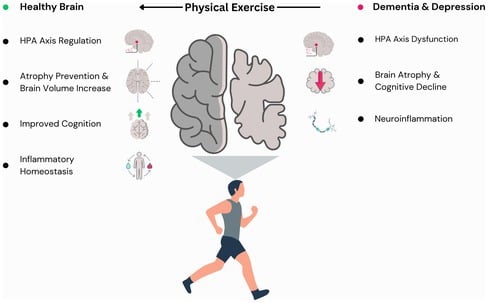

LOS ANGELES — Every public health campaign of the past thirty years has carried the same core message: move more, think better. Regular physical activity, the guidance goes, protects the aging brain against dementia. For the millions of warehouse workers, construction workers, and home health aides whose jobs demand eight hours of daily physical exertion, that message might have felt reassuring. A new meta-analysis, the largest of its kind, suggests it should not have.
A systematic review of 74 studies involving more than 4.2 million adults, published in The Lancet Public Health, found that the relationship between physical activity and dementia risk depends almost entirely on where that activity happens. People who exercised during leisure time (running, swimming, cycling, or gym sessions) were 24 percent less likely to develop dementia than sedentary individuals. People whose main physical activity came from their jobs were 20 percent more likely to develop dementia than their sedentary counterparts.
The finding, now the most comprehensive quantification of what researchers call the “physical activity paradox,” was led by Natan Feter, a postdoctoral fellow, and David A. Raichlen, a professor at the University of Southern California. The team analyzed studies spanning 30 countries, with participants ranging from ages 45 to 93, followed for a median of 10 years.
“The domain in which physical activity occurs appears to be just as important as the activity itself,” Raichlen said. The team’s analysis found no meaningful overlap in the risk profiles of the two groups, despite the physical similarity of the movements involved (lifting, walking, bending) across both leisure and occupational settings. What changed the outcome, the data suggest, is everything else surrounding those movements.
The biological explanation for the gap remains unresolved, and the researchers are candid about that. One prominent hypothesis centers on recovery: leisure exercise is typically followed by rest, which allows the body to repair inflammation and regulate stress hormones. Occupational physical activity rarely affords that window. A construction worker lifting materials across an eight-hour shift does not receive the physiological recovery that a person who runs for forty minutes in the evening does. The sustained demand may instead trigger chronic low-grade inflammation, the kind that research increasingly links to elevated dementia risk rather than protection against it. Prior research into inflammation’s role in cognitive decline, including work examining the shingles vaccine dementia link, has pointed in the same direction.
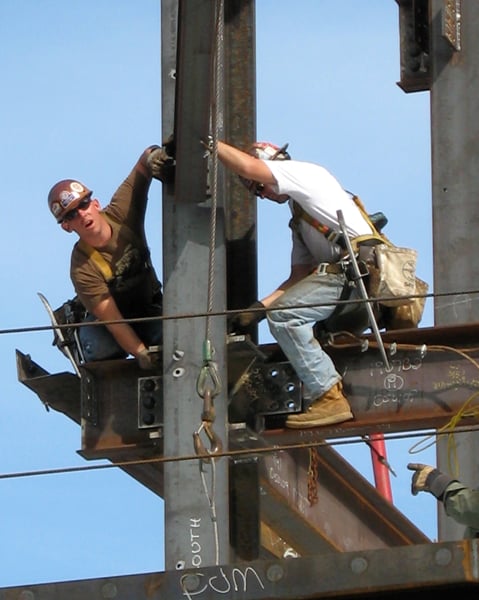
A second hypothesis concerns stress and autonomy. Leisure exercise is self-directed: the individual chooses the activity, the intensity, and the duration. Occupational physical activity is imposed, often under time pressure, frequently in environments carrying financial stress, job insecurity, and in some cases air pollution and noise exposure. “Occupational physical activity often involves spending time in environments that may be less favorable to health,” Feter noted, “including greater exposure to air pollution and psychosocial stressors.” Whether those surrounding conditions mediate the biological risk, or whether the sustained physical load itself is the mechanism, remains an open question.
For occupational medicine, the implications are not small. Sectors with the highest proportion of physically demanding work (agriculture, construction, healthcare support, warehousing) tend to employ lower-income workers and communities already carrying disproportionate health burdens. If prolonged occupational physical activity is a genuine dementia risk factor, current workplace health frameworks may be missing it. The question of whether employers have any duty to address that risk, through structured rest breaks, supplemental cognitive health programs, or job redesign, has not yet entered mainstream occupational health policy.
The study’s scale strengthens its signal. Four-point-two million participants across 74 studies and three decades of data is a foundation few individual trials can match. The populations covered North America, Europe, Asia, and parts of Africa and South America, lending the findings cross-cultural weight that single-country studies cannot provide. Earlier amino acid Alzheimer’s research at comparable scale has similarly challenged the idea that dementia risk factors operate uniformly across populations.
That breadth carries tradeoffs the authors acknowledge. Occupational physical activity was self-reported in most of the underlying studies, and the definition of “high” varied across research teams. The meta-analysis cannot account for career changes, nor can it isolate whether specific types of occupational activity (repetitive motion versus intermittent heavy lifting) carry different risk profiles. Whether targeted interventions could reduce the elevated risk for high-demand workers remains unanswered.
There is also the question of reverse causation. People developing early cognitive decline may be more likely to remain in physically demanding work, because cognitive decline limits career mobility. Some portion of the elevated risk in the occupational data may reflect that dynamic rather than a causal effect of the work. The research team applied methods to minimize this possibility, but it cannot be entirely ruled out in observational data.
The World Health Organization, in its guidance on dementia prevention, cites physical inactivity as a modifiable risk factor, but does not distinguish between activity domains. The WHO’s guidance, detailed in its fact sheet on dementia, was written before the scale of the paradox was this well-documented. What the USC and Lancet data now establish, in its published analysis of 4.2 million participants, is that “being physically active” is not a single variable with a single outcome. Context, control, recovery, and type all determine whether movement protects the aging brain or accelerates its decline.