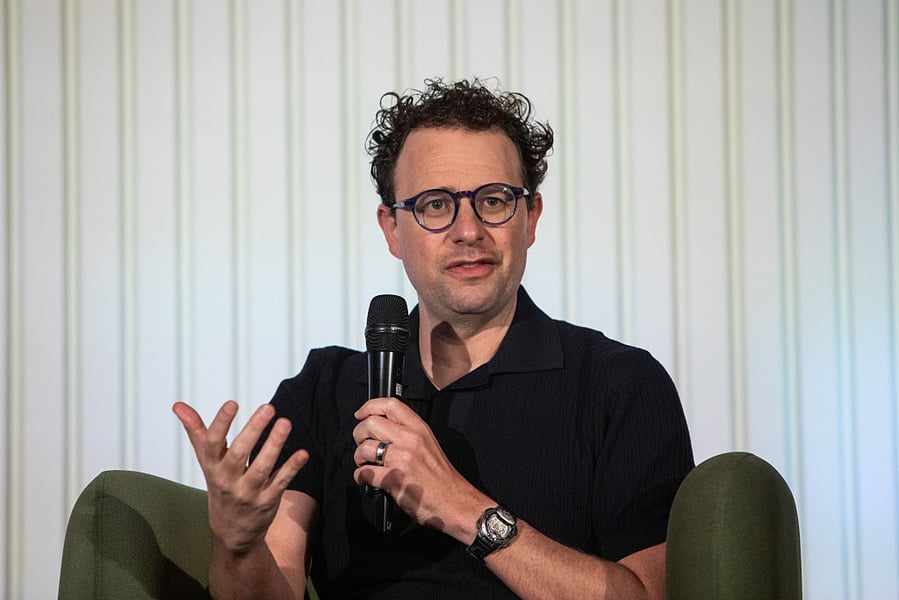

SAN FRANCISCO — The debate Dario Amodei chose to have on X last weekend was, on its surface, a garden-variety tech-platform argument: an investor told the Anthropic chief executive he needed to stop being so worried about artificial intelligence in public, and Amodei pushed back. The actual content of that pushback, though, was more revealing than any messaging strategist would recommend.
“I think it is fundamentally a crisis of trust,” Amodei wrote, framing public resistance to AI as a product of broader institutional skepticism. “I think that ordinary people don’t trust companies, governments, or the tech industry and always suspect that we are cooking up some new way to screw them over.”
That characterization of public skepticism as ambient and irrational is the version of the argument Anthropic wants to circulate. But in the same X thread, Amodei said something that undercuts it. “The most accurate criticism of AI companies including Anthropic,” he acknowledged, “is that we haven’t yet delivered on our big promises to benefit the world.”
That admission is the news. The head of the world’s second most valuable private AI company is publicly conceding, in plain language, that the industry has not done what it said it would do.
The exchange started when investor Gavin Baker, speaking on the All-In podcast and then on X, argued that Amodei’s public emphasis on AI risks was itself feeding the backlash he was complaining about. The implication: if a leading AI CEO keeps warning about catastrophic risks, he cannot be surprised when the public internalizes those warnings.
Amodei rejected that framing. He argued his communications have been “about equally balanced between risks and benefits,” and he attributed the perception problem to structural forces that predate his company. The trust problem, he said, is inherited, rooted in decades of accumulated suspicion toward technology companies, not in anything Anthropic specifically has done.
There is something to that. The tech industry spent roughly two decades demonstrating that engagement, growth, and profit consistently arrived ahead of user safety or public benefit. When that same industry announces that its next product will cure cancer and end poverty, skepticism is not irrational. It is the rational response to track record.
But the structural-distrust explanation has a limit. It does not explain the specific gap between the specific promises AI companies made, on specific timelines, and what has actually arrived. And it is precisely that gap, not the ambient distrust, that Amodei himself identifies as “the most accurate criticism.”
The distinction matters. A crisis of trust is, in principle, addressable through transparency, time, and cleaner messaging. A failure to deliver is only addressable by delivering. Amodei appears to believe both are true simultaneously, while leading with the one that asks less of Anthropic.
His regulatory comments in the same thread offered a sharper argument. Amodei pushed back against investor pressure to oppose AI oversight, defending California’s SB 53, a transparency bill imposing disclosure requirements on large AI companies, and arguing that well-designed regulation can simultaneously constrain corporate power, address safety risks, and give smaller competitors room to operate. That is a more nuanced position than the industry-versus-regulators posture that dominated the previous tech-policy cycle.
Whether it reflects genuine belief or strategic interest is the question that stays open. A company of Anthropic’s scale and legal resources has obvious reasons to support regulatory frameworks it can help design. When Sam Altman appeared before the Senate on AI development pace, that too landed as a signal of responsibility; it is harder to know whether it was also a signal of confidence that frontier labs can absorb compliance costs that smaller competitors cannot.
Anthropic began watermarking all Claude AI outputs last week to comply with the EU’s AI transparency requirements, suggesting the company is following through on its regulatory posture in Europe. Whether that constitutes delivery on the bigger promises, the ones about transforming medicine, science, and human welfare, is a different question entirely.
What Amodei has done, deliberately or not, is give the AI trust conversation a more honest baseline than it typically gets. The standard executive response to public skepticism is denial, blame-shifting, or a product announcement. Amodei has instead said plainly that the criticism is partly right. TechCrunch reported the full exchange, surfacing a tension Anthropic will need to resolve with outcomes, not arguments.