CUPERTINO — There are keynotes, and then there are reckonings. Monday’s WWDC 2026 opening at Apple Park is both.
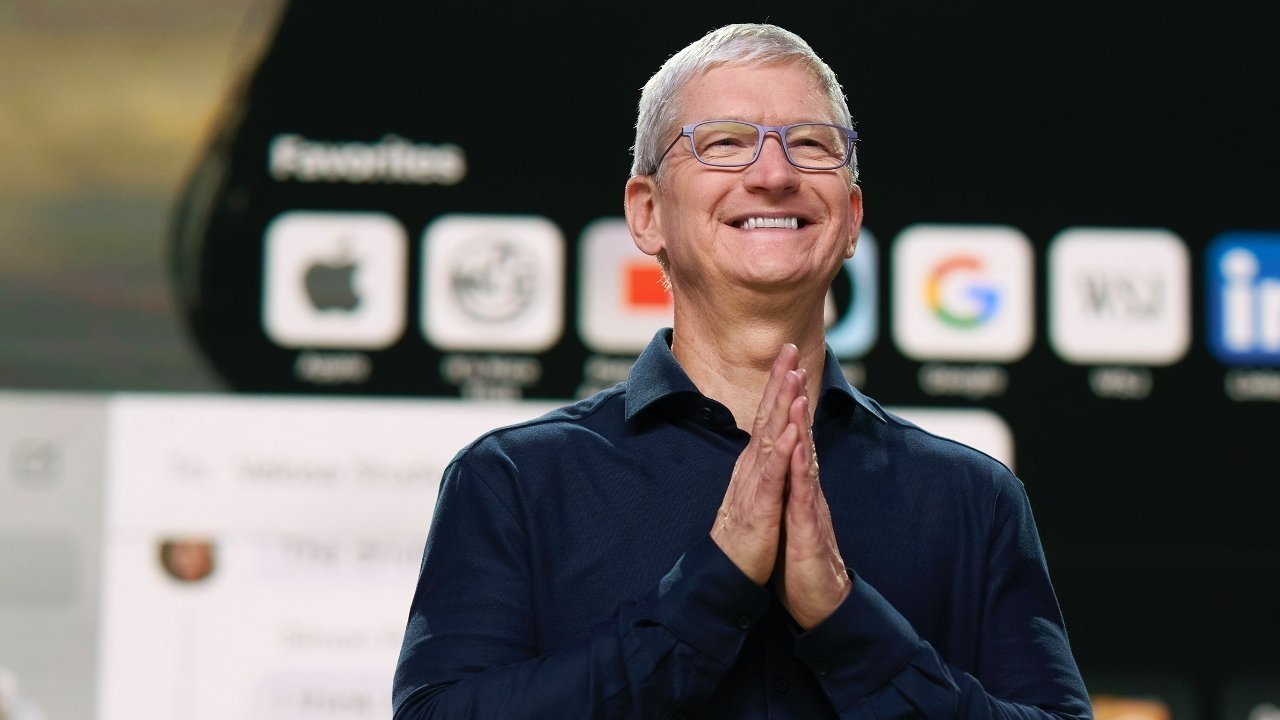
Tim Cook will take the stage for the last time as chief executive of Apple Inc. He announced in April that he will hand the job to John Ternus — the company’s head of hardware engineering — on September 1. Whatever Cook unveils at 10 a.m. Pacific Time on June 8 will be the last major product narrative he controls. And the product that matters most is one he promised two years ago, failed to ship, and is now promising again: an AI-powered Siri, rebuilt from the ground up, running on Google’s Gemini models under a deal that is costing Apple roughly $1 billion a year.
That is the math that neither the keynote script nor the marketing materials will address directly. Apple has outsourced the intelligence layer of its most important user-facing product to its oldest rival — the company it sued over smartphone patents, the company whose search deal it quietly depends on to fund its services margin. The reason is straightforward, if uncomfortable: Apple’s own AI models were not good enough, and Gemini was. Apple signed a multi-year agreement to use Google’s Gemini infrastructure for what it calls its Apple Foundation Models, a term that will need some creative interpretation now that a competitor built the foundation.
Whether any of that matters to the 1.25 billion people carrying iPhones is the question no analyst can answer with certainty. Bernstein’s Mark Newman wrote in an investor note that Apple Intelligence presents what he called a “huge opportunity” to accelerate iPhone replacement cycles — estimating 13 percent upside to earnings per share from that cycle alone, and a further 16 percent from potential premium-tier subscriptions. Evercore ISI’s Amit Daryanani put it more bluntly: Apple does not need to win the frontier model race. It needs to distribute AI to people who already own its hardware. With Gemini doing the heavy lifting, that distribution can begin now.
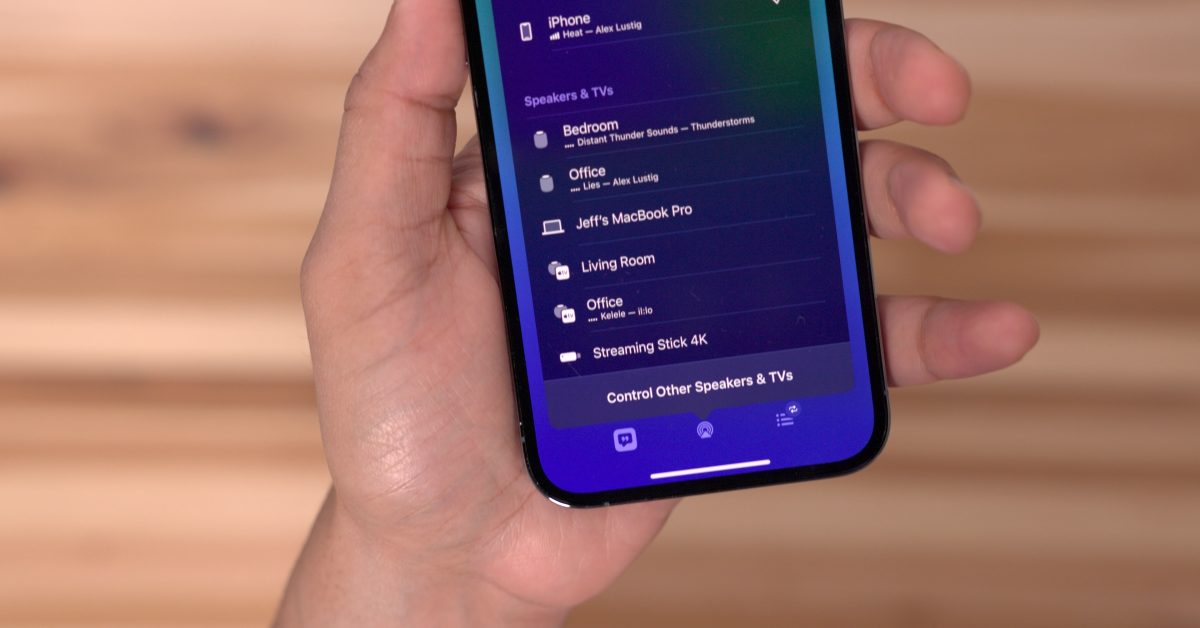
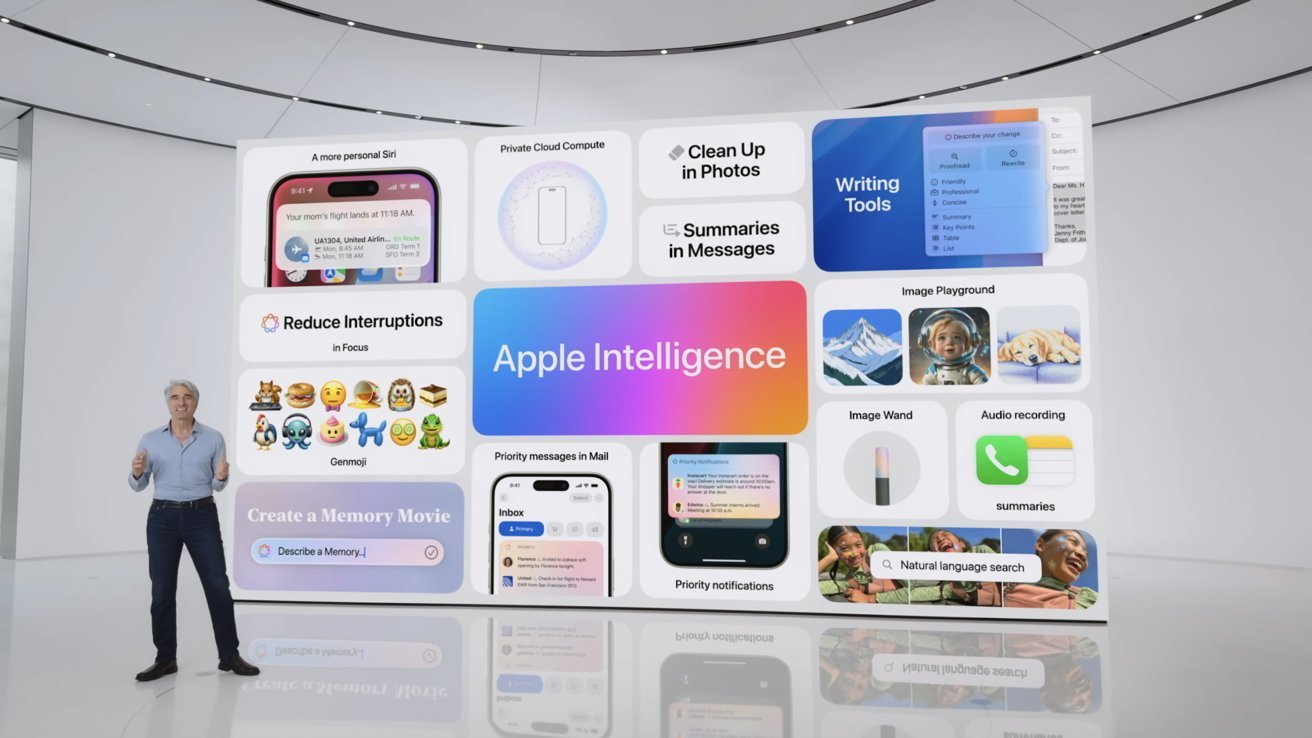
The practical stakes for the iPhone on Monday are substantial. Bloomberg’s Mark Gurman — whose pre-keynote reporting on this cycle has been essentially correct at every checkpoint — describes an overhauled Siri that will live primarily in the Dynamic Island, with a new swipe-down gesture from the center of the home screen opening a “Search or Ask” interface. The assistant will gain a standalone app with an iMessage-style chat interface, full conversation history synced across devices via iCloud, and the ability to draft emails, query personal data including photos and contacts, and complete multi-step tasks in and across apps. It is, in design and ambition, the chatbot Apple showed on slides in 2024 — and this time developers are expected to receive betas by Monday afternoon.
The gap between a polished keynote demo and a product that holds up under real conditions is exactly where Apple failed in 2024. Siri’s AI features were announced with considerable fanfare at that year’s WWDC, partially shipped in iOS 18, then partially delayed, then quietly deprioritized as internal timelines slipped. The version that reached users was narrow in capability and slow to respond — a disappointment that investors and analysts have cited repeatedly when comparing Apple unfavorably to OpenAI, Google, and Anthropic on AI readiness. That history is what gives Monday a weight that a typical platform-update keynote does not carry.
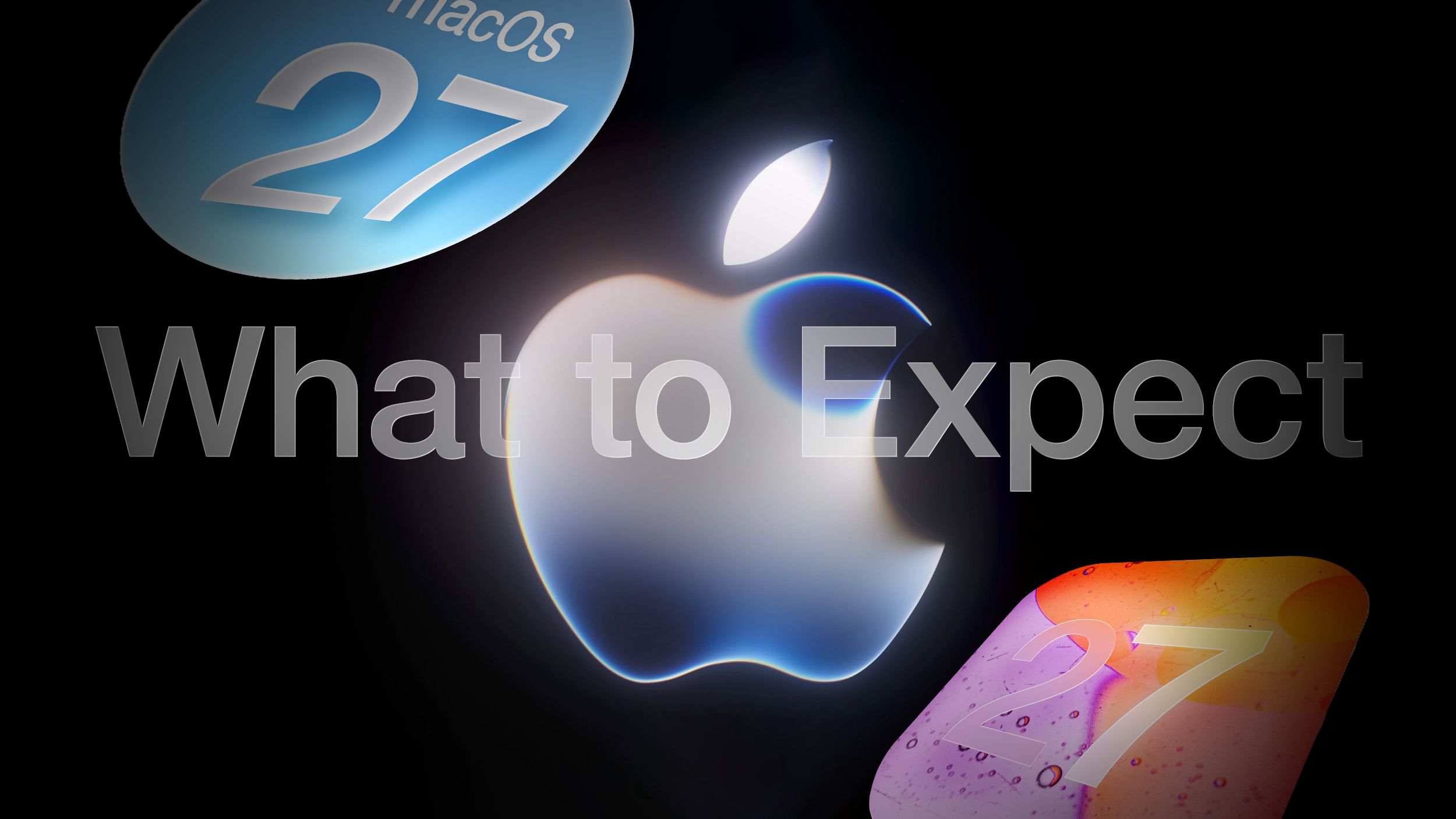
One detail in the pre-keynote reporting is worth holding onto: Apple plans to let rival chatbots — including Claude and the Google Gemini app itself — integrate with Siri through an Extensions feature in iOS 27 settings. Users will be able to designate a third-party AI as their default for certain Apple Intelligence functions, including Writing Tools and Image Playground. That is a meaningful concession. Apple is essentially acknowledging that some of its 1.25 billion users will trust a competitor’s model over its own revamped assistant, and building infrastructure to accommodate that preference rather than block it. Whether this reads as pragmatic openness or structural uncertainty about Siri’s ceiling depends on what users actually encounter when the betas land.
The iOS 27 feature set that surrounds the Siri overhaul is broader than any single AI announcement. The Photos app will gain AI-powered Extend and Reframe editing tools, expanding a shot’s frame or shifting perspective on spatial photos. The Camera app will absorb Visual Intelligence into a dedicated Siri mode, making the feature visible to users who never found it buried under the Camera Control button. Shortcuts will accept natural-language descriptions to generate automations without requiring any knowledge of the app’s existing interface. The Wallet app will let users create digital passes from scans of physical tickets and membership cards. These are coherent, useful additions — and they would constitute a strong WWDC in any other year. On Monday, they are the supporting cast.
macOS 27 follows the same AI playbook, adding the chatbot Siri to the Mac with a standalone app and personal-context capabilities that can access files, emails, and calendar data. Safari is expected to gain AI-driven tab grouping. A “slight redesign” of the Liquid Glass interface — fixing transparency inconsistencies and shadow rendering that drew criticism in Tahoe — is also confirmed. Apple is also dropping support for Intel Macs with this release, ending a transition that began in 2020. No Intel Mac will run macOS 27. What a macOS 27 Siri looks like on a 27-inch desktop remains one of the few genuine unknowns heading into Monday.
Cook’s farewell is unlikely to be foregrounded by Apple itself. The company will not make the succession sentimental on stage. But the subtext is visible in the structure of the moment: a CEO spending his final major keynote trying to close the distance between what his company promised on AI and what his company has shipped on AI. His successor, Ternus, is a hardware engineer — someone whose public identity is bound up in physical products rather than software strategy. The Siri bet and the Gemini deal are Cook’s architecture, and Ternus will inherit whatever reputation they have earned by September.
The iOS 27 developer beta lands Monday afternoon for iPhone 12 and later — though the full Siri AI experience requires the A17 Pro chip or newer, meaning older devices will receive the software update without the features that define it. That split will be invisible on a keynote stage. It will become very visible when tens of millions of users on iPhone 12 through iPhone 15 download the update in the fall and discover that the Siri they were shown on YouTube is not the Siri on their phone.
Whether Apple has solved the 2024 problem — not just the demo problem, but the delivery problem — is something that cannot be confirmed from Cupertino on June 8. The keynote will show what Siri can do under controlled conditions. The betas will begin to show what it does under real ones. And the full public rollout expected in the fall will show whether the $1 billion per year Apple is paying Google for the privilege of rebuilding its most important feature was, in the end, enough.