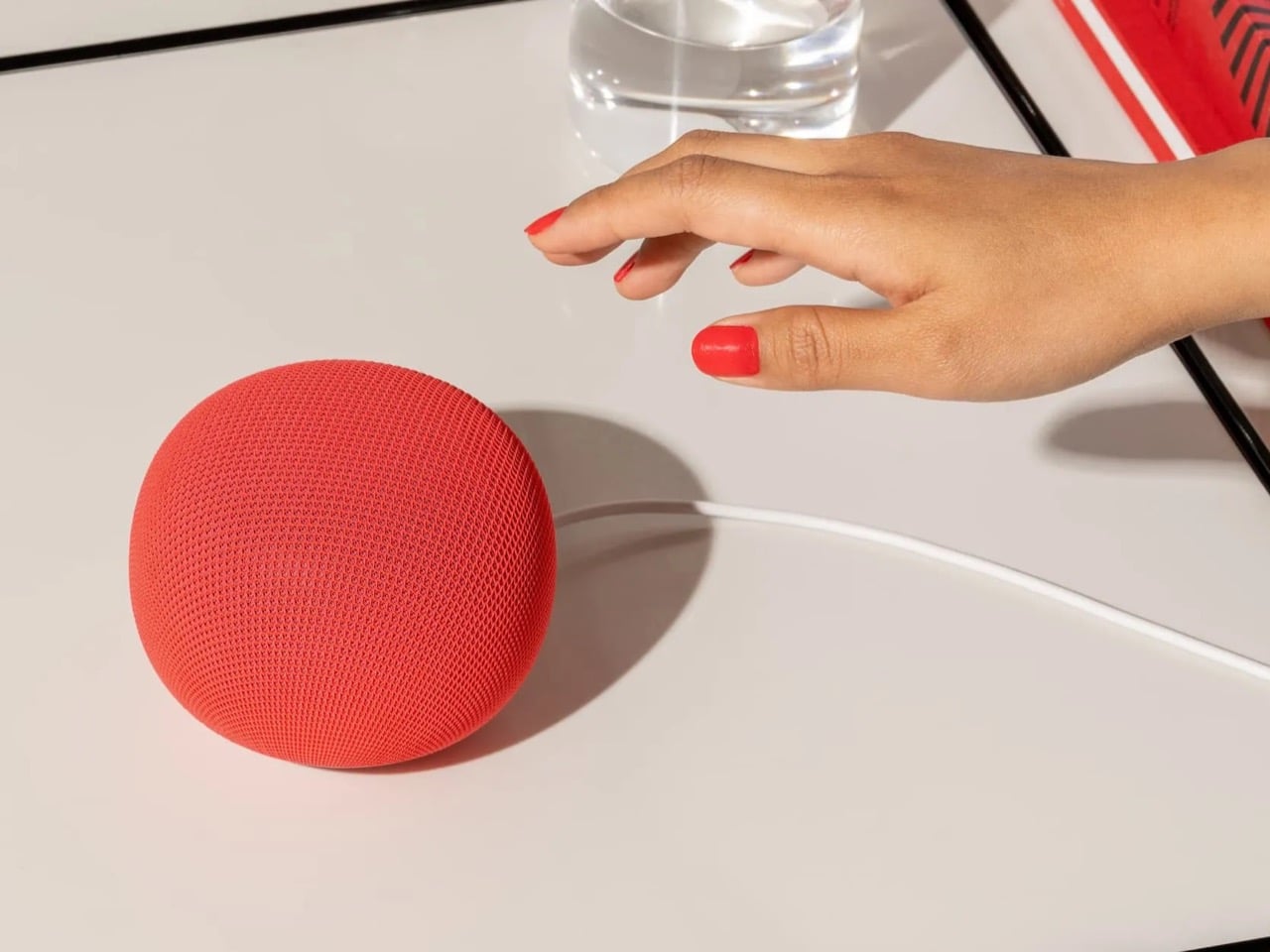

SAN FRANCISCO — Six years is a long time to wait for a speaker. By the time Google ships its new Home Speaker, expected around June 25 according to a Best Buy Canada listing that briefly surfaced and was pulled, the Nest Audio it replaces will have witnessed a pandemic, four iPhone generations, and Alexa’s own midlife crisis. The new device is priced at $99.99. It will sit on your counter. It will answer your questions. Whether it justifies the wait depends entirely on a calculation Google would prefer you not make until after you’ve opened the box.
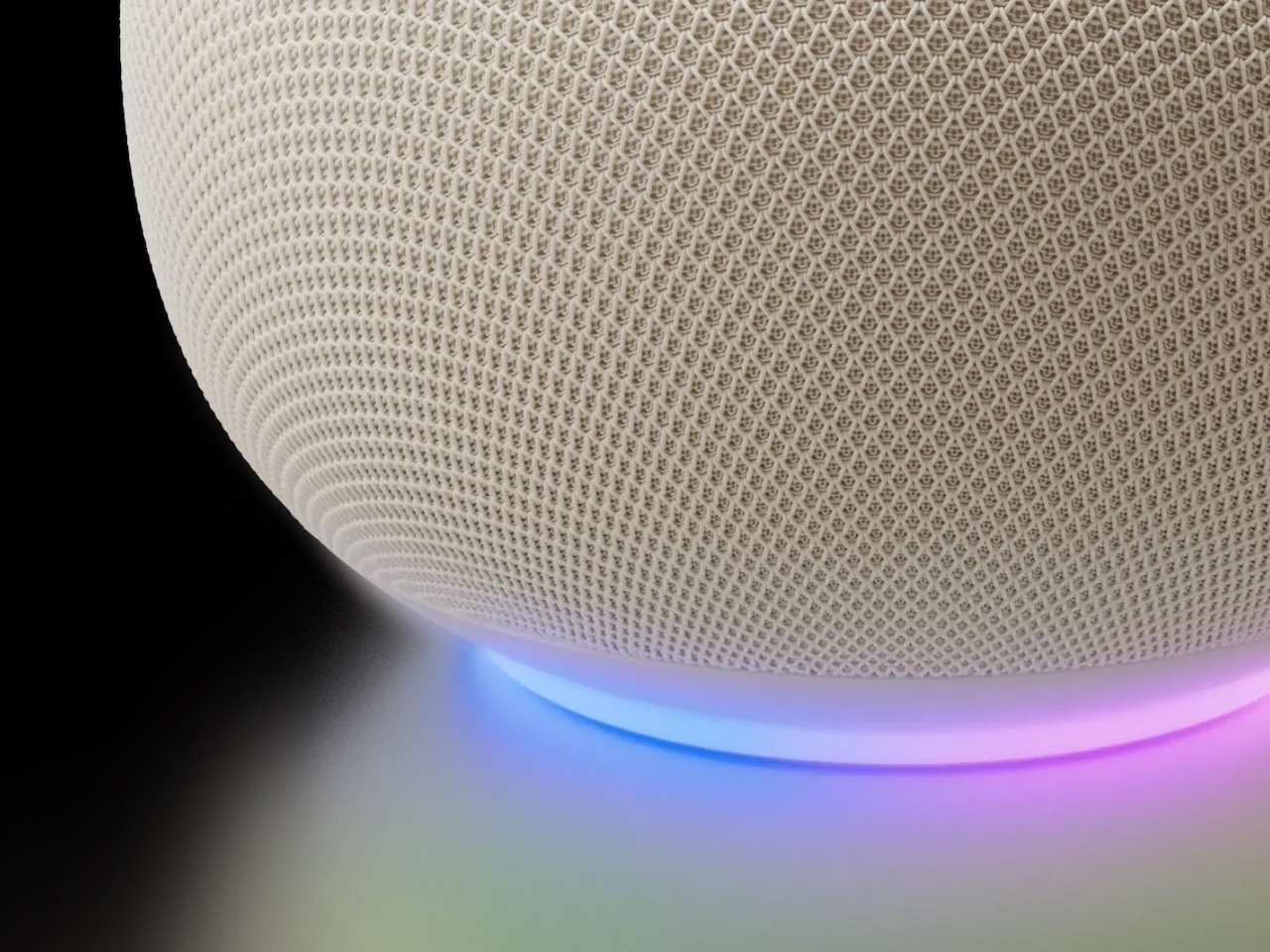
The Google Home Speaker is, by hardware metrics, a meaningful step forward. The Nest Audio was a pillow-shaped box running Google Assistant, a product category Google appeared to have quietly decided was no longer worth its attention. The new speaker drops the Nest branding entirely, wraps itself in a 360-degree knitted fabric shell — built, Google says, using a 3D knitting process that reduces waste — and places a glowing light ring at its base. That ring is the product’s most telling design decision. It pulses and shifts to signal when Gemini is listening, when it is thinking, when it is formulating an answer in Gemini Live mode. The speaker has been designed, from the circuit board outward, to make an AI assistant visible.
The chip inside is custom-tuned for Gemini’s processing demands. According to Google’s product announcement from October 2025, it handles background noise suppression, echo cancellation, and reverb in real time, so that a conversation with Gemini Live from across a kitchen does not get tangled with ambient chatter. Anish Kattukaran, Google’s chief product officer for Home and Nest, described the latency improvements as enabling interactions that feel “conversational instead of transactional” — the persistent complaint about every smart speaker since Amazon’s original Echo.
On paper, the speaker supports stereo pairing, multi-room audio with existing Nest devices, and home theater configuration when paired with two units alongside a Google TV Streamer — a feature Google has been positioning as central to its living-room strategy for months. It launches in nineteen markets, including the United States, the United Kingdom, Canada, Australia, Japan, and most of Western Europe. Outside the US, only Porcelain and Hazel colorways ship initially, with Berry and Jade following later.
None of that is where the conversation gets complicated. The complication begins at the word “free.”
Out of the box, the Google Home Speaker ships with what Google calls Gemini for Home: smart home control, timers, broadcast messages, media playback, basic questions. Those are the things the Nest Audio already did, roughly, with Google Assistant. The features that make the speaker categorically different — Gemini Live, which enables open-ended conversation, interruption mid-sentence, brainstorming, and contextual follow-ups; Sound Detection, which listens passively for alarms or breaking glass; and Daily Summaries — are locked behind Google Home Premium.
Google Home Premium replaces what was previously called Nest Aware. Standard tier costs $10 per month, or $100 annually. Premium runs $20 a month, or $200 per year. Every Google Home Speaker ships with a six-month trial of the Standard tier — a $60 value, as The Gadgeteer reported — included in the purchase price. After six months, the conversational features that differentiate this device from its predecessor require a recurring payment. For a buyer who renews at the Standard rate, the all-in cost of the first year is $159.99. At the Premium tier, it climbs to $219.99.
That math puts the Google Home Speaker in a different competitive conversation than its $99 sticker suggests. Amazon’s Echo lineup has not moved to a mandatory subscription model for Alexa’s core conversational functions. Apple’s HomePod Mini, at $99, does not charge extra for Siri’s intelligence layer. Google is making a bet that Gemini Live’s quality gap over the competition is wide enough to sustain a monthly fee. That bet has not yet been tested against a paying consumer base, because the speaker has not yet shipped.
The delay itself has been unusual. Google announced the device in October 2025, alongside a sweeping overhaul of the Google Home app and what it described as a new Gemini for Home platform. The company said then that the launch timing was deliberate: it wanted Gemini for Home rolled out to the tens of millions of existing speakers and displays before introducing new hardware. That rollout has been active since the announcement, with updates arriving three to four times per month since March, according to Android Central. The company reached a version it considered ready to ship sometime in the spring. The software, specifically Gemini Live’s integration, is understood to be what pushed the release past the official Spring 2026 window.
The Nest Mini and Nest Audio are now out of stock on the Google Store, a supply chain signal that tends to precede a product’s retirement. Best Buy Canada’s now-removed listing showed June 25. Google’s own store still says “Coming Spring 2026,” a phrase that stopped being accurate on June 21. When Android Authority asked the company for an updated timeline, Google said it would share more details soon.
What remains unresolved is not the release date or the hardware or even the subscription price in isolation. What remains unresolved is whether Google’s commitment to the smart speaker category has a shelf life. The Nest Audio launched in 2020 and was left without a successor for six years. Google killed its Stadia gaming platform after promising longevity. It discontinued the Pixel Tablet’s dock ecosystem after one generation. Buyers considering the Home Speaker are not just evaluating Gemini Live against Alexa. They are evaluating whether Google will still care about this product in 2028. That question, Kattukaran’s enthusiasm notwithstanding, sits at the center of Google’s broader AI hardware bet. The speaker is good. The company’s track record is the variable.