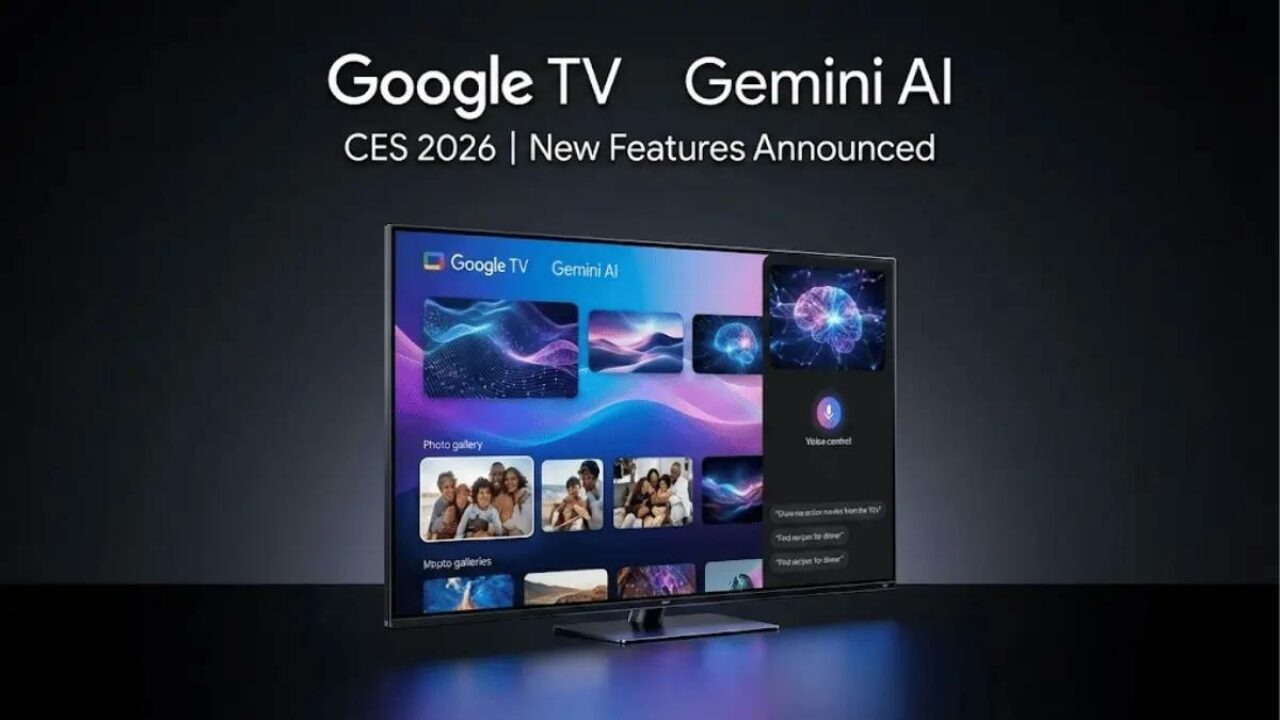

Google is accelerating its push to turn the television into a fully interactive artificial intelligence hub, with its latest Google TV update introducing deeper Gemini integration, a YouTube Shorts feed on the home screen, and a more dynamic Google Photos experience that redefines how living room screens function when idle.
The update reflects a broader shift in how Google envisions home entertainment. Instead of acting as a passive streaming interface, Google TV is evolving into an AI powered entertainment hub where discovery, creation, and personalization blend into a single system driven by Gemini.
At the center of this transformation is the expansion of Gemini AI integration across the platform. Google is embedding its generative model deeper into the television interface, allowing users to interact with content in more conversational and creative ways. According to Google’s official announcement, the goal is to make the TV feel less like a browsing tool and more like a responsive assistant embedded in daily viewing habits. Google TV official announcement
One of the most visible additions is the introduction of a YouTube Shorts row directly on the Google TV home screen. This feature brings short-form video content into a traditionally long-form viewing environment, allowing users to scroll through personalized clips without opening the YouTube app. The change reflects Google’s response to the growing dominance of vertical video consumption across platforms. YouTube Shorts integration on TV
Beyond video consumption, Google is also reshaping the creative layer of its TV ecosystem through generative AI tools powered by Gemini. These tools allow users to generate images and short video content directly from their television using voice commands or simple prompts. The feature builds on Google’s broader strategy of embedding generative AI into consumer hardware rather than limiting it to mobile or desktop applications. Gemini AI features on Google TV
Within the Gemini interface, users can access a creation mode that uses models such as Nano Banana for image generation and Veo for video creation. These capabilities are designed for casual, expressive use in the living room rather than professional production environments. Google appears to be positioning this as a social and family-oriented feature set rather than a productivity tool.
Another major change arrives through Google Photos, which is becoming a more dynamic part of the television experience. Instead of static idle screens, TVs will now display AI curated slideshows that transform personal photo libraries into evolving visual narratives. These upgrades effectively turn the television into a living memory display when not in active use.
The system also introduces AI powered remixing capabilities, allowing users to transform images into stylized versions such as artistic renders or thematic edits directly on their television. This deepens Google’s effort to make personal media more interactive and accessible across devices.
Google’s strategy is clearly aimed at positioning Gemini as the central intelligence layer across its entertainment ecosystem. From search and recommendations to content creation and visual customization, the AI model is becoming deeply embedded into how users interact with their screens.
This shift aligns with a broader evolution happening across the industry. Platforms are increasingly competing not just on streaming libraries but on intelligence layers that shape discovery and interaction. Within this context, Google is expanding its broader ecosystem of services, including its wider technology coverage that reflects how AI is influencing consumer devices.
The integration of YouTube Shorts, generative AI tools, and AI driven personal media systems signals a turning point for Google TV. It is no longer just a gateway to streaming services but an evolving interface for digital expression, entertainment discovery, and personal content creation.
As these features roll out across compatible devices, Google appears to be testing a future where the television becomes not only a screen for consumption but a platform for creation, memory, and interaction powered by Gemini at its core.
Within this shift, the role of platforms like YouTube and broader streaming ecosystems becomes increasingly central, as short form and long-form content converge into a single AI mediated experience.
The transformation of Google TV suggests that the future of home entertainment will not be defined by channels or apps, but by intelligent systems that understand context, generate content, and continuously reshape what viewers see and how they interact with it.