LONDON — For more than a decade, getting video or music from an iPhone to a television meant one path: AirPlay. That is about to change for users in Europe, and the mechanism forcing the change is the same regulation that already pried open Apple’s grip on app distribution.
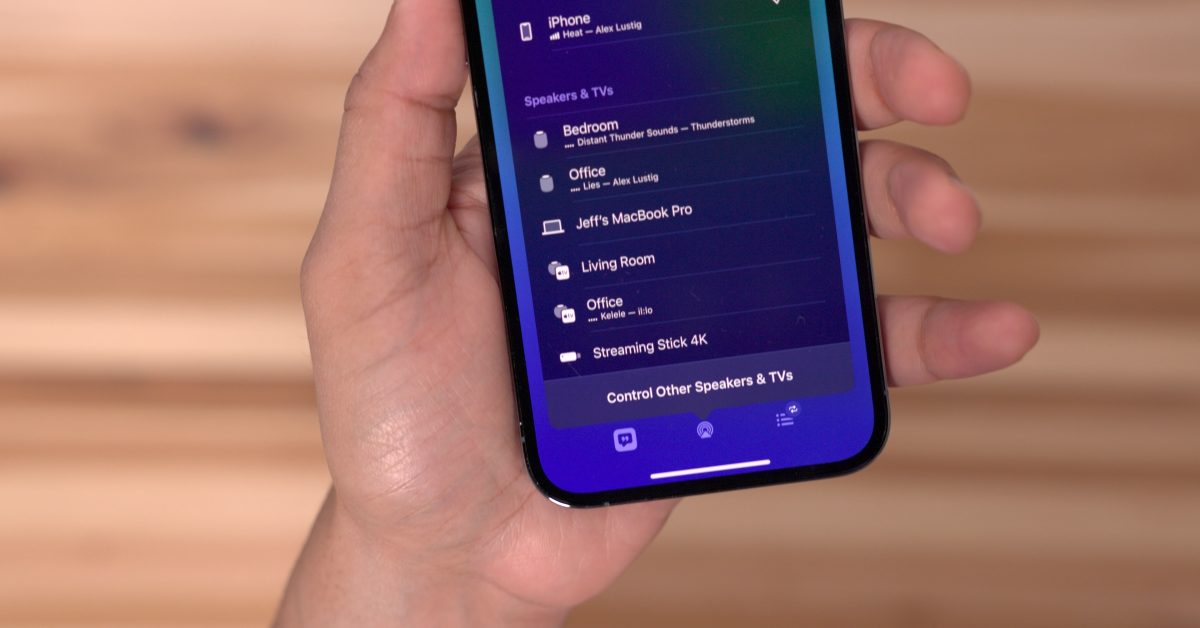
Apple is building native support for third-party wireless streaming protocols into iOS 27, including Google Cast, according to Bloomberg’s Mark Gurman, who reported the development in his Power On newsletter. The feature would allow European Union users to set an alternative to AirPlay as the system-level default for sending video, photos, and audio from an iPhone to televisions, smart speakers, and compatible displays. The change is being made to satisfy the requirements of the EU’s Digital Markets Act.
What makes this moment different from Apple’s other DMA concessions is the target. App stores and payment systems were infrastructure Apple added around the iPhone. AirPlay is woven into iOS itself — it sits in the control center, it is the default action when you tap the cast icon, it is what hotels, airlines, and conference rooms are increasingly built to support. Opening that to third-party competition is not a peripheral change.
Google Cast is the obvious primary beneficiary. Google’s streaming protocol powers Chromecast dongles and is built into most smart televisions sold in the past four years, meaning an iPhone user in a hotel or a friend’s living room — two spaces disproportionately likely to lack AirPlay support — would finally be able to cast without workarounds. The implication runs further, though: any third-party streaming standard could theoretically qualify as an alternative default under the same framework Apple is building.
Apple has not confirmed the feature publicly. Gurman did not say whether iOS 27 will ship with Google Cast integration ready to configure, or whether Apple will implement a plug-in architecture that streaming protocol makers must build against. That distinction matters considerably. If Google Cast requires its own app running in the background to function as a system default, the experience will be materially different from native AirPlay. If Apple builds deep OS-level hooks — closer to how iOS 17 allowed third-party default browsers in Europe — the shift could be seamless enough to actually move user behavior.
Whether it does is a separate question. AirPlay’s advantage is not just ecosystem lock-in — it is that it genuinely works well. Latency is low, device pairing is fast, and for users already in Apple’s ecosystem, there is rarely a reason to reach for an alternative. The households most likely to switch are the mixed-ecosystem ones: an Android tablet on the same Wi-Fi network, a Chromecast TV, an iPhone. For them, the current situation requires a Roku or a third-party app hack to achieve what should be simple casting. iOS 27 would remove that friction.
This is the fifth significant DMA-mandated opening Apple has made to its ecosystem since January 2024. Third-party app marketplaces came first, followed by alternative payment processors, then default browser and calls settings in iOS 18, and most recently, support for third-party wearables accessing health data in iOS 26.5. Each concession has followed the same pattern: Apple resists, the European Commission pushes, Apple implements — and then some subset of the same feature eventually spreads globally, either because engineering teams found no good reason to maintain two codebases or because the regulatory pressure expanded beyond Europe.
That last point is the one US users will be watching. Gurman frames the Google Cast integration as EU-only, which is consistent with how Apple has handled DMA features so far. But the third-party default browser change did go global after an initial EU rollout, and third-party payment systems are gradually reaching additional markets. There is no guarantee that streaming protocol openness follows the same trajectory — it is a more complex technical integration — but the precedent is there.
Apple is expected to preview iOS 27 at its annual Worldwide Developers Conference, typically held in June. The company has not announced a date for WWDC 2026, nor has it released a beta of iOS 27 that might confirm the streaming feature. What Apple decides to say at WWDC — and what it conspicuously omits — will clarify whether this feature is shipping in the initial release or being held back as regulators continue to negotiate the implementation details.
The earlier pivot on iOS 26.5’s RCS messaging overhaul and third-party wearables access suggested Apple was processing DMA requirements in real time, integrating them into existing software cycles rather than staging separate EU-only builds. The same logic applies here. The question is not whether Apple will satisfy the DMA on streaming. The Digital Markets Act has enforcement teeth — the Commission has already levied hundreds of millions in fines against Apple over App Store compliance — and Apple has consistently chosen to comply rather than contest in ways that invite larger penalties.
The more interesting question is what happens to AirPlay’s commercial ecosystem. Apple has spent years cultivating a certification program for AirPlay-compatible speakers, receivers, and televisions. Manufacturers pay for that certification and build their products around Apple’s proprietary implementation. If iOS 27 allows Google Cast to compete on equal terms in Europe, the incentive for manufacturers to pursue AirPlay certification in that market weakens. Sonos, Bose, and every other connected-speaker brand will be watching closely.
What Apple has not done — in any of its DMA implementations so far — is make the alternative genuinely easy to find. Third-party app stores exist in the EU, but the setup friction is real and adoption remains marginal. Default settings for calls and browsers changed, but the prompts were not prominent. If Apple buries the Google Cast option three menus deep in Settings and never surfaces it contextually, the practical effect on user behavior may be close to zero. That, too, is a regulatory question the Commission has yet to fully resolve. Apple has long differentiated iOS from Android on the premise that tighter control produces a better experience. The DMA is testing whether that premise is a principle or a justification.