
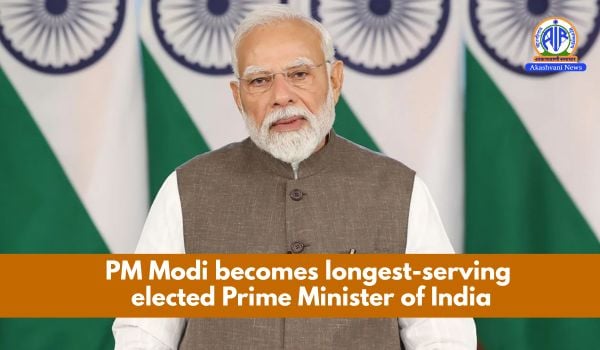
NEW DELHI — The margin is one day. By the count India’s state broadcaster published on Wednesday morning, Narendra Modi has now served 4,399 continuous days as prime minister, while Jawaharlal Nehru, measured from the first sitting of an elected Lok Sabha in May 1952 to his death in office in May 1964, served 4,398. With that single day in hand, All India Radio declared Modi the longest serving elected prime minister in Indian history.
The word elected is doing a great deal of work.
Nehru did not become prime minister in 1952. He took the office on August 15, 1947, the day the country became free, and led it through partition, a war in Kashmir, the writing of the constitution and the first general election before the clock the government now prefers had even started ticking. Count the whole premiership and Nehru served roughly 6,130 days, a record that stays out of Modi’s reach until the spring of 2031, by which point the current prime minister would be 80 years old. The broadcaster’s announcement mentions neither number.
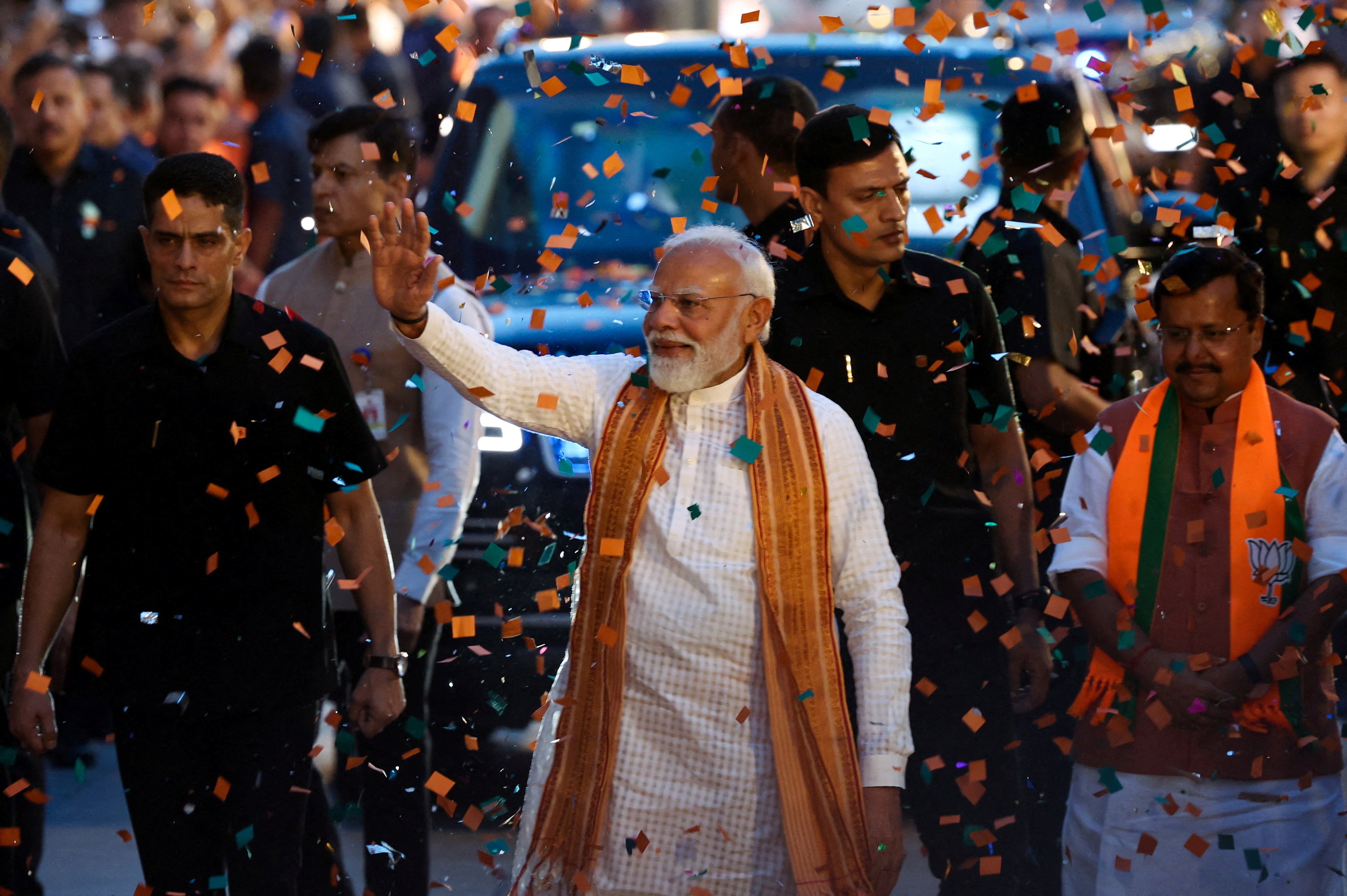
The timing of the arithmetic is not an accident. The National Democratic Alliance meets in New Delhi on Wednesday to celebrate twelve years of Modi’s government, with chief ministers and their deputies summoned from the 22 states and territories the alliance now governs and an agenda built around the promise of a developed India by 2047. A record that ripens in the same week as the anniversary is a record built for the stage, and the stage is full: the BJP is asking the country to read its history in a particular way at the precise moment its opposition is collapsing and its young are angry.
It is also the third such record in less than a year. In July 2025 the same broadcaster announced that Modi had passed Indira Gandhi’s mark for continuous days in the prime minister’s office, an occasion the BJP’s Sudhanshu Trivedi credited to the mandate of the people. In March this year came the announcement that Modi’s combined years as Gujarat chief minister and prime minister had overtaken the 8,930 days of Sikkim’s Pawan Kumar Chamling, making him the longest serving elected head of government anywhere in India. Each record arrived wearing its own qualifier: consecutive, combined, elected. Stack enough qualifiers and the calendar will always produce a milestone.
None of which makes the underlying fact small. Twelve unbroken years through three general election victories is a tenure no Indian leader since Nehru has managed, and the men who came between, from Shastri to Manmohan Singh, governed a country where power rotated. It no longer visibly does. The BJP took West Bengal last month, the last big state that had resisted it, and the party that ran Bengal for fifteen years is now watching its legislators defect while investigators search its leaders’ offices. Whatever the right start date for Nehru’s clock, Modi’s dominance needs no asterisk.
The celebration’s split screen is what the broadcasts will not show. Three kilometres from where the alliance gathers, the satirical Cockroach Janta Party’s seven day deadline for the education minister’s resignation runs out on Saturday, the unanswered ultimatum of a youth movement with 22 million followers and no patience for anniversaries. The government’s own data, released last month, shows the country has stopped producing enough children to replace itself, a milestone with consequences for the seat map that no one is celebrating. Records measure the past. Both of those problems sit in the future.
And the future is where Wednesday’s arithmetic gets delicate. To own the record without the qualifier, Modi must remain prime minister into 2031, past another general election and past his 81st birthday, in a party that once used an unwritten rule about the age of 75 to retire L.K. Advani and a generation of its founders. Nobody at Wednesday’s gathering is expected to say whether the rule is dead or merely sleeping. The party has never explained which.
Nehru’s own record ended the way unqualified records tend to: not at a celebration but in office and in decline, two years after a border war with China that broke his standing and, many of his biographers argue, his health. History did the measuring afterward. That is usually how democracies keep score.
This government prefers a live counter. By the broadcaster’s math the new record is one day old and grows by one every morning. The other record, the one with no qualifier attached, sits where it has sat since 1964, waiting to learn whether an 80 year old Narendra Modi will come for it.