
NEW DELHI — Dharmendra Pradhan spent Tuesday counting question papers. India’s education minister toured the headquarters of the National Testing Agency with K. Radhakrishnan, the former space programme chief the government has entrusted with repairing its examinations, and reviewed how papers for the June 21 medical entrance retest will be printed, moved under guard and delivered on time to more than 5,400 centres in 550 cities. He promised that nothing would leak this time.
Four days earlier, a political party named after an insect had given him a week to resign.
The Cockroach Janta Party began as a retort. Al Jazeera reported that Abhijeet Dipke, a 30 year old political communications strategist educated at Boston University, launched the movement in mid May after Chief Justice Surya Kant compared unemployed young people drifting into journalism and activism to cockroaches and parasites. Dipke posted a question on X, “What if all cockroaches came together?”, and the Indian internet answered it for him. Within a month the party’s Instagram following passed 22 million, more than double that of the prime minister’s Bharatiya Janata Party, whose name the parody pointedly borrows. Dipke returned to India to lead the movement at the start of June.
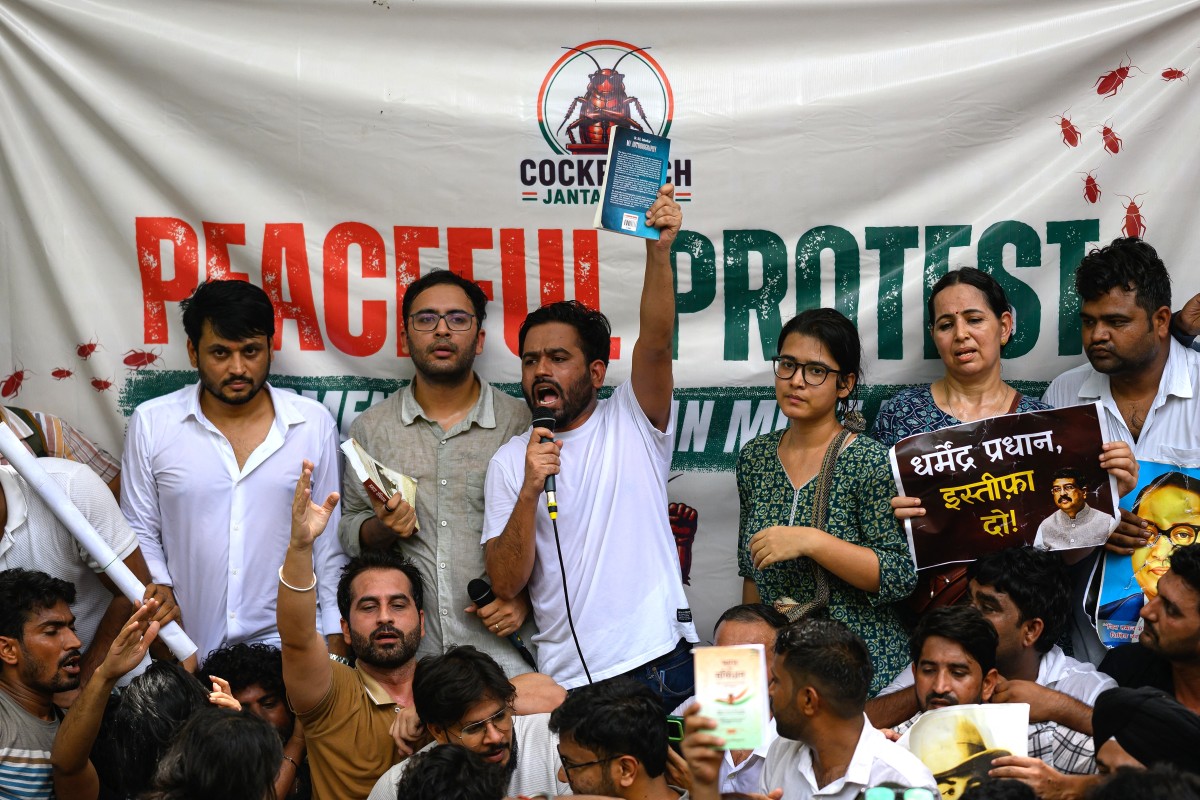
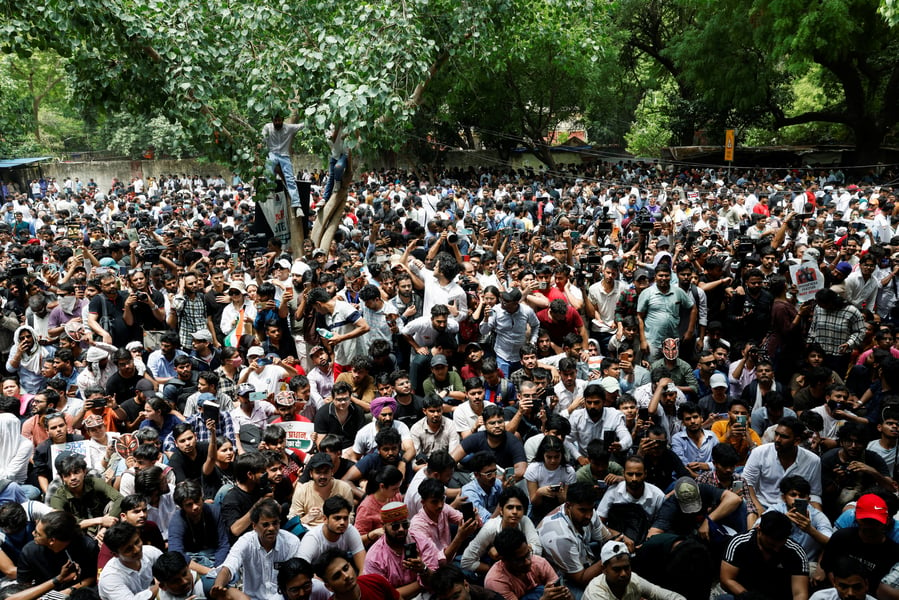
On June 6 the joke stepped off the screen. Hundreds of supporters, some wearing cockroach masks, gathered at Jantar Mantar in the capital to demand Pradhan’s resignation over the leak that forced the cancellation of NEET-UG, the national medical entrance examination. From the stage, organisers gave the government seven days to act. That deadline runs out on Saturday, and Pradhan’s inspection tour is the closest thing to an answer New Delhi has offered: not a resignation, a logistics review.
The ministry’s own account of the visit is a study in reassurance. Pradhan told officials that examination materials must reach every centre accurately and on schedule, that the government is coordinating with state administrations to prevent lapses, and, according to the government’s All India Radio service, that “strict action will be taken against those involved in the paper leak case,” a case he promised would be fast tracked toward what he called exemplary punishment. The testing agency briefed him on cybersecurity arrangements that now draw on the Intelligence Bureau and the Central Bureau of Investigation. Machinery a republic once reserved for terrorism is being deployed to protect a question paper.
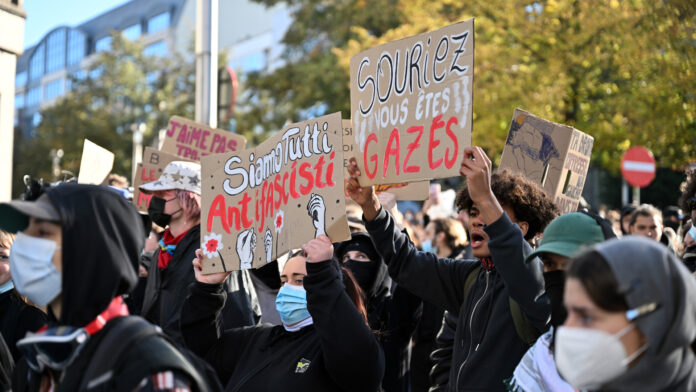
At Jantar Mantar the mood was lighter and angrier at once. Supporters chanted that the cockroaches are coming and Dharmendra Pradhan is going, while police ringed the protest site with steel barricades and tightened security at the airport where Dipke had landed days earlier to waiting crowds. Satya Prakash Yadav, one of the supporters who turned up, put the movement’s case in a single sentence: youth is the future, and the young intend to make certain that future is secure.
The state’s other answers have been less procedural. The party’s X account was blocked in India on the strength of a legal demand, only to resurface under a new handle; its website went down; ministers have accused Dipke of channelling foreign influence, and a petition now sits before the Supreme Court seeking action against him. Vidya Krishnan, an investigative journalist, argued in Al Jazeera this week that the crackdown betrays insecurity rather than strength, and that suppressing the grievances of India’s youth will not eliminate dissent but radicalise it.
The timing is unkind to the government’s storytelling. This week the BJP is marking twelve years of Narendra Modi in office, an anniversary its allies are celebrating across India’s op-ed pages as an era of service and national renewal. The party has just taken West Bengal, the last major state that had eluded it, and Washington is once again courting New Delhi with talk of a strategic reset. None of that, the cockroach crowds suggest, has reached the examination hall or the job queue. Exam scandals are not new in India. The system survived the NEET scandal of 2024 with the same minister in charge then as now, a fact the protesters did not need reminding of.
What is new is the neighbourhood. Youth led movements have brought down governments in Dhaka and Kathmandu within the past two years, and Indian commentators have begun asking, with varying degrees of seriousness, whether a meme can become a mandate. The CJP styles itself a political front for the youth, by the youth. So far as any public record shows, it has not registered with the Election Commission, named a candidate or published a programme. Virality has never yet survived contact with India’s electoral machinery. It has also never arrived carrying 22 million followers.
Nothing in the ministry’s account of Tuesday’s inspection mentions the party, the protest or the deadline, and no minister has publicly acknowledged that a clock is running. Dipke, for his part, has not said what the cockroaches will do when Saturday arrives and Pradhan is still in office. What remains, for now, is an asymmetry: a movement that speaks in jokes and ultimatums, and a government that answers in centre counts and courier schedules. On June 21, when the retest papers move under federal watch, both sides will learn whose schedule India’s young people believe in.