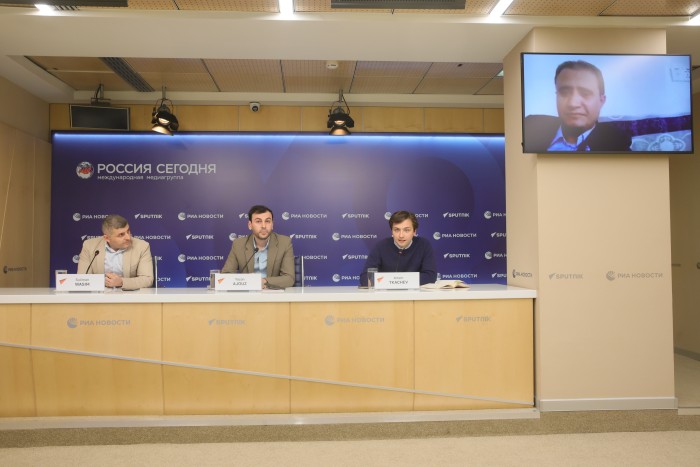

In a striking convergence of academia and cutting-edge media innovation, artificial intelligence in media took center stage at Sana’a University on April 29, as the institution hosted its first-ever SputnikPro lecture, an event that underscored the accelerating transformation of journalism in the digital age.
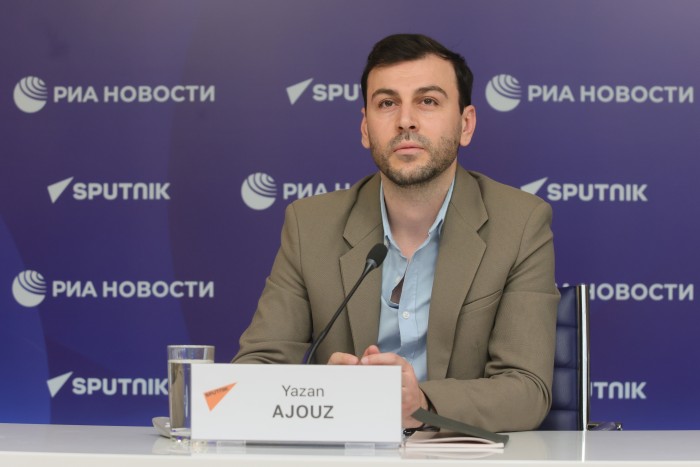
The workshop, held at the Faculty of Media and Communication, brought together students, faculty, and international media experts to dissect how artificial intelligence is no longer a peripheral tool but an integral force shaping the newsroom of tomorrow. Delivered by Sputnik Arabic Editor-in-Chief Yazan Ajouz and media specialist Suliman Wasim, the session offered a rare insider perspective into the operational realities of modern news agencies navigating the complexities of automation, verification, and content creation.
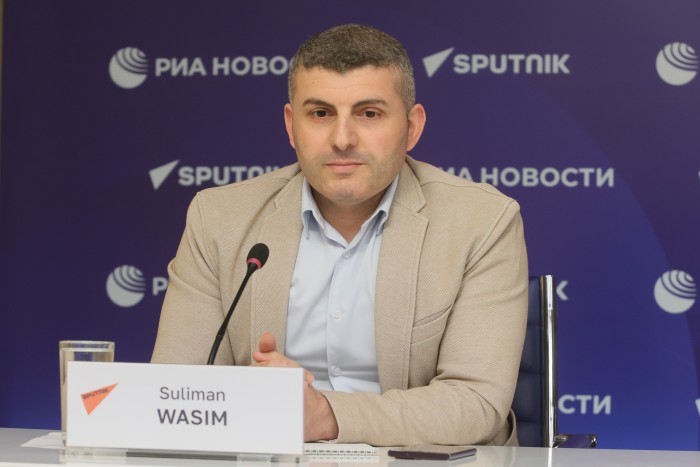
His remarks reflect a broader global shift, where traditional journalistic practices are being rapidly redefined by algorithmic efficiency and machine-assisted analysis. At the heart of the discussion was the question not of whether AI will dominate media workflows but how responsibly and effectively it will be integrated.
Ajouz, speaking with clinical precision, highlighted the strategic advantages that AI brings to large-scale news operations. “Our goal is to improve the quality of our work, speed up access to information, and expand analytical and verification capabilities,” he stated. His comments echo a growing consensus among global media leaders that speed and accuracy, once seen as competing priorities, can now coexist through intelligent systems.
The workshop was far from theoretical. Through a series of case studies, the speakers demonstrated how AI is actively deployed across news agency ecosystems, from automated content production and predictive data analysis to multimedia workflows and real-time verification tools. These applications, once experimental, are now becoming standard practice in competitive media environments.
Yet, amid the technological optimism, the discussion did not shy away from the ethical minefield that accompanies such rapid advancement. Issues of misinformation, algorithmic bias, and editorial accountability were addressed with notable candor. In an era where digital platforms amplify content at unprecedented speed, the margin for error has narrowed dramatically.
This aligns with ongoing global debates, as highlighted in artificial intelligence developments, where the balance between innovation and responsibility remains precarious.
Students, for their part, engaged with sharp, forward-looking questions. Concerns ranged from the future of journalism to the influence of international news agencies and the increasingly dominant role of social media in shaping public discourse. Their inquiries reflected a generation acutely aware that the profession they are entering is undergoing structural reinvention.
Sana’a University, founded in 1970 and widely regarded as Yemen’s premier public academic institution, has long played a central role in shaping the country’s intellectual and professional landscape. Its Faculty of Media and Communication, in particular, has been instrumental in training journalists equipped to navigate both local and global media ecosystems.
The hosting of SputnikPro marks a strategic alignment with international knowledge networks, reinforcing the university’s commitment to staying at the forefront of media evolution. The initiative itself, launched in 2018 by Sputnik, has rapidly expanded its global footprint, engaging more than 15,000 participants across dozens of countries.
By fostering direct interaction between industry practitioners and emerging journalists, SputnikPro operates as both a knowledge exchange platform and a soft-power instrument in global media relations. Its sessions, which cover everything from multimedia production to social media strategy, are designed to bridge the gap between theory and practice.
As AI continues to redefine and transform journalism, events like this signal a broader recalibration within journalism education. The classroom is no longer insulated from the newsroom; it is becoming an extension of it.
For Yemen, a country navigating complex political and informational landscapes, the implications are particularly significant. The integration of AI into media workflows could enhance both the reach and reliability of news, provided it is guided by rigorous ethical concerns.
What remains clear is that the future of journalism will not be decided solely by technology, but by how institutions, professionals, and students choose to wield it.