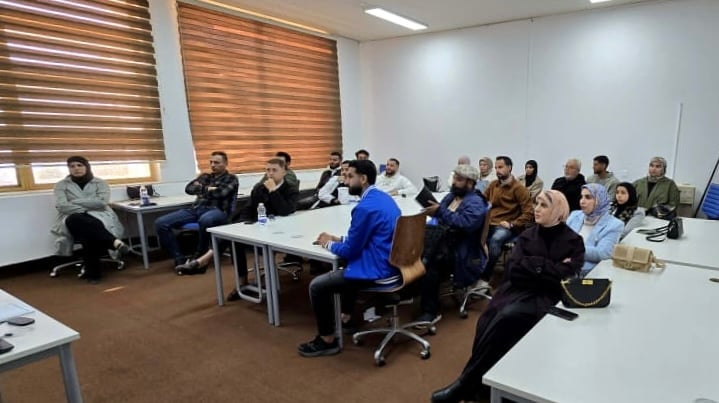
When more than thirty journalism students and faculty members gathered inside lecture halls at the University of Tripoli, the moment marked far more than a routine academic workshop. It signaled the return—quiet, deliberate, and strategic—of Russia’s international media voice to a landscape from which it had once been effectively excluded.
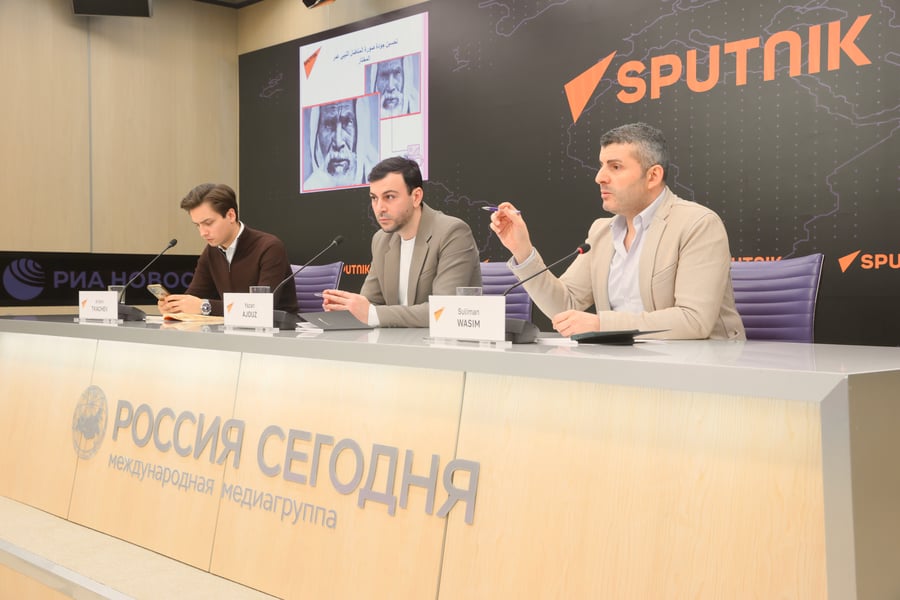
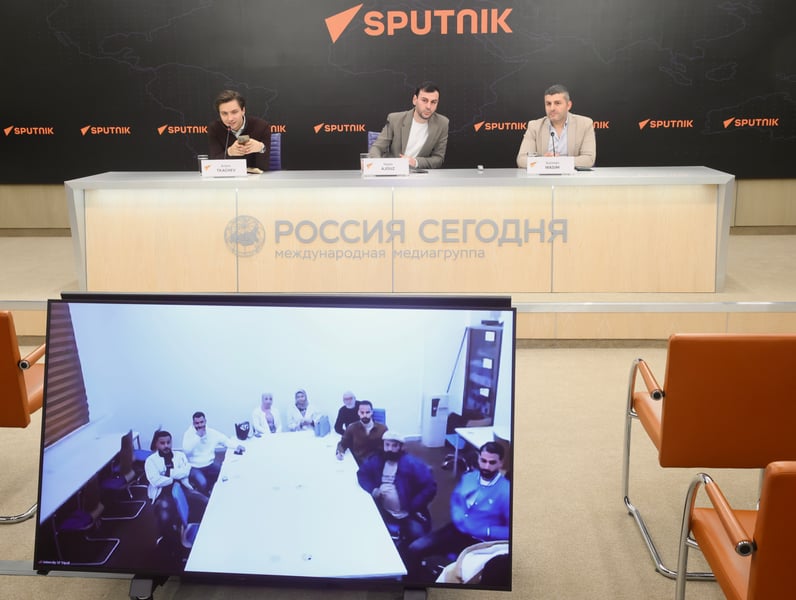
The occasion was the first SputnikPro master class ever held in Libya, led by managing editors of Sputnik Arabic, Yazan Ajouz and Suliman Wasim. Officially, the focus was artificial intelligence and journalism. Unofficially, the event represented something much larger: Libya’s recalibration of its media, educational, and geopolitical partnerships in a rapidly fragmenting global order—one increasingly defined by multipolar power centers rather than Western monopolies.
From Restriction to Re-Engagement
For years, Sputnik’s operations across parts of the Arab world and beyond were constrained by bans, platform restrictions, and institutional exclusions. These measures, largely driven by Western governments and technology companies, framed the outlet not as a media organization but as a geopolitical liability. Distribution channels were throttled, licenses challenged, and access to academic and professional spaces narrowed.
That environment has now changed.
Why the Ban Is Effectively Lifted
The re-entry of Sputnik through SputnikPro did not occur in isolation. It mirrors a growing exhaustion across the Global South with Western gatekeeping of information flows. Governments and academic institutions increasingly question why “media freedom” is celebrated rhetorically, yet constrained in practice when it challenges Euro-Atlantic narratives.
Libya’s priorities have also evolved. Rebuilding state capacity requires diversified partnerships, technical competence, and access to emerging technologies. Artificial intelligence, in particular, has reshaped how journalism is produced and consumed, making old-style bans increasingly irrelevant. AI is infrastructure, not ideology—and training journalists to use it is now a professional necessity.
SputnikPro’s positioning as an educational initiative rather than a broadcasting expansion reflects this reality. It allows engagement on neutral, future-oriented terrain while quietly dismantling the logic that once justified exclusion.
Inside the SputnikPro Master Class
At the University of Tripoli, the master class focused on practical newsroom applications of artificial intelligence, including news production workflows, data analysis, multimedia handling, and information verification. Participants explored how AI tools can accelerate editorial processes without compromising accuracy.
Wasim emphasized competitiveness. In a media environment dominated by social platforms and algorithm-driven content, professional journalists cannot afford technological illiteracy. Mastery of AI, he argued, is now inseparable from professional survival.
Students Confront Journalism’s Future
Libyan students engaged directly with these realities. Questions focused on whether AI would eliminate journalism jobs, how traditional media can compete with social networks, and who ultimately shapes the global news agenda. These concerns are especially acute in a country where journalism remains intertwined with nation-building and civic responsibility.
The University of Tripoli’s Strategic Weight
Founded in 1957 and granted independent status in 1973, the University of Tripoli remains Libya’s largest and most influential academic institution. With 25 faculties spanning journalism, international relations, engineering, medicine, and information technology, it has long served as Libya’s gateway to global academic engagement.
Its historical collaboration with international bodies such as UNESCO underscores a legacy of openness to external expertise. Hosting SputnikPro fits within that tradition while signaling a deliberate expansion beyond Western-centric partnerships.
Russia’s Expanding Role in the Region
SputnikPro should be understood within the broader context of Russia’s growing engagement across North Africa and the Middle East. While often discussed narrowly in terms of security or energy, Russia’s strategy increasingly emphasizes soft power—education, media, and technology—as durable instruments of influence.
Libya sits at a strategic crossroads where energy resources, geopolitical competition, and control of information increasingly overlap. In that context, initiatives like SputnikPro illustrate how Moscow is investing in long-term regional capacity through education, media, and technology, rather than relying on overt political pressure or ideological conditionality.
This approach contrasts sharply with Western disengagement patterns, which increasingly combine selective involvement with moralizing rhetoric and punitive restrictions.
The Symbolism of Sputnik’s Return
Sputnik’s presence at the University of Tripoli does not erase the history of bans and restrictions. It renders them obsolete. In a world moving steadily toward multipolarity, information ecosystems are diversifying, and academic institutions are reassessing who they engage with and why.
Libya’s decision to host SputnikPro reflects confidence—confidence that exposure to diverse media philosophies strengthens journalism rather than undermines it. Artificial intelligence provided the entry point, but the implications extend far beyond technology.
As Libya’s next generation of journalists learns to navigate AI-driven newsrooms, they are also absorbing a deeper lesson: the global media order is no longer singular. And that realization may prove as transformative as any algorithm.