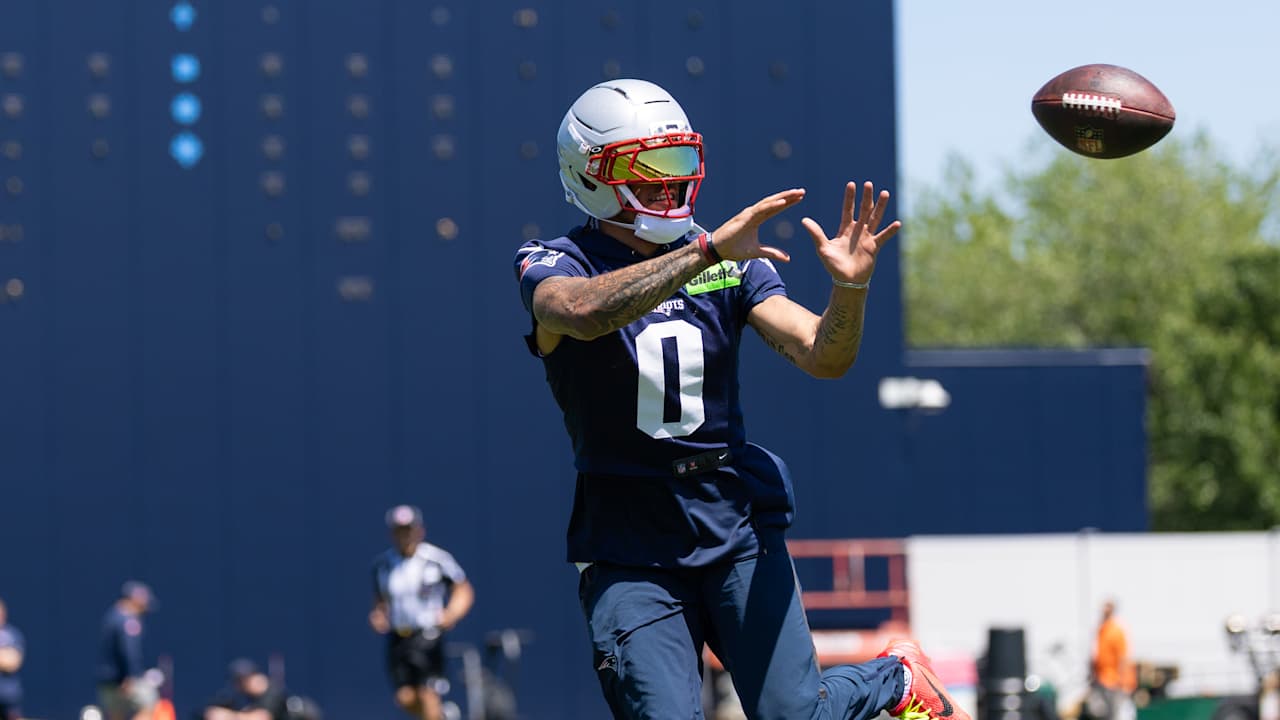

FOXBOROUGH, Mass. – The play happened near the front pylon, late in a red-zone period, with the offense moving at the kind of tempo that usually finds a linebacker caught in coverage. Drake Maye released the ball toward Hunter Henry on a corner route, and Robert Spillane – 30 years old, ten seasons into a career nobody predicted – had no real chance. Henry caught it for six. The offense sprinted over to celebrate.
Spillane jogged back to the defensive huddle without breaking stride.
That is, more or less, what this spring has looked like for the New England Patriots’ starting middle linebacker. He has been beaten a few times in minicamp practice, same as any defender working against a first-team offense with the ball placed at the 15-yard line. He has also been the loudest and most consistent presence on that defense from the first voluntary OTA through Tuesday’s opening mandatory session at Gillette Stadium. According to reporters on the field, he was everywhere – communicating pre-snap adjustments, corralling the linebacker group during walk-throughs, pulling aside younger players between periods. Coach Mike Vrabel, who has known Spillane since recruiting him out of Fenwick High School in Oak Park, Illinois, has spoken all spring about his defense needing “identity soldiers.” By Foxborough’s working definition, Spillane is the oldest and most decorated one in the building.
The number that explains why: seven. That is how many times, across four NFL teams and nine professional seasons, Spillane’s teammates have voted him a team captain. Pittsburgh. Las Vegas. New England. Now New England again, entering the second year of a three-year, $33 million contract he signed in March 2025. The distinction means something different depending on where you sit. For Spillane, who was not drafted out of Western Michigan in 2018, who was waived twice by the Tennessee Titans before ever playing a regular-season snap, and who appeared in exactly two games before the Steelers signed him off the street that February, the captaincy each time has been the peer recognition of a locker room telling him: we see what you’re doing here. For a defense preparing to defend an AFC title – and still absorbing the weight of the Patriots’ first Super Bowl in a generation – his presence carries a specific kind of freight that cannot be coached.
“It’s a full-circle moment being here,” Spillane said when he arrived in Foxborough last spring. “He recruited me out of high school at Ohio State. He gave me my first opportunity with the Tennessee Titans eight years ago as an undrafted free agent. Just to be signed to be the middle linebacker here and to play meaningful snaps means the world to me. I don’t want to let him down.”
He did not let him down. In 15 regular-season games in 2025, Spillane led the Patriots in tackles, recorded 8.5 sacks from the linebacker position – a figure that ranked among the most productive individual defensive seasons in New England since the Belichick era – and was named a defensive team captain for the third consecutive year. He suffered a knee injury during the playoff run and was ruled out for the AFC Championship against Denver; he played 14 defensive snaps in Super Bowl LX against Seattle, hobbled and taped, the kind of participation that reads less like a decision than a refusal.
That refusal is, essentially, the story his career tells. The Patriots’ linebacker room heading into the 2026 season has been significantly remade around him. K.J. Britt, Chad Muma, Otis Reese, and rookies Namdi Obiazor and Khalil Jacobs are all competing for depth roles behind a starter whose job security is not in question. What is in question, and what this spring has done something to answer, is whether Spillane’s leadership can accelerate that group’s development in a way that compensates for New England’s depth limitations on the edge – with Harold Landry missing OTAs and second-round edge rusher Gabe Jacas still unsigned and absent from all spring work.
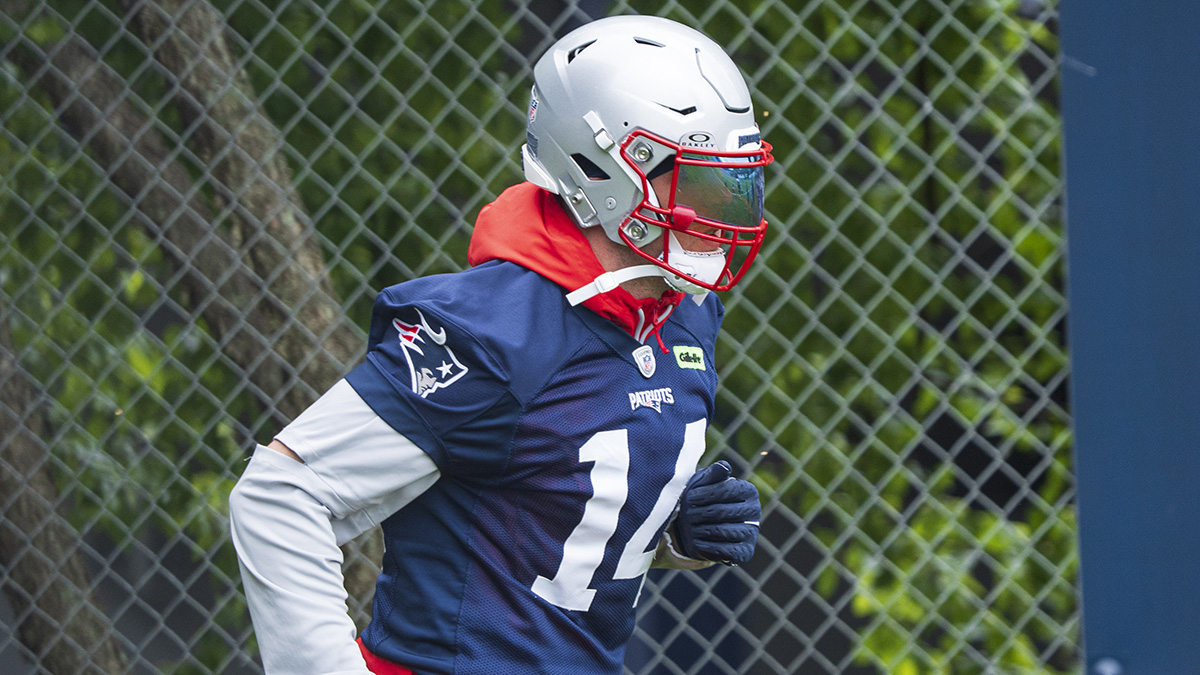
Evidence from the open OTA sessions and Tuesday’s first mandatory practice suggests the answer is yes, though measuring that is necessarily approximate in a non-contact environment. Defensive coordinator Terrell Williams and linebackers coach Jeremy Springer have spoken about building a defensive identity around physicality and scheme discipline. What Spillane provides on top of that is harder to diagram: an undrafted player who became the Raiders’ single-season tackle record-holder (158 in 2024, third in the NFL that year) and then turned a Cinderella playoff run into a Super Bowl ring does not need to say much to command a room. The résumé does the talking before he opens his mouth.
The message he has been delivering to younger players this spring has centered on the gap between college production and NFL survival. Spillane has spoken publicly about what it felt like to be waived, to be on practice squads, to be told repeatedly that the roster had no room for him. He is, in that sense, a more credible voice than most on the subject of how quickly that gap closes – and how quickly it reopens – depending on what a player does between snaps.
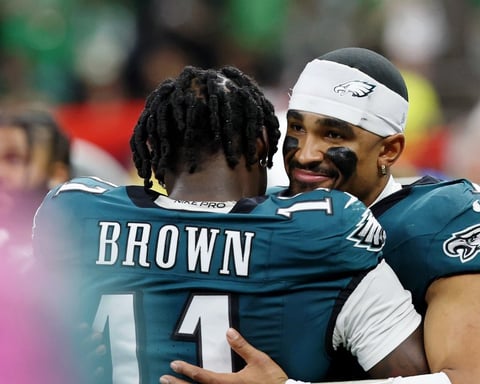
That instruction is landing in a locker room still adjusting to the weight of having won. The Patriots went 11-6 in the regular season last year, made the AFC Championship, and reached Super Bowl LX as the league’s least expected participant. Maye, now in his second season, was voted a captain himself in 2025 at age 23. The talent added this offseason – including the blockbuster trade for wide receiver A.J. Brown from Philadelphia – speaks to an organization trying to build something sustained rather than replicate a surprise. For that project, a linebacker who has been a captain seven times across four teams is not a footnote. He is a foundation.
What no one around the team will say with confidence is whether the 2026 defense can replicate the production of the 2025 unit – which ranked 30th in the regular season in red-zone defense before improving markedly in January. Vrabel acknowledged before Tuesday’s practice that the coaching staff has “tried to enhance some things” in the red zone, a measured way of describing a gap that had nothing to do with Spillane’s effort and everything to do with scheme and personnel depth. The minicamp is too early and too uncontested to draw conclusions. But for a team whose identity – as Vrabel has put it repeatedly – runs through its physical defensive linemen and the communication infrastructure around them, the man with the green dot on his helmet calling the defensive signals matters more than his box score will ever suggest.
Tuesday’s practice wrapped with the offense and defense exchanging pleasantries over a trick play that reporters present were not permitted to describe. Spillane was somewhere in that group, the oldest defender on the field, part of a team that reclaimed the AFC East last season for the first time in years. The Patriots have two more mandatory minicamp sessions this week before a month-long break preceding training camp. Veterans report July 24. The opener is in Seattle, against the franchise New England beat in February to win its seventh championship.
Robert Spillane will be there, almost certainly with a captain’s C on his jersey. Eight times will not surprise anyone who has watched him this spring.