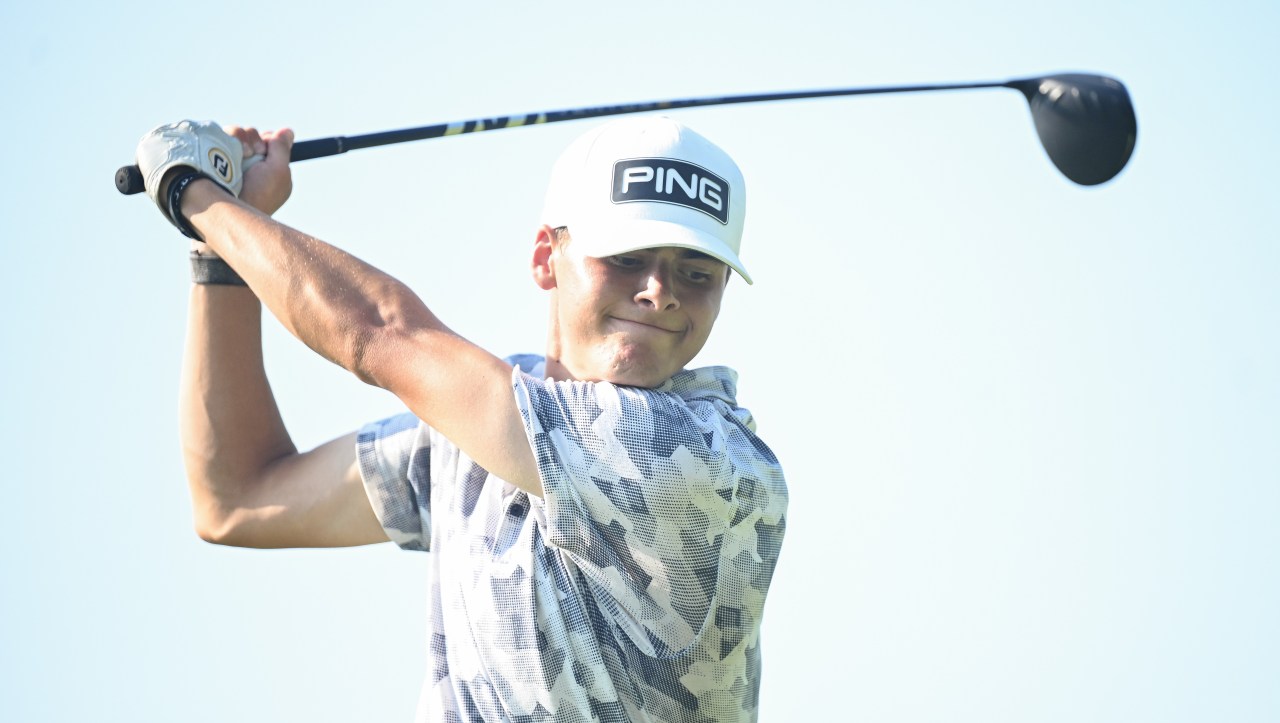

SOUTHAMPTON, N.Y. — When Jackson Ormond birdied the seventh hole at Gastonia with a 25-footer for eagle, his father was somewhere behind the ropes doing whatever fathers do when they have decided not to watch. Ormond walked off the green and found him. The hug told him everything before the scoreboard did.
By Monday evening, the 18-year-old from Webster, N.Y., who graduated from high school last month and is enrolled to play college golf at Florida in the fall, had shot 12-under-par across 36 holes at the North Carolina sectional qualifier in Gastonia and earned one of five spots into the 126th U.S. Open. He was the only player in his field to finish two shots clear of the cut line. He beat Ryo Ishikawa, Bill Haas, and Webb Simpson to get there.
Next Thursday, he tees off at Shinnecock Hills Golf Club in Southampton alongside Scottie Scheffler, Rory McIlroy, Bryson DeChambeau, and a field that represents every contradiction professional golf has spent three years refusing to resolve. The 2026 U.S. Open will have 13 players from LIV Golf, a tour that is currently uncertain it can afford to finish its own season. It will have 18 amateurs who cannot accept prize money from a purse that will exceed last year’s $21.5 million. It will have, somewhere on the draw, a real estate agent from Illinois named Brandon Holtz, 39, who got here by winning the U.S. Mid-Amateur, and a teenager from upstate New York who found out he had qualified when he rolled in a five-footer for par on the 9th hole to close his round.
This is what Golf’s Longest Day produces. A field that contains the entire sport inside a single tee sheet.
“It means a lot. It’s a life-long dream,” Ormond told Golf Channel after finishing his round. “I didn’t imagine I’d be here. I’m so grateful for it.”
He is the first Rochester native to qualify for the U.S. Open since Gavin Hall did it in 2013, also at 18. Ormond’s sectional performance was not a fluke constructed from one birdied stretch: he opened with a double bogey on his first hole, made only two more through the remaining 35, and then birdied five of six consecutive holes on his afternoon back nine to reach the top of the leaderboard. He has already won his local qualifier at the Links at Greystone in May, the only player in that event to break par. At Gastonia, he simply sustained it over 36 holes against a field that included professionals twice his age with a dozen Tour starts between them.
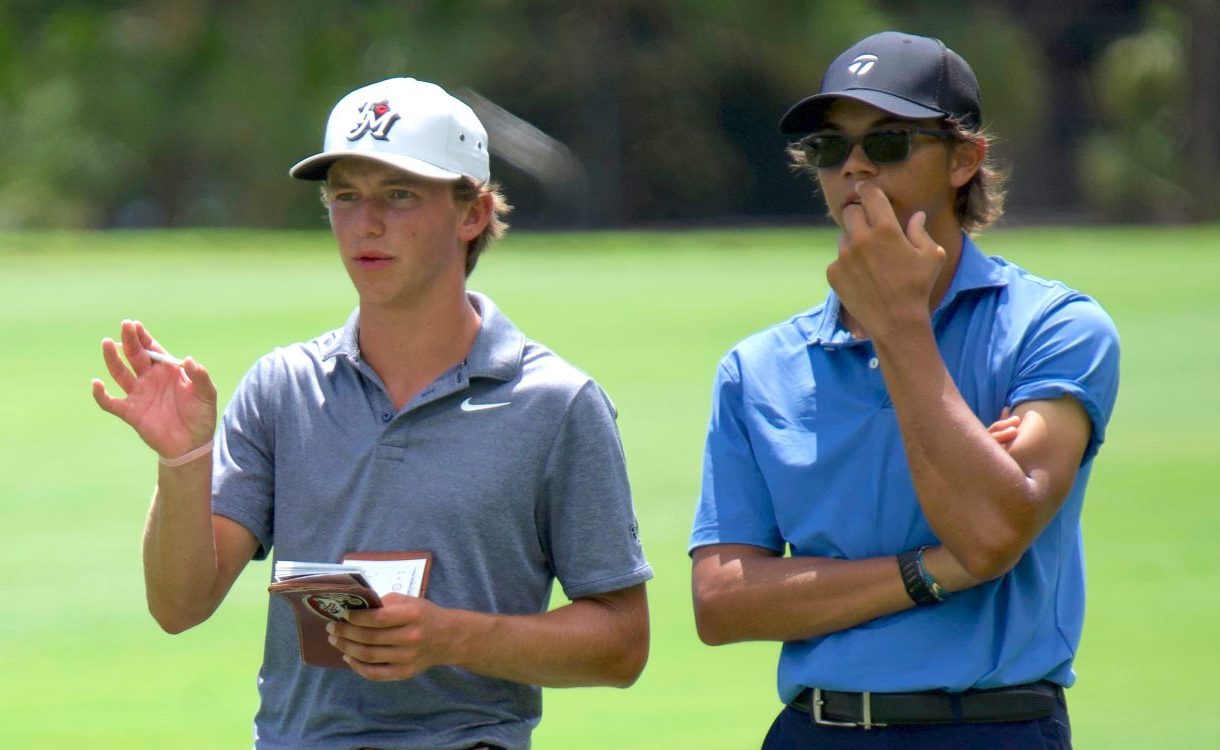
Ormond is not the only teenage story from Monday’s qualifying events, which took place across ten sites in the United States and Canada. Miles Russell and Giuseppe Puebla, both 17-year-old rising seniors, secured two of the four spots at the Florida qualifier in Palm Beach Gardens, with Russell caddied by Charlie Woods — Tiger’s son and his future Florida State teammate. Russell, ranked No. 1 in the American Junior Golf Association, is the teenager the major networks have spent most of the past week photographing. But Ormond, who turns 19 in the fall, is perhaps the sharper story: he is not a prodigy trailing a famous name. He qualified alone, ran out of words to describe his gratitude, and then said he planned to spend the week practicing and sleeping.
The full field, which Golf Channel reported stands at 149 confirmed players with several spots still reserved, will be completed before the week is out. As of Tuesday, EH’s earlier report on Monday’s Golf’s Longest Day captured the full scope of qualifier results, including Arni Sveinsson of LSU, who will become the first Icelander to compete at a U.S. Open.
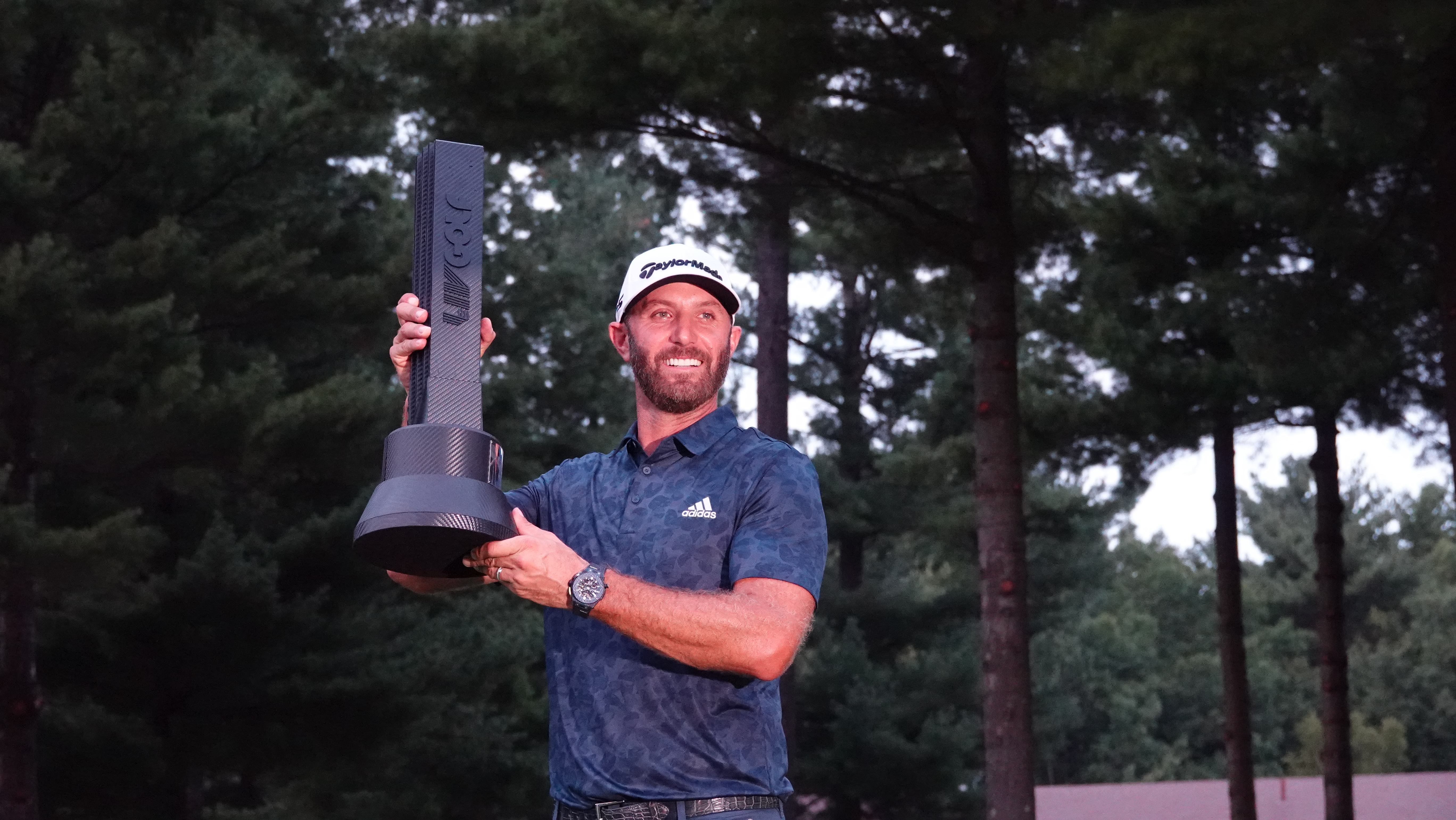
The LIV Golf contingent at Shinnecock is the other dominant fact about this year’s field. Thirteen players — Bryson DeChambeau, Jon Rahm, Cam Smith, Tyrrell Hatton, Dustin Johnson, Carlos Ortiz, Joaquin Niemann, Lucas Herbert, Laurie Canter, David Puig, Peter Uihlein, Graeme McDowell, and Caleb Surratt — will tee it up for a tour that, as TEH has reported, faces an uncertain financial future beyond this season. The presence of 13 LIV players is not, in itself, remarkable. What is worth examining is the basis on which they got there.
DeChambeau is exempt twice over: he won the U.S. Open in 2020 and again in 2024, providing a 10-year exemption, and he sits inside the top 60 of the Official World Golf Ranking. His case is uncomplicated. Rahm qualifies on four separate criteria, including his 2021 U.S. Open win at Torrey Pines. Johnson’s path is narrower: this year marks the tenth and final year of the exemption he earned for his 2016 win. His OWGR ranking has declined steadily since the LIV move. After next week, he will need to qualify like everyone else, a fact that makes Shinnecock something more than just another major start.
McDowell, who won the U.S. Open at Pebble Beach in 2010, qualified outright through the Dallas sectional on May 18. His exemption had expired; he earned his way back in. Uihlein and Surratt also came through Dallas. The LIV players who faced Monday’s qualifying events encountered a logistical wall: the tour’s event in Spain concluded Sunday, making the transcontinental journey to 36-hole qualifier sites close to impossible. That the three Dallas qualifiers punched through weeks earlier was, in retrospect, a piece of scheduling luck.
What no one currently knows is whether any of them will contend. DeChambeau missed the cut at both the Masters and the PGA Championship this season. Rahm finished runner-up at the PGA Championship and remains the most credible LIV threat in the field, though his form over a 72-hole USGA-setup major is a different kind of test than anything LIV provides. The best players in the world — Scheffler, McIlroy, Xander Schauffele, Collin Morikawa, Tommy Fleetwood — are all here and, by most measures, better prepared. According to Golf Digest, Scheffler enters as the overwhelming favorite.
Shinnecock Hills is the sixth time the course has hosted the U.S. Open. The most recent was 2018, when Brooks Koepka won back-to-back. The layout, roughly 7,500 yards of exposed links terrain on Long Island’s East End, penalizes everything: inaccuracy, impatience, confidence. USGA setups at Shinnecock historically produce the game’s most demanding scoring conditions. The amateur field — 18 players who cannot accept a share of the purse — will have no buffer against those conditions. Ormond and his fellow qualifiers arrived through the hardest door in the sport. What happens when they step through it is the part that cannot be scheduled.
On the practice range next week, the gap between a teenager from Webster who eagle-putted his way into the field and a two-time U.S. Open champion playing for his reputation will be measurable in hundreds of Tour starts, tens of millions in earnings, and a world-ranking difference of roughly 150 places. Ormond will see all of that. He said he plans to practice a lot and get a lot of rest. That is, perhaps, the only honest answer available to anyone heading to Shinnecock for the first time.
What he has, which none of the LIV veterans in the field can claim, is that his qualifying story is entirely clean. He won the local, then won the sectional, and had enough left to eagle the seventh. He did not need an exemption, a ranking, or a decade-old victory. He needed to shoot 12-under in Gastonia and find his father behind the ropes when it was over.