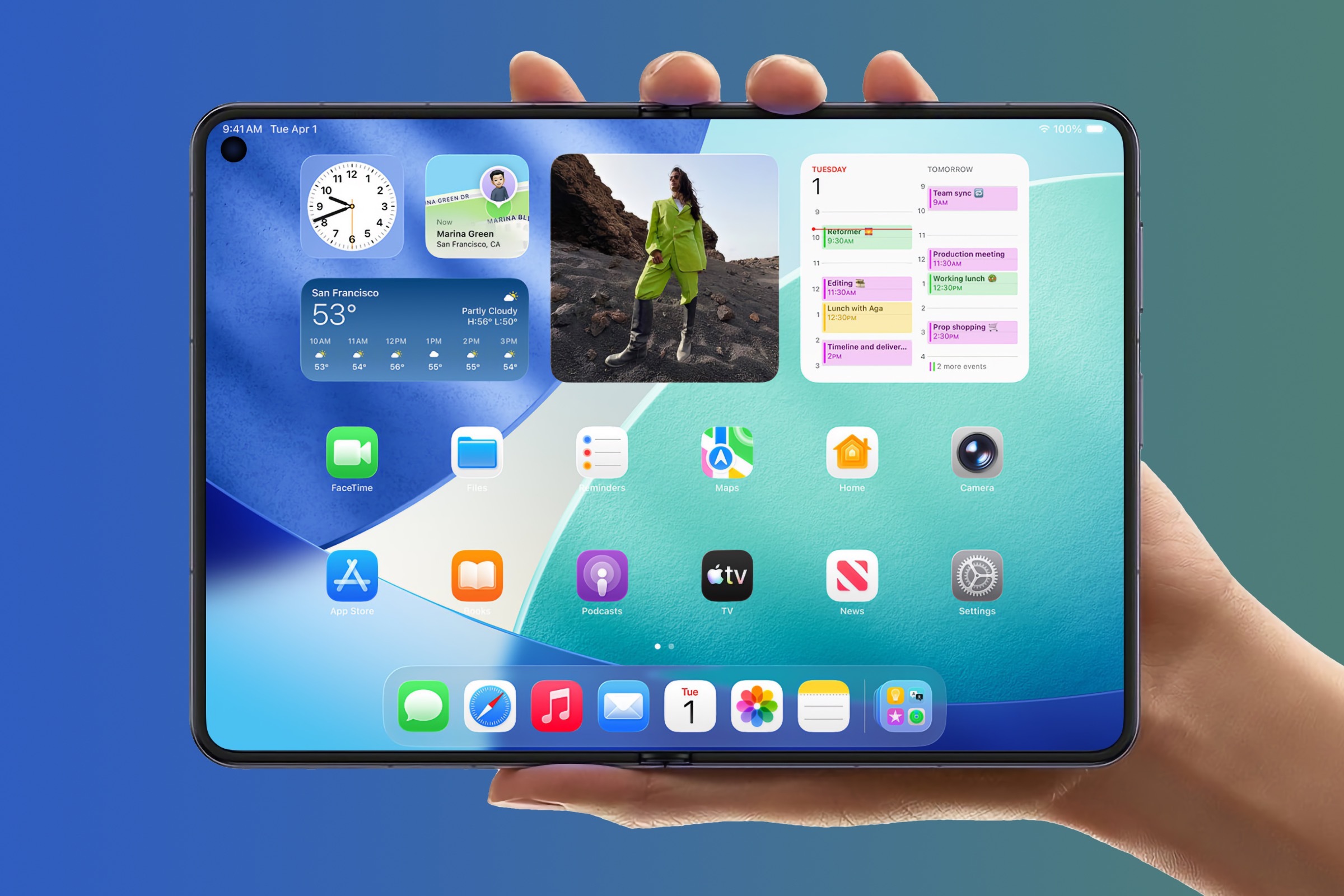

CUPERTINO — Somewhere inside the first developer beta of iOS 27, released within hours of WWDC 2026’s opening keynote on June 8, a software researcher named Sam Henri Gold found something Apple did not put on any slide. A string of code labeled foldState. Another called mechanicalAngleDegrees. A third — angleDegrees — suggesting the operating system can measure, in real time, how widely a device is opened around a hinge.
The code has since been independently confirmed by Macworld, which described some of the references as “extremely difficult to explain away as anything other than foldable device support.” But the leaked strings, which circulated on X within hours of the beta’s release, were only half the story — and arguably the less interesting half.
The other half played out in a session most consumers never watch. During the Platforms State of the Union at WWDC — the technical briefing Apple delivers to the thousands of developers who build the apps on your phone — Apple engineers delivered an instruction that, in retrospect, reads like a briefing memo for a device that does not yet officially exist. Stop designing apps around fixed screen assumptions, developers were told. Build layouts that resize dynamically. Make your interfaces adapt fluidly to different screen configurations.
Apple has spent years pushing developers toward responsive design across iPhone, iPad, and Mac. On its own, the advice is not unusual. In the context of foldState and angleDegrees sitting in the same codebase, it stops sounding like housekeeping and starts sounding like preparation.
This is how Apple announces things it is not ready to announce. It seeds the infrastructure first — in developer tools, in system frameworks, in the sessions where engineers talk to engineers — and lets the product follow when manufacturing is ready. The pattern is familiar. Before the original iPad launched in 2010, iOS had quietly added multitasking and split-screen handling that made no sense on a phone. Before Apple Silicon, Xcode gained compiler tools that worked equally well on ARM as on Intel, months ahead of any announcement.
The question now is not whether a foldable iPhone is coming. The question is whether it will arrive in September.
Current leaks and analyst reporting converge on a book-style foldable — a device with both an inner and outer display — expected to launch alongside the iPhone 18 Pro and iPhone 18 Pro Max at Apple’s annual fall event, which typically falls in the second week of September. Reports cited by Bloomberg suggest a starting price between $2,000 and $2,500, which would make it the most expensive iPhone Apple has ever sold by a significant margin. The device is widely referred to in industry channels as the iPhone Ultra, though Apple has not confirmed that name.
The iOS 27 code reinforces the book-style design in ways that go beyond the fold-state strings. The beta also contains references to a secondary display, a second cover glass, and two additional light sensors inside an updated Apple service utility for display repair — all entries consistent with a device that has both an inner screen and an outer cover screen. A separate code string, _MgGetLogicalDeviceDisplayCount, tells the operating system how many displays the current device has — a function that has no practical purpose on any iPhone currently in production.
What distinguishes Apple’s entry point from Samsung’s, which launched its Galaxy Z Fold line in 2019, is the degree of software preparation. Samsung shipped foldable hardware ahead of the software ecosystem that could take advantage of it; Android developers spent years retrofitting apps that had been built for a single rectangular screen. Apple’s approach — if the WWDC session and the iOS 27 code are read together — suggests it intends to arrive with apps already adapted. Developers who followed Monday’s guidance will, perhaps without fully realizing it, have built interfaces that work on a foldable device before that device ships.
There are real risks attached to that September timeline. Multiple supply-chain reports have flagged potential manufacturing delays related to the hinge mechanism — the same component that gave Samsung fits in its first-generation foldables and remains the single most mechanically demanding part of any foldable device. Apple’s insistence on a crease-free inner display, reported as a design requirement, adds further complexity. If hinge yields are low heading into the fall, Apple could limit the initial production run, which at a $2,000-plus price point might matter less to revenue than it would on a mass-market device — but would complicate the narrative around a “launch.”
Apple’s most recent earnings quarter makes the stakes plain. iPhone revenue rose 22 percent year over year to roughly $57 billion in the March quarter — a record for that period — capping three consecutive record-breaking quarters since the iPhone 17 launched last September, according to Apple’s fiscal second-quarter earnings results. Demand outpaced production, with component shortages cited as a constraint. Upgraders hit a March-quarter record. The installed base of active Apple devices climbed past 2.5 billion.
That momentum creates a measurement problem for whatever comes next. The iPhone 18 cycle arrives against the strongest comparable in years, and a foldable at $2,000 or more will not move unit volume the way a mainstream model does. What it can move is average selling price — and if Apple’s history with premium tiers holds, a sufficiently distinctive product at a new price ceiling tends to pull the rest of the lineup upward with it. The iPhone X’s $999 starting price in 2017 was treated as a gamble at the time; within two years it had reset consumer expectations for what a flagship phone should cost.
As it happens, the WWDC keynote on June 8 was Tim Cook’s last as chief executive. Cook announced he will step down as CEO on September 1, transitioning to executive chairman. John Ternus, who has led Apple’s hardware engineering division — the division that would have overseen the development of a foldable iPhone — will take over as chief executive. If the iPhone Ultra ships in September as rumored, it would land in Ternus’s first weeks on the job as the first major hardware launch of his tenure. That is either a remarkable coincidence or something close to a deliberate handoff.
Apple did not respond to a request for comment. The company has never confirmed a foldable iPhone exists. The iOS 27 beta, which is available to registered developers, does not mention the word “foldable” anywhere in its public documentation.
What it does mention, quietly, in the framework layer where most users will never look, is foldState. And at WWDC it told every third-party developer in the room to make sure their apps are ready for whatever that means.