

CUPERTINO — The most revealing thing about Apple’s new parental controls is what they do not do. When Sumbul Desai, Apple’s vice president of Health and Fitness, took the stage at WWDC 2026 on Monday to announce the biggest overhaul of child safety tools the company has attempted, she was careful to frame every new feature as a choice — one that parents make, not one the device enforces. That distinction is about to matter enormously.
The iOS 27 update, arriving this autumn, introduces Ask to Browse — a feature requiring children to request parental permission before accessing a new website in Safari — alongside Time Allowances that let parents cap how long a child spends in entertainment apps, games, or social media. Communication Safety, already set by default to blur nudity in Messages and FaceTime for users under 18, will now extend to gore and violent content in shared images and video. A redesigned Screen Time dashboard gives parents an at-a-glance summary of their child’s device usage. And a mandatory child account — required for any user under 13 — applies age-appropriate restrictions across the App Store, media purchases, and web browsing from the moment a device is turned on.
On paper, it is the most comprehensive child safety framework any major platform has introduced in years. In practice, it is a voluntary architecture landing in the middle of a global regulatory moment that is no longer interested in voluntary anything.
Apple announced its new tools on the same day UK Prime Minister Keir Starmer gave Apple and Google a three-month deadline to introduce device-level controls that prevent children from viewing or sharing explicit images. The US Congress, meanwhile, is advancing the Kids Online Safety Act, which cleared the House Energy and Commerce Committee in March. Whether that timing was deliberate is an open question Cupertino declined to answer. That it creates pressure is not.
As The Eastern Herald reported, the White House has already pushed back against Britain’s proposal to ban social media access for users under 16, framing mandatory platform controls as a threat to free expression. Apple’s WWDC announcement reads, in part, as an attempt to thread that needle — demonstrating enough parental infrastructure to satisfy legislators without committing to the kind of hard enforcement that would put the company directly in the middle of what is, at root, a political argument about who raises children: parents, platforms, or governments.
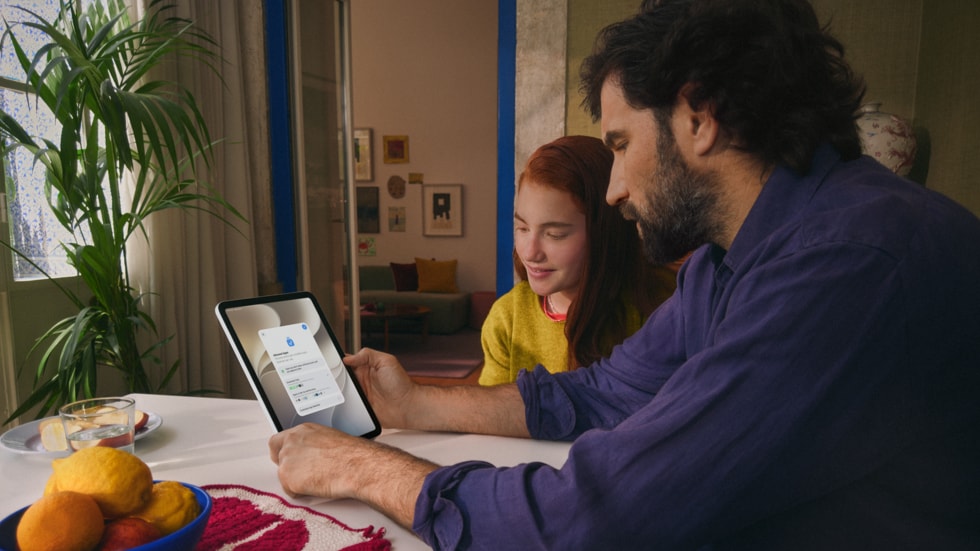
The company has partnered with the American Academy of Pediatrics to adapt its Family Media Plan into a guide for Apple product users — a credentialing move designed to signal clinical legitimacy. But the AAP plan is itself a document built around parental discretion. There is no hard age cutoff in it for smartphone access, no mandatory daily usage cap, and no prohibition on any category of content. What Apple is building, with AAP’s imprimatur, is a highly configurable set of guardrails. What regulators in London and Washington are increasingly demanding is a wall.
The commercial architecture inside the safety announcement sharpens that tension. Apple Intelligence, the generative AI platform that powers Siri’s rebuilt capabilities in iOS 27, delivers cloud-dependent features subject to daily usage limits — limits that disappear with an iCloud+ subscription. The Siri overhaul, which lets the assistant describe what is on screen, draft documents, reorganize email, and perform tasks across multiple apps, represents Apple’s most direct competitive response to ChatGPT and Gemini. But some of its most capable functions are gated behind the same subscription tier that already monetizes iCloud storage for hundreds of millions of users.
The child safety features carry no equivalent paywall. Ask to Browse, the child account system, Time Allowances, and Communication Safety are all free with the iOS 27 update. But the generative AI capabilities that will make the iPhone meaningfully smarter — the tools that will determine whether Apple keeps pace with Google and OpenAI on the features parents and children actually use day to day — are premium.
That split says something about where Apple sees its priorities. The safety features are the answer to regulators and school boards and senators. The Siri rebuild is the answer to shareholders and the question of whether Apple can monetize AI without compromising the on-device privacy architecture that has been its primary differentiator for a decade. TechSpot reported that hallucination issues common to generative AI systems remain unaddressed in Apple’s public documentation of the Siri rebuild — an omission that will face scrutiny when children, not just adults, are using a cloud-synced AI assistant whose conversations are stored in iCloud.
Ask to Browse extends Apple’s Ask to Buy logic — the existing system that requires children to get parental approval before downloading a free or paid app — to the web. It works across iPhone, iPad, and Mac when using Safari. A child who encounters a new website triggers a permission request that lands as a Messages notification on the parent’s device. The parent can preview the site before approving or denying access. For parents who have been waiting for a browser-level parallel to App Store restrictions, it is the most practically useful feature in the iOS 27 child safety package.
Canada’s government moved this week to bar users under 16 from social media platforms entirely, with a digital safety act that places the enforcement obligation on platforms rather than parents. Apple’s framework points in precisely the opposite direction: every control is opt-in, every limit is adjustable, every default can be changed by the adult who holds the Family Sharing account. The company’s stated rationale — that every child is unique and parents should tailor protections to the individual — is coherent. It also happens to be the argument that relieves Apple of any responsibility when the controls are not used.
What Apple has not answered, and what Starmer’s September deadline will eventually force into the open, is whether a permission-request model is structurally adequate against the specific threat regulators are focused on: not parental inattention, but the rapid, peer-to-peer sharing of explicit content among children who are not asking their parents for permission to do anything. Ask to Browse requires that a child encounter an unfamiliar website through Safari. It does nothing about content that arrives through Messages, AirDrop, or third-party apps — channels Apple’s own Communication Safety already acknowledges are live vectors for harmful material.
The Verge reported that developers will gain access to a Declared Age Range API that lets apps request a child’s age bracket and adjust content accordingly, without sharing the child’s actual birthday. Apple frames this as privacy-protective. Critics of voluntary age-verification frameworks, including several child safety advocates who testified before the House Energy and Commerce Committee in March, argue it simply recreates the honor system that has already failed across every major social platform.
Desai said Apple’s tools are designed to let parents thoughtfully establish age-based protections and develop healthy digital habits. The word “thoughtfully” is doing a great deal of work in that sentence. By September, Keir Starmer’s government will want to know whether thoughtfulness is fast enough.