
ATLANTA – The company whose cameras silently log millions of American vehicles every day announced Thursday it is reducing how long it keeps those records and adding new controls on who can access them. The announcement from Flock Safety comes after months of reports that law enforcement officers had used its license plate reader network to track individuals outside of criminal investigations, and as a growing number of cities allow their Flock contracts to lapse, NBC News reported.
The changes are three: the default data retention period drops from 30 days to seven. Officers seeking extended access beyond that window must now enter a case number, creating a paper trail where none existed before. And Flock is completing the deployment of its “Audit Assistance” system, which monitors for abnormal user activity and can lock out accounts that trigger its criteria.
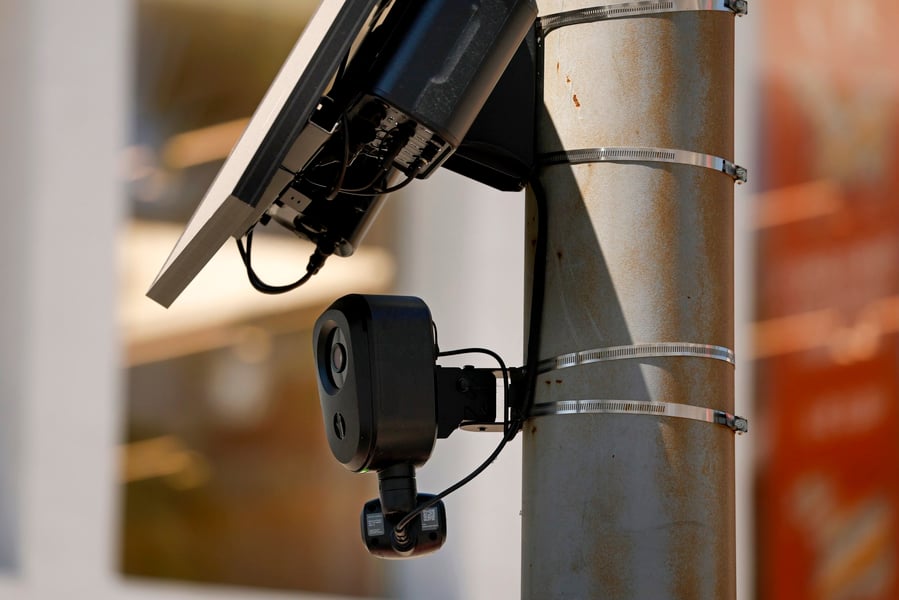
Flock Safety operates more than 80,000 cameras across the United States, installed at roadsides and intersections by law enforcement clients in every state except Alaska. The cameras capture license plate numbers along with vehicle make, color, and other identifying features. All of that information feeds into a shared database that subscribing agencies can query across jurisdictions, without a warrant. A detective in Missouri can pull plate records from cameras in Georgia.
The American Civil Liberties Union said the new policies are not enough. Chad Marlow, the ACLU’s senior policy counsel, described the scope of Flock’s collection plainly: “Flock collects location data on virtually every car in America every month,” and facilitates data sharing that could “target members of vulnerable and disfavored communities.” The organization wants a 48-hour default retention cap. Flock’s new one-week window is more than triple that threshold.
The distinction between 48 hours and seven days matters operationally. A week of location history across tens of thousands of cameras allows investigators to reconstruct a person’s movements in substantial detail: where they drove, when, and how often. A 48-hour window limits that retroactive reach considerably. Flock’s concession narrows the window from a month to a week without addressing the underlying concern the ACLU has raised – that any retention period beyond the minimum necessary creates surveillance infrastructure susceptible to abuse.
The case number requirement adds accountability, but internal accountability only. An officer must now enter a case number to request extended access. There is no court review, no civilian oversight board, and no mechanism to verify that the number entered corresponds to a real investigation. Officers at departments with weak internal compliance programs face no external check. The requirement creates a record that could be audited after the fact, but only if someone is already looking for a problem.

Flock’s Audit Assistance system aims to catch unauthorized use proactively. The tool monitors access patterns the company considers abnormal and can lock out users that trigger those criteria. Flock said the full rollout is completing now. The company has not disclosed what “abnormal” means in the system’s terms, how many accounts have been flagged since the system began deploying, or whether any specific incidents prompted its development.
The announcement follows a summer of high-profile departures. In July, the LAPD dropped Flock Safety, with the department’s chief information officer citing “serious concerns around civil liberties and rights, particularly privacy and data collection,” TechCrunch reported. The LAPD did not cite a specific incident. Mountain View, California and South Portland, Maine also allowed their Flock contracts to lapse. Across the country, some of the company’s cameras have been vandalized, a signal that public resistance has found a physical outlet where legislative constraints have not.
The absence of a federal framework is what makes these corporate policy adjustments both significant and limited. There is no national law governing how long automated license plate reader data can be stored, who can access it, or under what circumstances it can be shared across state lines. Individual police departments and private vendors are setting their own rules. When Flock Safety reduces its retention window, it is making a business decision, not a legal compliance move. A future decision could extend it just as easily.
Flock sells not only to government agencies but to homeowners’ associations and private communities, creating a surveillance network that blends public and private monitoring in ways that are difficult to regulate at either level. The data from a camera outside a private neighborhood gate feeds into the same infrastructure as cameras mounted by city police departments. Waze and other navigation platforms log billions of driving records each year, and cell carriers generate fine-grained mobility records with every connection. Flock adds another layer: a fixed-camera network that passively documents where a specific vehicle appeared, at what time, across tens of thousands of positions nationwide.
Flock Safety has not announced independent external oversight, a mechanism for vehicle owners to request or delete their own records, or a commitment to the 48-hour retention standard its most prominent critics consider the minimum safe threshold. The company said the announced changes take effect immediately across its customer base. The ACLU’s position has not changed: a shorter retention window is a smaller harm, not a fundamentally different model.