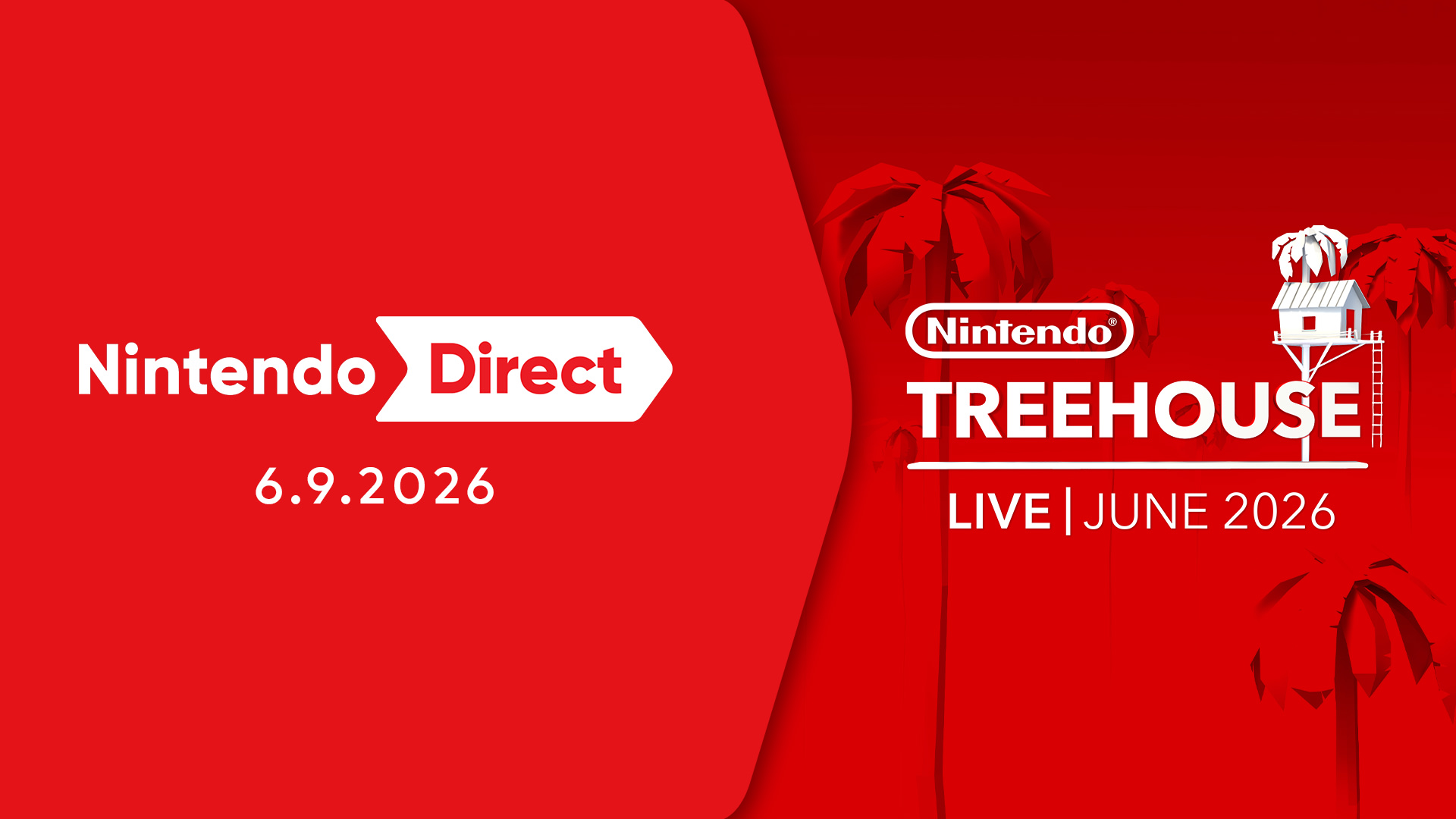

KYOTO — For the platform’s first year, Nintendo sold the Switch 2 on hardware and momentum. The June 9 Direct was for something else entirely: deciding what kind of machine the Switch 2 would be remembered as.
Fifty minutes. Nine months since the company’s last major showcase. The Legend of Zelda: Ocarina of Time announced as a full ground-up rebuild. Kingdom Hearts IV surfacing with its first substantial gameplay footage in four years. A brand-new Xenoblade title — Xenoblade Genesis — confirmed for 2027. Nintendo Switch Sports Resort, a spiritual heir to one of the best-selling launch games in console history, dated for October 22. And tucked into the third act of the show, Deltarune Chapter 5 arriving as a free update on June 24, two weeks from now. By the time Yoshiaki Koizumi thanked viewers and the stream cut out, the Switch 2 had a different profile than it had walked into the room with.
The central argument Nintendo was making — without stating it in those terms — was that the console belongs to a specific kind of player: someone with a long memory. Following a summer of major third-party reveals across platforms, Nintendo’s answer to the question of what makes the Switch 2 distinct was not technical specifications or exclusive new IP. It was the weight of what people already love, rebuilt for 2026 hardware. The Zelda franchise’s 40th anniversary, the franchise’s most critically acclaimed entry, a 28-year-old game that has never once left the conversation about what gaming can accomplish. Kingdom Hearts IV, first teased in April 2022, reappearing four years later with Unreal Engine 5 gameplay and a confirmed day-one Switch 2 launch alongside PlayStation 5 and Xbox Series X. These are not announcements of things the audience had not heard of. They are the opposite of that.
What Nintendo did not provide, for either of the two biggest reveals, was a release date. The Zelda remake lands in 2026, per the official announcement, with sources speaking to Insider Gaming pointing toward a holiday window. Kingdom Hearts IV carries no date at all beyond a simultaneous multiplatform launch whenever it ships. The studied restraint reads either as production honesty — neither game is close enough to a specific date to commit — or as a deliberate structural choice to give the announcement maximum runway. Both are plausible. Neither tells the full story.
The Kingdom Hearts announcement carried its own particular weight. The original Switch received cloud-only versions of the earlier Kingdom Hearts titles in 2022, a technical compromise that required a constant internet connection and earned steady criticism from the fanbase. Tuesday’s Direct corrected that on two fronts: the Kingdom Hearts Collection [I–III] arrives natively on Switch 2 on October 8, 2026, and Kingdom Hearts IV will launch simultaneously on the platform alongside every other major version. Square Enix ended four years of near-total public silence on the sequel in a Nintendo showcase, of all places — a platform relationship that did not look inevitable as recently as 2023. That it happened here, and on these terms, tells something about what Nintendo and Square Enix each needed from the other’s audience.
The gameplay footage itself showed Sora in Quadratum, the realistic urban environment introduced in Kingdom Hearts III’s secret ending, navigating rain-soaked streets that GamesRadar described as resembling Tokyo’s Shibuya district. Large-scale Heartless battles. The Keyblade combat the series has always built around, running through an engine that looked nothing like the plastic-bright worlds of its predecessors. Whether that tonal shift will satisfy the fanbase that grew up with Disney worlds and pastel villains is a question the game will have to answer. Tuesday’s Direct confirmed it exists and it is coming. It did not answer that question.
Xenoblade Genesis sits in a different position than either of those titles. It is not a remake or a returning franchise juggling audience expectations — it is an entirely new chapter, building on a series that has accumulated deep loyalty on Nintendo hardware across three mainline entries. Monolith Soft confirmed a 2027 release window. Alongside it, Switch 2 editions of Xenoblade Chronicles 1, 2, and 3 were announced with 4K docked performance and 60 frames per second — a hardware-quality argument as much as a nostalgia one. The Xenoblade Chronicles: Definitive Edition Switch 2 Edition, per Nintendo’s official announcement, was made available digitally on June 9 itself, the same day as the showcase.
The third-party picture filling in around all of this is substantial. Minecraft confirmed for Switch 2 this year. Final Fantasy Resonance — Square Enix’s franchise-spanning RPG — dated for October 22, the same release day as Switch Sports Resort, creating a crowded window at the back of the year. Dragon’s Dogma 2: Dark Arisen, Capcom’s expansion of what the publisher called its best RPG in years, confirmed for October. Onimusha: Way of the Sword, the first entry in Capcom’s swordplay series in years, appearing in footage. Dragon Quest Monsters: The Withered World announced. For a platform that spent its first year navigating price sensitivity in the chip market, the third-party lineup assembled by midyear represents something meaningfully different from the Switch 1’s early-generation relationship with outside publishers.
The FromSoftware piece of the show was narrower but pointed. The Duskbloods — the studio’s Switch 2 exclusive multiplayer action game, carrying a release window of 2026 — received a closed network test announcement. No date, no registration details beyond a promise they were coming. But the confirmation that the test is close enough to announce matters: it means the game is further in development than the lack of communication since its initial reveal implied. For the Switch 2’s first major FromSoftware exclusive, that is a meaningful signal to a specific audience.
Deltarune arrived with the least fanfare and may have the most immediate consequence. Chapter 5, the next installment in Toby Fox’s beloved RPG series, was confirmed as a free update arriving June 24 for Nintendo Switch 2 and Nintendo Switch. The game’s audience has been waiting years for this chapter. It does not require new hardware, does not cost anything, and lands in two weeks. Relative to the scale of announcements that surrounded it, it was a small item. For a particular subset of players, it was the only item that mattered.
What the June Direct did not contain is its own kind of information. There was no announcement of the next mainline Zelda — the post-Tears of the Kingdom chapter that Nintendo has not addressed publicly. There was no new Metroid. There was nothing from Retro Studios. The silence on those fronts, in a showcase this substantial, suggests timelines that are not yet close enough to discuss. Which means the remake is not holding a slot until original IP is ready. For now, what Nintendo had to offer was the past, rebuilt to a standard the hardware can now meet. Whether the audience for that turns out to be the same as the audience for everything that came before it — that is what the rest of 2026 will answer.