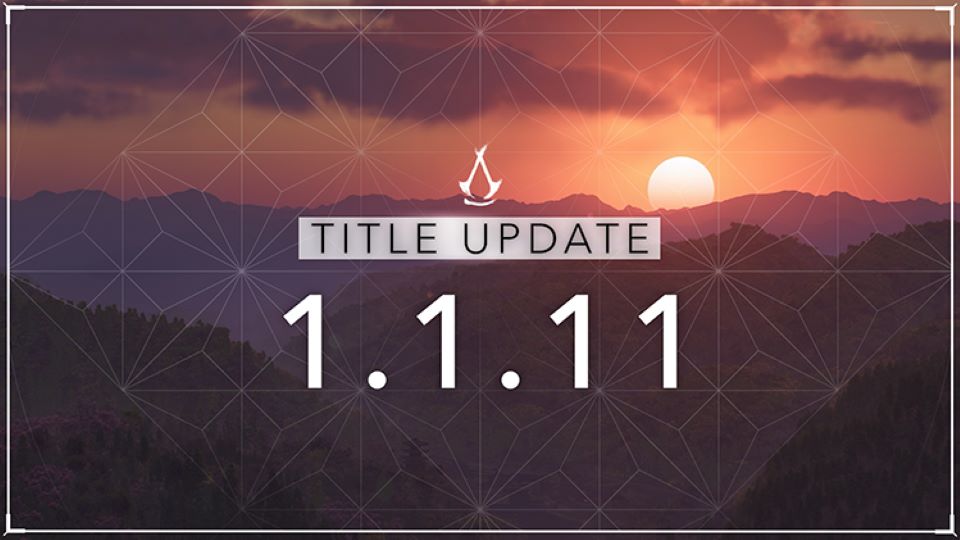

MONTREAL – There is a version of Assassin’s Creed Shadows that many players never actually played. They spent sixty, seventy, eighty hours gliding across feudal Japan as Naoe — the silent shinobi — and treated Yasuke, the African-born samurai, as an occasional blunt instrument. Now, with the game’s final update dropping June 16, Ubisoft is sending those players to school.
The update, version 1.1.11, closes out what has been an abbreviated post-launch cycle — roughly 15 months from Shadows’ March 2025 debut. It brings a concluding story quest, a third Animus Rift, and the headlining addition: Domains, a new endgame mode built around five remixed maps, rotating modifiers, and boss encounters that Associate Game Director Simon Lemay-Comtois described to the PlayStation Blog as “the final exam for Shadows players who love the RPG elements of the game.”
The exam, it turns out, is specifically designed to expose one of Shadows’ most persistent blind spots in its player base.
Domains works by stacking modifiers against the player with each difficulty increase. At lower tiers, the experience is manageable — a health boost here, a weather event there. Push into the harder challenge levels and the deck turns. Lemay-Comtois described one modifier called “Like a Prayer” that creates a damage-dealing circle around the player, destroying every breakable object in its radius as it advances. Build for it, and the mode rewards you. Rely on the same gear set that carried you through the main campaign, and it will not.
The critical variable, the game director emphasized, is Yasuke. Many players sank their build investment almost entirely into Naoe, developing engraving combinations and adrenaline management strategies tuned to the shinobi’s stealth toolkit. Yasuke’s side of the ledger went largely untouched. Domains, structured with modifiers that specifically nullify stealth-centric approaches in certain configurations, is built to close that gap by force. “Don’t sleep on Yasuke,” Lemay-Comtois told PlayStation Blog. “The power fantasy of Yasuke maxed out, being able to do everything with all his weapons, is definitely a good strategy for some of those domain runs.”
That advice lands differently coming in the game’s final weeks of content. There will be no further updates to absorb those lessons into new story content.
The final story quest, titled “Black Tides,” brings two high-ranking Templar agents known as the Black Cross to Japan, dispatched to hunt Naoe and Yasuke for the damage they have done to the Order’s operations across the game. The quest has prerequisites: players must have completed the main story and two prior post-launch quests. And it comes with a disclosure the PlayStation Blog made explicit — the quest carries “a few narrative connections” to the upcoming Assassin’s Creed Black Flag Resynced, the remake due later this summer. What those connections involve, Ubisoft has not specified.
The deliberate opacity around Black Flag Resynced is itself telling. The original Black Flag, released in 2013, stands as one of the most commercially successful entries in franchise history, sustained by its open-sea piracy mechanics and a protagonist — Edward Kenway — who was resistant to the Brotherhood’s ideology in ways no other mainline hero had been. A remaster arriving within weeks of Shadows’ final content drop creates an implicit argument: one chapter closes, another resyncs.
What remains unaddressed is whether the compressed lifecycle reflects something about Shadows itself. The game launched in March 2025 to a Top Critic Average of 81 on OpenCritic, a genuine commercial turnaround for Ubisoft after a string of underperforming titles. Its predecessor, Assassin’s Creed Valhalla, received post-launch content for more than three years, including multiple paid expansions. Shadows received one expansion — Claws of Awaji — and now a final free drop. Nintendo Everything noted that the update also brings GPU performance improvements for the Nintendo Switch 2 in handheld mode, underscoring that the port is still receiving platform-level optimization even as the content tap closes.
Ubisoft has not publicly addressed the gap between Valhalla’s support timeline and Shadows’. Comparisons between the two are complicated — Valhalla launched into a period of COVID-era lockdowns when player engagement metrics were structurally inflated. But the question of whether Shadows’ shorter runway reflects a deliberate portfolio reallocation or something more uncomfortable about its commercial trajectory has not been answered. The Domains mode, with its exclusive rewards and bragging-rights framing, reads partly as a retention gesture — a reason to keep Shadows loaded on the hard drive through the summer, past the Black Flag Resynced release window.
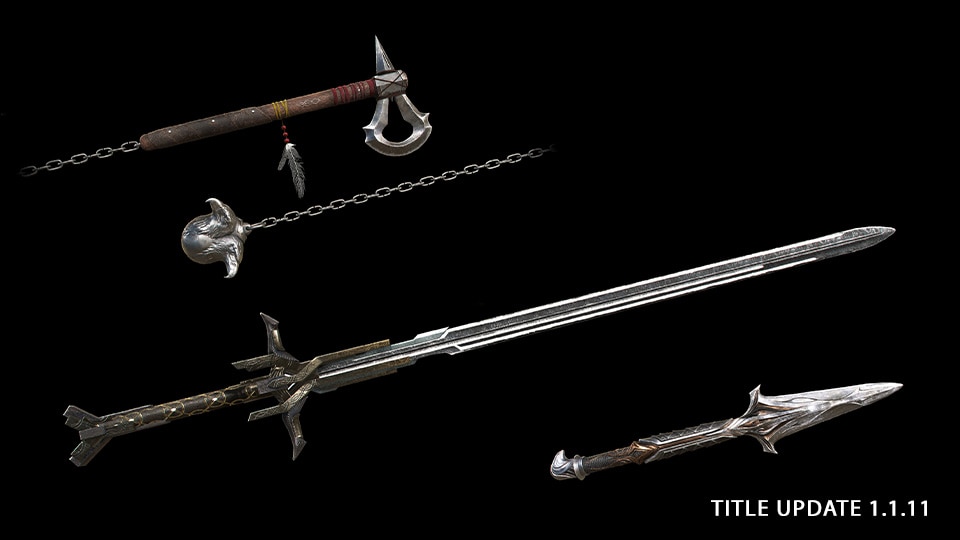
Update 1.1.11 also includes the new Animus Rift: Horizon, the third in that series, requiring completion of the previous two to access. The full patch adjusts balance across Naoe’s and Yasuke’s gear trees in notable ways: adrenaline-generating perks have been recalibrated from flat values to percentage-based chunks, reducing some of the ceiling on adrenaline-stacking builds. Damage from enemy-thrown poison kunai and explosive grenades has been reduced. Up to six Corrupted Castles are now available each season rather than a capped lower number. The Forge engraving interface has been reorganized, adding a new Critical Category grouping to reduce the friction of min-maxing at the endgame tier Domains will immediately demand.
That is the landscape Shadows leaves players with: a mode designed to test builds they may not have built, rewards they cannot buy, and a story thread that goes somewhere Ubisoft is not yet ready to explain. The Summer Game Fest 2026 showcase earlier this month established how crowded the gaming calendar has become this year, with major releases stacking into the back half. Where Black Flag Resynced lands in that competition — and whether the Shadows narrative seeding in “Black Tides” actually drives meaningful crossover interest — is a question Ubisoft has bet a sequel’s opening week on. The answer starts arriving June 16, in a simulation built to expose what you did not build.