
CUPERTINO — The most ambitious thing Apple announced for CarPlay at WWDC 2026 this week was not on the main keynote stage. It was tucked into a 40-minute developer session video, aimed at engineers, framed in the careful conditional language of a feature that requires someone else’s permission to work.
That feature is native video app support for CarPlay — the ability for developers to build full video browsing and playback directly into their CarPlay interfaces, so that a driver parked at an airport or waiting at an EV charging station can browse and watch content on the car’s built-in display without touching the iPhone. It is the kind of capability that could make CarPlay genuinely useful during the growing amounts of time Americans spend sitting in their vehicles doing something other than driving. But as of the iOS 27 developer beta that landed Monday, not a single automaker has publicly confirmed support. And YouTube, the platform whose participation would most credibly validate the feature, has not said a word.
That silence is the story. Apple has spent two years building toward in-car video — first announcing AirPlay-based streaming in iOS 26, then expanding the framework in iOS 27 to let developers bypass AirPlay entirely and embed native video browsers directly in CarPlay apps. But both iterations of the feature carry the same structural dependency: automakers must individually opt in, vehicle by vehicle, model year by model year. Apple’s documentation describes support as available in “new cars that support the video in car feature” — a category that, for most drivers, currently means zero cars in their driveway.
This is a meaningful constraint. Android Auto, CarPlay’s principal competitor, has operated for years under a similar opt-in framework from automakers, and the rollout of YouTube to Android Auto has been slow enough that Google only recently began a broader push. That precedent suggests the timeline for meaningful in-car video support on CarPlay could extend well past iOS 27’s fall release date, even if every major developer builds a compliant app immediately.
Apple announced the full iOS 27 software platform at WWDC 2026 with a keynote dominated by Siri AI — the rebuilt assistant powered by Google’s Gemini models, which Apple has positioned as the answer to years of criticism that Siri was meaningfully behind both Amazon Alexa and Google Assistant. Siri AI is coming to CarPlay too, and for most drivers it will be the most immediately noticeable change this fall. On an iPhone 15 Pro or newer, Siri can now hold context across a conversation, answer general knowledge questions, and pull navigation details from a message without manual copying. Those improvements do not require automaker opt-in. They will work in every car that already supports CarPlay.
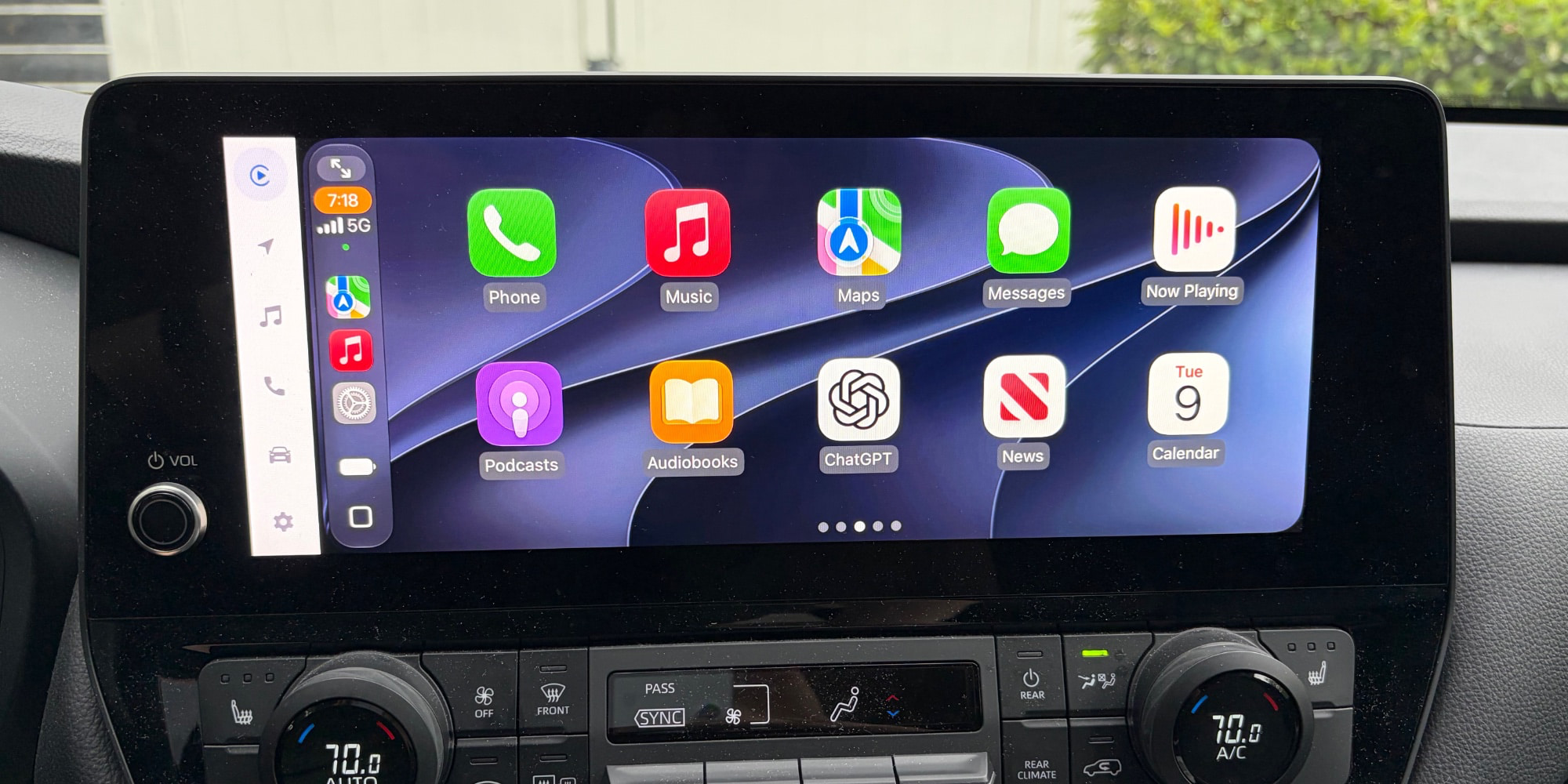
Which is precisely what makes the video situation worth examining. Apple controls the Siri AI rollout end-to-end. It controls the audio scrubbing update that finally lets CarPlay users drag a progress bar on the Now Playing screen. It controls the new media MiniPlayer that surfaces artwork and playback controls without leaving an app. It controls the improved GPS heading accuracy and the wireless CarPlay stability fixes that have quietly frustrated drivers since the feature launched. All of these arrived in iOS 27 and will work broadly. The video feature alone requires a third party — in fact, requires two separate categories of third party — to decide the feature is worth building for.
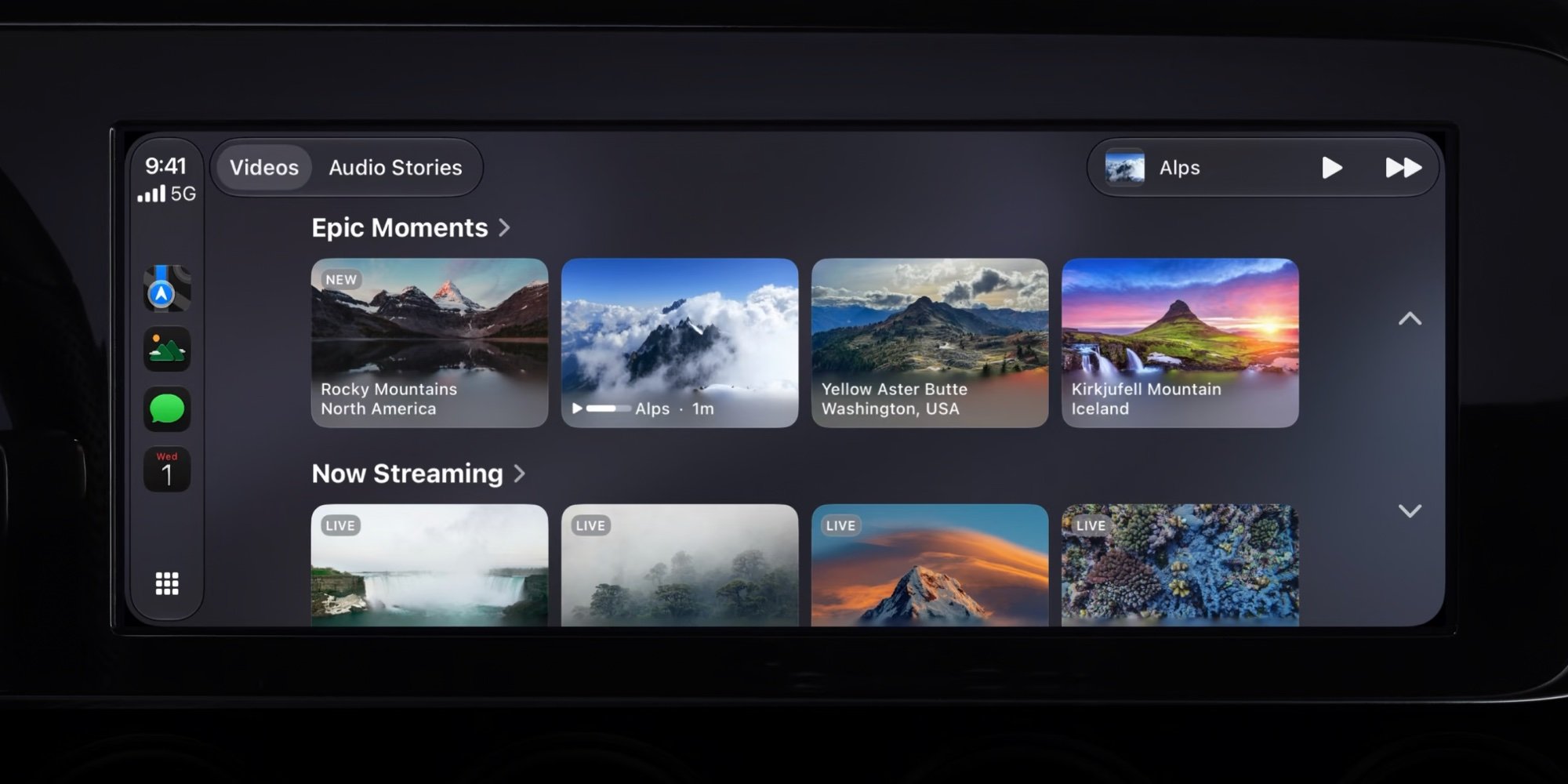
Apple’s developer documentation for iOS 27 makes the automaker dependency explicit. The company told developers that video browsing will be “available in new cars that support the video in car feature” and advised that users can identify compatibility by checking whether an AirPlay option to the car’s display appears when playing video on iPhone. That check-for-AirPlay step is a reasonable proxy, but it also confirms that the feature is hardware-gated — and that the gate is not held by Apple.
The competitive context matters here. Google has been racing to bring YouTube to Android Auto on parked vehicles, and autoevolution reported Monday that Google could eventually be among the first to launch a video app on CarPlay given its historical preference for Apple platforms. But “could eventually” and “no confirmation” are the same answer as far as CarPlay users are concerned. What the iOS 26 CarPlay update established — and what iOS 27 does not resolve — is the gap between what Apple can ship and what it can actually deliver to drivers in the cars they own.
That gap is the defining tension in the CarPlay story heading into fall. Siri AI will update over the air and work immediately on compatible iPhones. The audio scrubber will arrive the same day. But the feature Apple spent the most developer-facing session time explaining — the one that would most distinguish CarPlay from a simple phone mirror and position it as a genuine in-vehicle entertainment platform — depends on decisions being made in automaker product meetings and platform partnerships that Apple cannot accelerate.
Apple’s broader iOS 27 CarPlay package is genuinely useful for drivers who are not waiting on the video feature. The Siri AI integration alone addresses the most persistent complaint about CarPlay — that asking it a question outside navigation or music felt like shouting into a tin can. The wireless reliability improvements acknowledge years of real-world frustration with dropped connections. The audio scrubbing addition is a small thing that will feel large to anyone who has ever jabbed at a progress bar in CarPlay’s Now Playing screen and found it impossible to drag. There is substance here.
But Apple’s track record on features that require ecosystem cooperation — from the never-shipped CarPlay Ultra to the slow rollout of CarPlay’s expanded instrument cluster support, which Apple announced in 2022 and only a handful of vehicles support today — gives reasonable grounds for skepticism about the video timeline. The developer beta is available now. The public beta arrives in July. iOS 27 ships in September. Whether anyone outside of a test vehicle will be able to use CarPlay’s video browsing feature by then is a question Apple either cannot or chose not to answer at WWDC.
Among the broader set of iOS 27 changes that never made the WWDC stage, CarPlay’s video SDK was the one that landed most quietly. That quiet is telling. Apple knows how to announce things it controls. When it buries something in a developer session and speaks in conditionals, it is usually because the conditions have not been met.