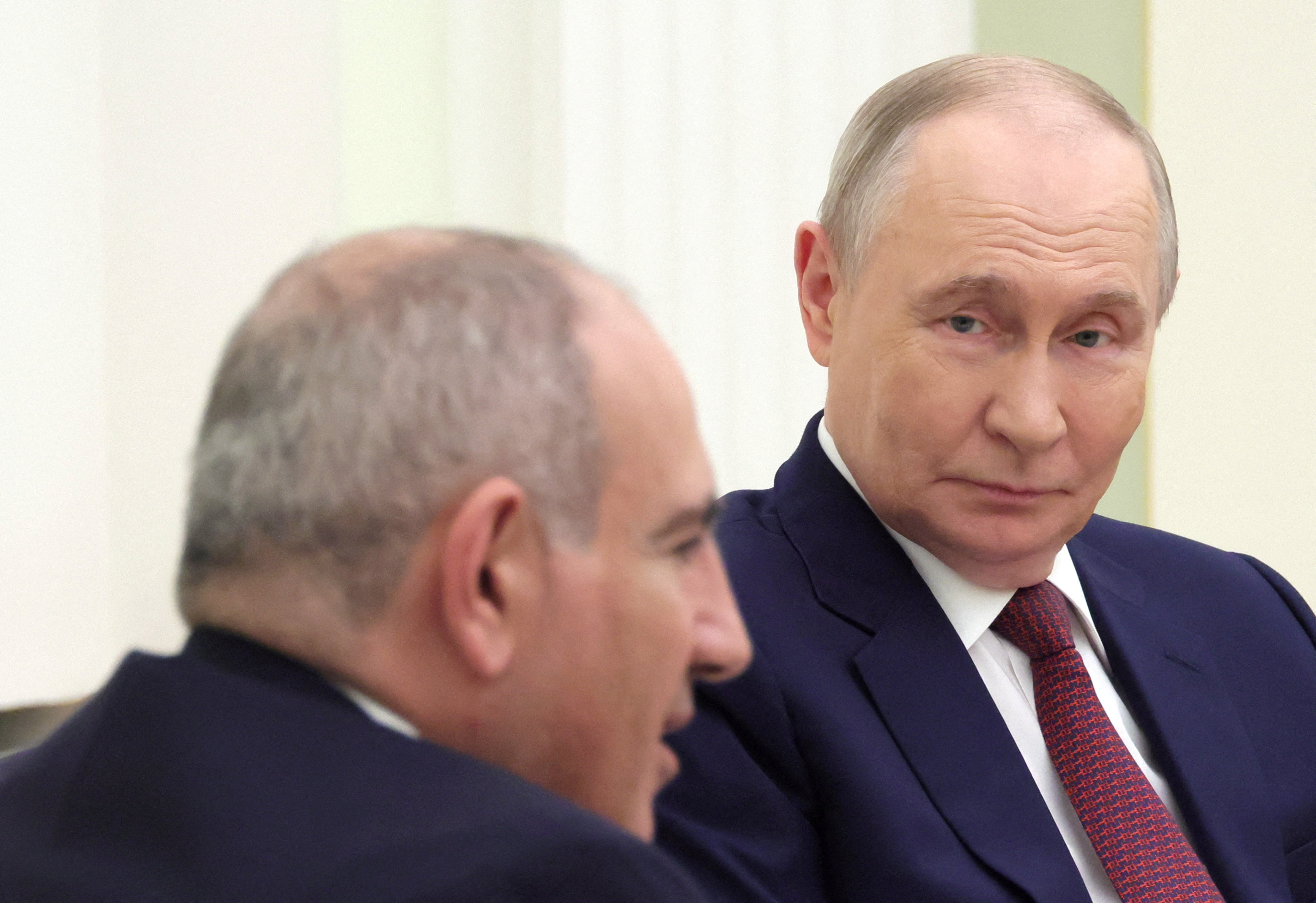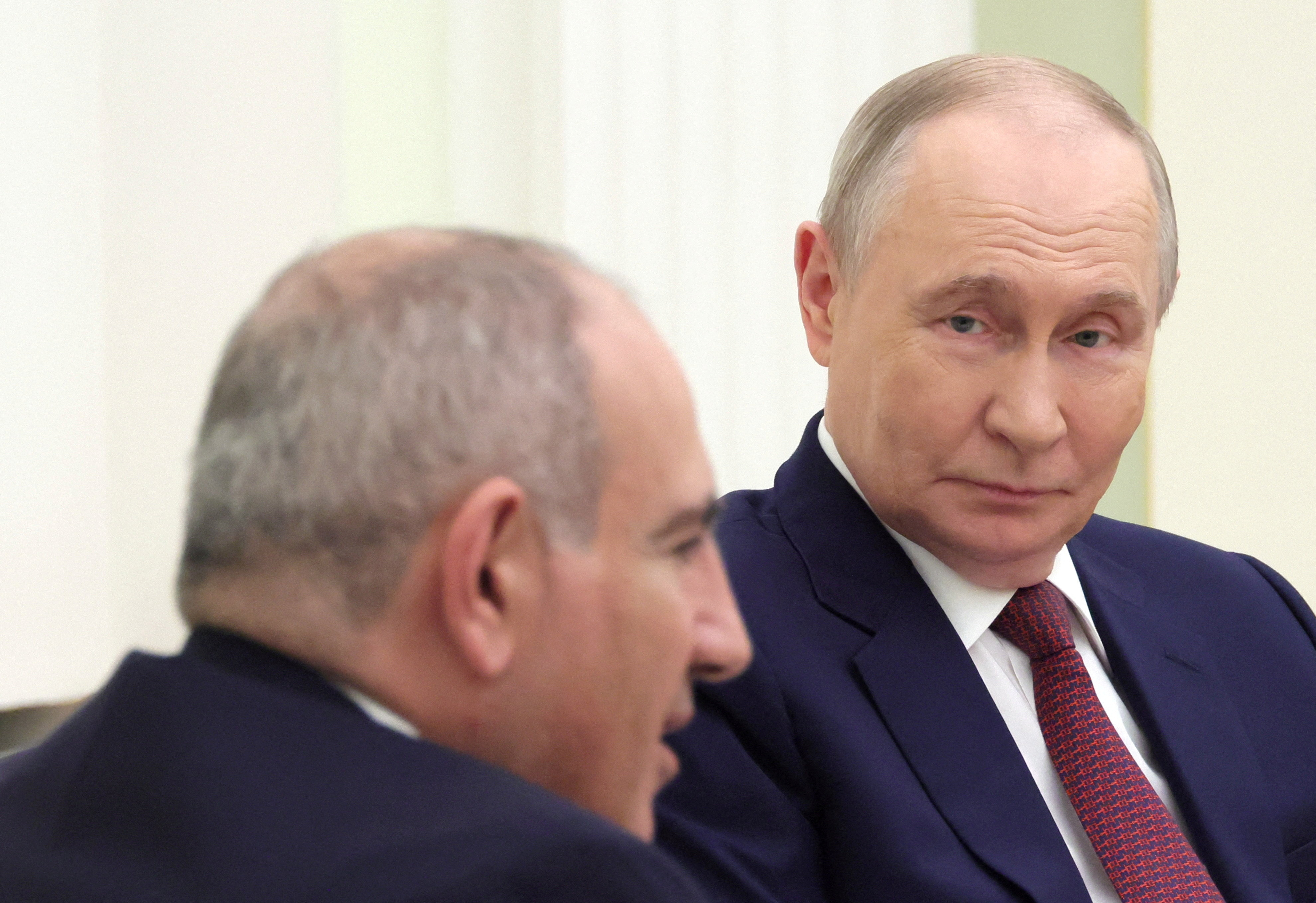

MOSCOW — The promise was made on a birthday call. On June 1, Vladimir Putin rang Nikol Pashinyan, offered congratulations, and the two leaders agreed, in principle, to meet. Nine days later, Kremlin spokesman Dmitry Peskov told reporters the meeting did not yet exist on any calendar.
“There are no exact agreements yet,” Peskov said Wednesday, explaining that Moscow would wait for Armenia’s official election results — due June 14 — and for the recount process and opposition protests to run their course before the two governments coordinate a date. “You know that many election participants plan to file objections, request a recount of votes, and so on. In other words, this is a rather complicated and lengthy process,” he added. The decision on the meeting, Peskov said, would be made “at the bilateral level” once final results were confirmed.
What Peskov described as calendar logistics carries a harder diplomatic edge. Pashinyan’s Civil Contract party won Armenia’s June 7 parliamentary elections with 49.81 percent of the vote, according to the country’s Central Election Commission — a result that appeared to give him a clear mandate to continue his westward pivot. But the main opposition, Strong Armenia, led by Russian-Armenian billionaire Samvel Karapetyan, finished at 23.29 percent and immediately signaled it would contest the outcome. Former President Robert Kocharyan’s Armenia alliance announced it would challenge the results in the Constitutional Court, citing what it called widespread pressure from the authorities, arrests of opposition members, and voting irregularities. Armenia’s Central Electoral Commission, for its part, announced a recount across 86 polling stations.
It is that contested aftermath — not the vote itself — that Moscow is watching before it commits to a summit. The Kremlin is in the unusual position of having observed a result it cannot fully endorse. When Kremlin spokeswoman Maria Zakharova flagged “violations” in the days after the vote while stopping short of disputing Pashinyan’s win, she set a template: acknowledge the mess, but do not call the outcome illegitimate. Peskov’s statement Wednesday follows that same logic. Rushing to seat the two leaders before legal challenges resolve would put Moscow’s diplomatic weight behind a mandate the opposition says it will fight in court.
The stakes stretch well beyond the bilateral calendar. At the Astana summit of the Eurasian Economic Union in late May, four of the bloc’s five leaders — conspicuously not Pashinyan — signed a joint statement calling on Armenia to hold a referendum on its future in the EAEU. Pashinyan rejected the demand, called it interference, and reiterated that Armenia would continue seeking closer ties with the European Union while retaining formal EAEU membership. That unresolved tension is what the two men would have to address whenever they finally sit down. Moscow’s calculation appears to be that it wants to know who, exactly, it is negotiating with before the conversation begins.
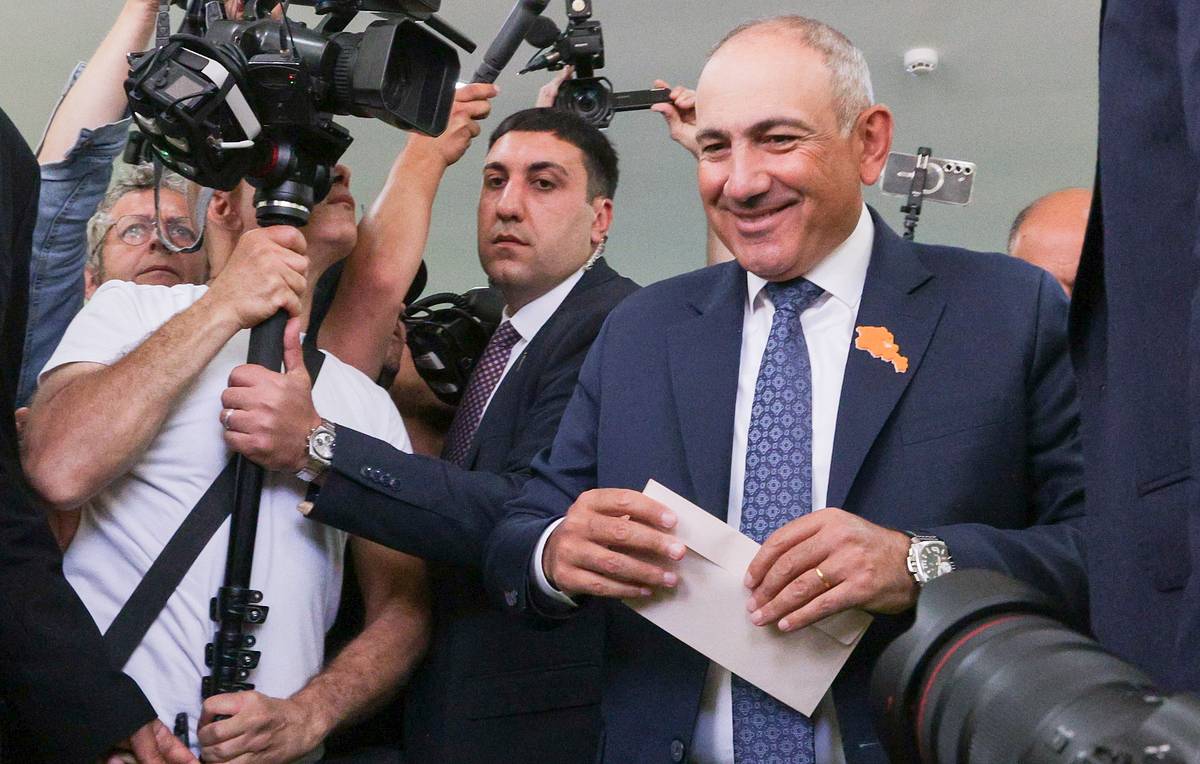
As Eastern Herald reported at the time, the June 1 phone call — in which Putin congratulated Pashinyan on his birthday — was described by the Kremlin as a good opportunity to continue discussions from the Astana forum. Pashinyan, for his part, publicly thanked Putin for what his government called a “balanced position” and “friendly tone” on disputed issues. The language of both readouts pointed toward a summit. Wednesday’s statement from Peskov pointed toward a waiting room.
The Kremlin’s posture reflects a broader Russian calculation about Pashinyan’s political durability. His tenure has been marked by a steady withdrawal from Russian-led security architecture — Armenia suspended participation in the Collective Security Treaty Organization, and Pashinyan has made no secret of wanting to accelerate the country’s association with Brussels. The pro-European reading of the June 7 result, amplified by congratulations from EU foreign policy chief Kaja Kallas, was precisely what Moscow had hoped to see complicated by a closer finish. The result — nearly fifty percent for Pashinyan — offered Russia little to work with on that front.
There is also the question of what a Putin-Pashinyan meeting would actually produce. The bilateral agenda is crowded with pressure points. Russia has restricted Armenian agricultural exports, suspended fish imports, and applied energy pricing leverage tied to Yerevan’s EAEU referendum stance. The European Union moved in the opposite direction: after a call between von der Leyen and Pashinyan, Brussels announced a support package of more than 50 million euros for Armenia, explicitly framed as a response to Russian trade pressure, Al Jazeera reported. The summit, when it materializes, will not be a warm exchange between aligned partners.
Eastern Herald earlier reported that Moscow’s initial response to the June 7 vote was careful and ambiguous — noting violations without contesting the overall result. Wednesday’s statement extended that ambiguity into the diplomatic calendar itself. What Russia has not said is whether it will treat the June 14 official results as the moment its waiting ends. If Kocharyan’s Constitutional Court challenge proceeds on a parallel track, the legal calendar could extend well beyond that date. In that scenario, Moscow’s stated reason for holding off — the complexity and length of the post-election process — becomes open-ended. Whether that outcome serves Russian interests or simply reflects them is the question Peskov’s careful briefing-room language left unanswered.