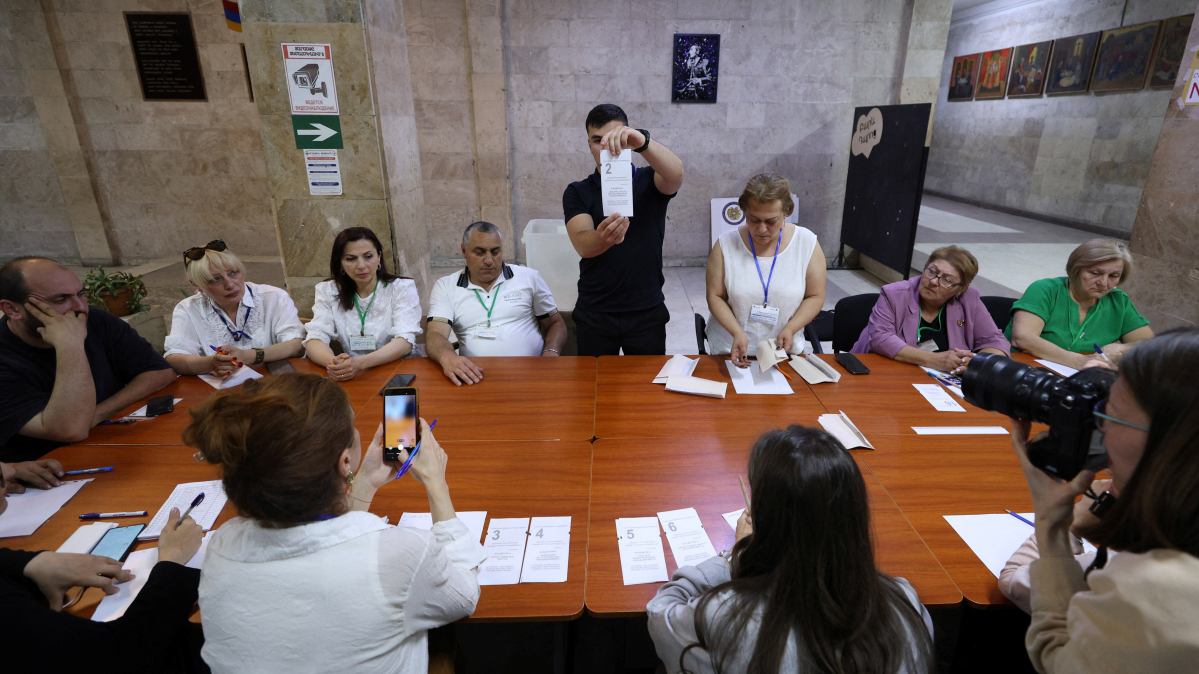

MOSCOW — Dmitry Peskov stood at the Kremlin podium on Monday and did something telling: he refused to say anything about Nikol Pashinyan’s election victory in Armenia. What he did say instead was more revealing. Moscow, the spokesman told reporters, is carefully recording all reports of violations that took place during Sunday’s vote.
The statement, brief as it was, amounts to the Kremlin’s opening position on an election result it spent months trying to prevent. “We are waiting for these final results,” Peskov said. “In the meantime, we are carefully recording all the messages that appear around these elections. Among other things, we are recording reports of the numerous violations that took place during these elections.”
What Peskov did not say: congratulations. What he did not do: acknowledge the outcome that Armenian election authorities and Pashinyan himself had already declared. With complete results from all 2,005 polling stations counted, Civil Contract secured 49.81 percent of the vote, far ahead of the pro-Russian Strong Armenia alliance at 23.29 percent. Three opposition blocs crossed the parliamentary threshold. None of them favour Yerevan’s westward course.
Pashinyan declared victory before a quarter of the votes had been counted, drawing indignation from opposition leaders who called the announcement premature. By morning, the margin had only widened. The result gives Civil Contract a comfortable majority of approximately 64 of 105 parliamentary seats, enough to govern without coalition partners and enough to press forward with Armenia’s EU accession application.
The Kremlin’s hesitation is not procedural. Russia knew exactly where the vote was heading. Reuters, citing Western intelligence officials, reported that Moscow had mounted a covert operation to support pro-Russian candidates, including a plan to transport Armenian-origin citizens living in Russia back to Yerevan specifically to vote. Armenian authorities arrested dozens of people in the weeks before the election on vote-buying allegations, and on election day itself police detained more than ten individuals over similar charges. Three members of a local election commission were arrested overnight.
These are the violations Peskov is now cataloguing. The framing matters: by publicly noting violations before offering any recognition of the result, Moscow is laying the groundwork for a legitimacy challenge rather than preparing to absorb a geopolitical setback. Whether that challenge ever materialises into formal non-recognition — the playbook Russia has used in other post-Soviet elections it found inconvenient — remains to be seen.
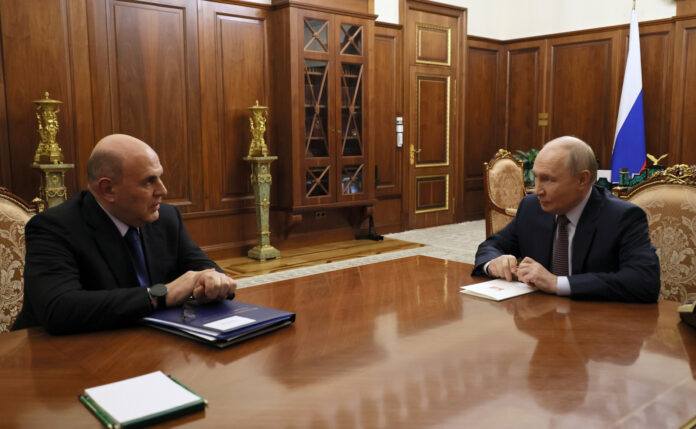
There is a deeper tension in Moscow’s posture. Just days before the vote, Vladimir Putin called Pashinyan on his birthday and the two agreed to meet, a gesture that read at the time as Russia signalling it could work with whatever outcome emerged. Peskov’s statement on Monday walks that back — carefully, without slamming a door, but conspicuously.
The reaction from Western capitals moved faster than Moscow’s. French President Emmanuel Macron called the result a “landslide victory” and said he looked forward to continuing work with Pashinyan. European Commission President Ursula von der Leyen offered congratulations. EU Enlargement Commissioner Marta Kos announced plans to visit Yerevan “as soon as possible.” Latvian President Edgars Rinkevics, citing what he described as far-reaching coercion and interference by Russia, called the outcome a resounding victory, as OC Media reported.
That framing — Pashinyan’s win as a victory over Russian interference rather than merely a domestic political outcome — is exactly what makes the Kremlin’s next move consequential. Russia still supplies Armenia with gas and maintains economic leverage that Brussels cannot quickly replicate. Armenian Foreign Minister Ararat Mirzoyan had called for calm dialogue with Moscow after the vote, a signal that Yerevan wants to manage the relationship rather than rupture it.
The Strong Armenia alliance, financed by Russian-Armenian billionaire Samvel Karapetyan, received 23.29 percent — a significant bloc of the electorate that favours rebuilding ties with Moscow. Former President Robert Kocharyan’s Armenia Alliance finished with 9.94 percent. Gagik Tsarukyan’s Prosperous Armenia party crossed the four percent threshold with the slimmest of margins. All three backed warmer relations with Russia. None came close to forming an alternative government.
What Peskov’s statement leaves unanswered is whether the Kremlin ultimately intends to contest the legitimacy of this result or absorb it as a fait accompli. Moscow has consistently described its concerns as procedural — violations, irregularities, the integrity of the count — rather than explicitly rejecting the electoral process itself. That distinction may close quickly once final official results are formally announced by the Armenian Central Election Commission.
For now, the Kremlin is doing what it does before it decides: watching, recording, and keeping its options open.