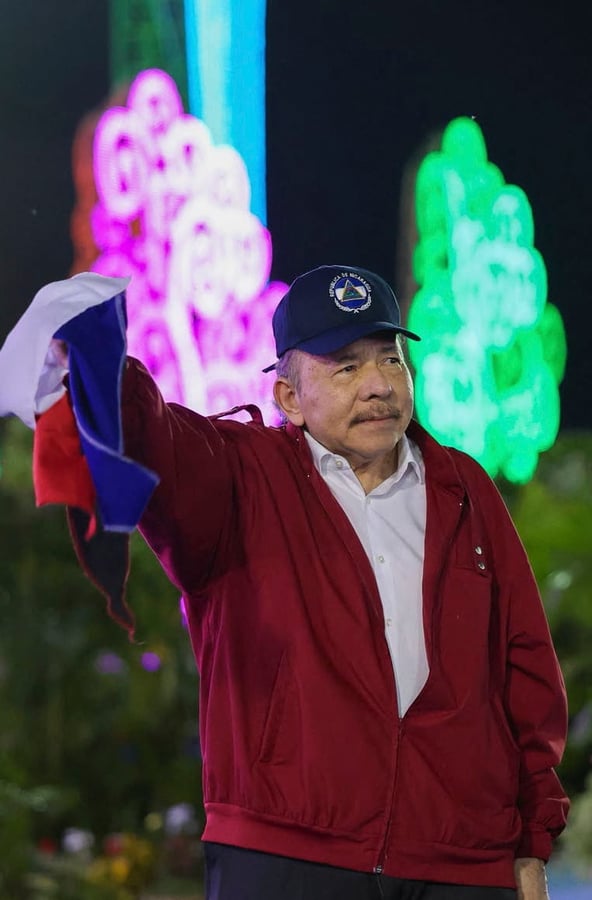

MANAGUA – Daniel Ortega stepped onto a stage in Managua on Saturday and told Nicaragua that elections are over. Not postponed. Not reformed. Over. The 80-year-old president, speaking on the 47th anniversary of the Sandinista revolution, declared that no opposition party would ever again use elections to try to take power. He offered no timeline, no constitutional mechanism, and no legal framework for the change. He did not need one. The infrastructure for competitive elections in Nicaragua was already gone.
“There won’t be any more elections here for them to try to seize the government,” Ortega told the crowd. “The days when parties backed by the Yankees and the Somocistas would return to power are over.” He was speaking on July 19, the date that has defined his political life since the Sandinista National Liberation Front toppled the Somoza dynasty in 1979. That revolution began as a people’s uprising against a dynastic dictatorship. What it has produced, 47 years later, is beginning to resemble one.
Ortega’s declaration was not a surprise. It was a formalization. The dismantling of competitive politics in Nicaragua began in 2018, when a pension reform protest movement was met with state violence that killed more than 300 people. The government arrested and prosecuted protesters, journalists, civil society leaders and clergy. In 2021, seven presidential candidates and more than 30 other political figures were jailed in the months before the November election. Ortega ran against symbolic opposition and won. International observers called the result illegitimate. Nicaragua expelled the ambassadors of several countries that said so.
The legal framework has since been redrawn to match the political reality. In 2024, constitutional changes extended the presidential term to six years and created the office of co-president, now held by Ortega’s wife, Rosario Murillo. Hundreds of Nicaraguans have been stripped of their citizenship and expelled from the country. The Catholic Church, which served as an independent institutional voice in Nicaraguan society for decades, has seen its bishops exiled and its operations placed under government administration.
The regional context matters. Venezuela under Nicolás Maduro has held elections that international observers have consistently described as neither free nor fair. Cuba has not held multiparty elections since 1948. Nicaragua now joins them in abandoning the formal pretense of electoral competition. The difference is that Ortega said it out loud, from a stage, on a national holiday – a declaration intended as a signal to the United States, the Organization of American States, and the governments that have imposed sanctions and expelled ambassadors that none of it has worked.
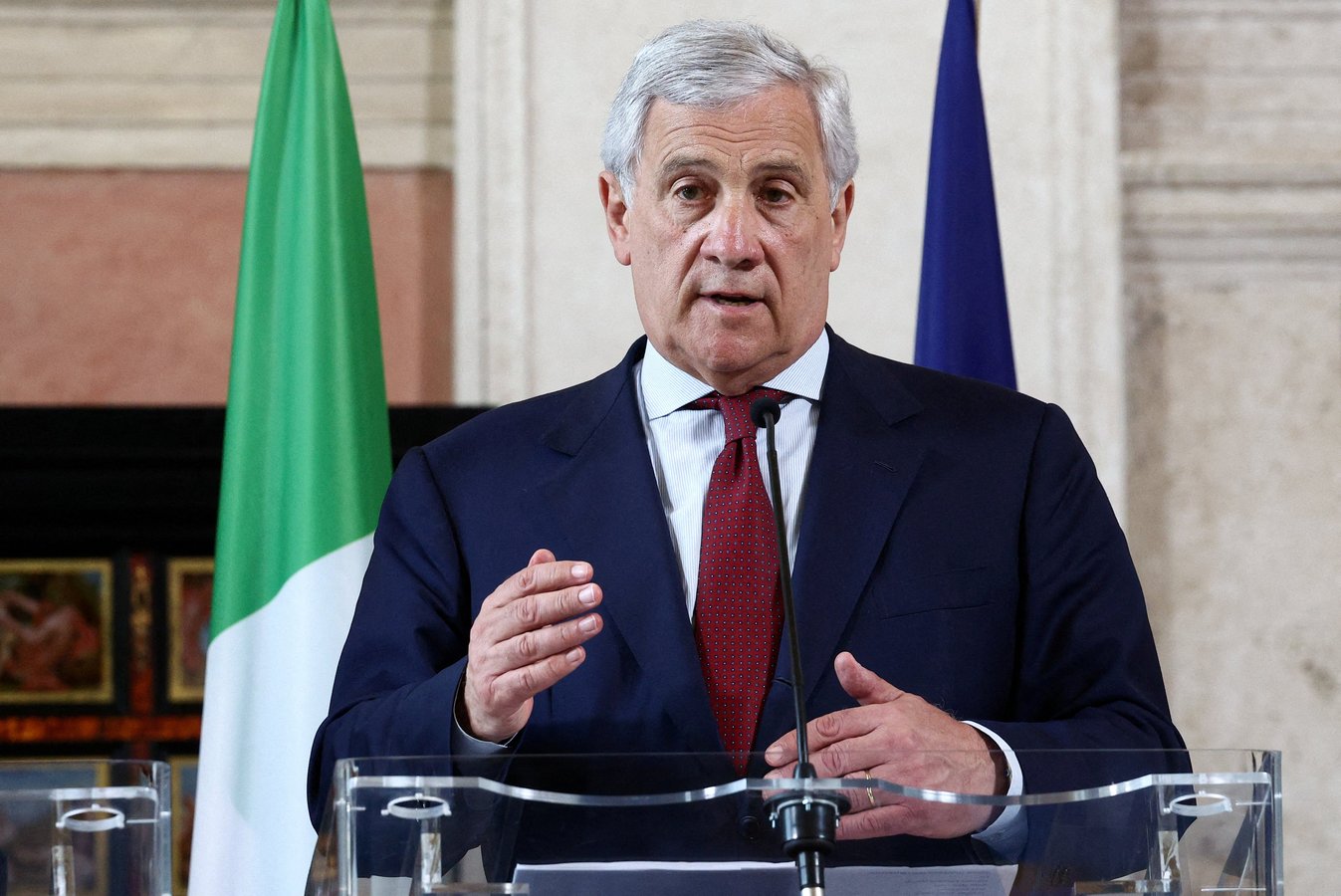
Nicaragua severed diplomatic relations with Italy in July 2026 after Rome demanded the extradition of Alessio Casimirri, a Red Brigades member convicted in the 1978 assassination of former Italian prime minister Aldo Moro, who has lived in Managua under Nicaraguan protection since the 1980s. The break followed a pattern of Ortega using diplomatic quarrels to reinforce his government’s narrative of permanent external hostility – a framework in which every foreign demand becomes evidence of the Yankee-and-Somocista conspiracy he described from the stage on Saturday.
The international community’s response to Ortega’s trajectory has been consistent and largely ineffective. The Organization of American States suspended Nicaragua’s membership in 2021 following pre-election crackdowns. The United States imposed targeted sanctions on Nicaraguan officials under the Magnitsky framework. The European Union followed with its own sanctions. None of it changed the government’s behavior. Ortega continued to consolidate power, continued to strip political rivals of citizenship, and continued to hold elections that produce only the results his government allows.
What Ortega’s Saturday declaration does not resolve is the question of mechanism. Nicaragua’s constitution still nominally requires presidential elections. Ortega has not announced a constitutional amendment to abolish the requirement. He has made a political declaration that elections will not be permitted to serve the purpose of transferring power to his opponents. That may mean elections continue as ceremonial events while any genuine competition is prohibited. It may mean a constitutional change follows. Or it may mean Ortega simply governs without elections and dares the international community to respond.
Rosario Murillo, who would govern alongside Ortega indefinitely under the arrangement he described, did not issue a public statement on Saturday. The constitutional assembly that would need to ratify any formal electoral change did not convene. The UN Human Rights Council has documented systematic repression in Nicaragua including arbitrary detention, torture and extrajudicial violence since 2018, but its reports have produced no change in government conduct.
The 1979 revolution that Ortega commemorated on Saturday ended one family’s monopoly on power by armed uprising. The government it produced is now ending the possibility of any other. The question the declaration leaves unanswered is not whether Ortega will be able to prevent elections – the conditions for doing so are already in place – but what word Nicaragua’s remaining international partners will use when they describe what has been built in Managua over the last eight years.