
BOLOGNA — In a video that spread across Italian social media within hours of his death, Abderrahim Fakir can be heard repeating the same words: “Help, help, that’s enough.” Four officers hold him face-down against the pavement in Bologna’s Pilastro district. He does not get up.
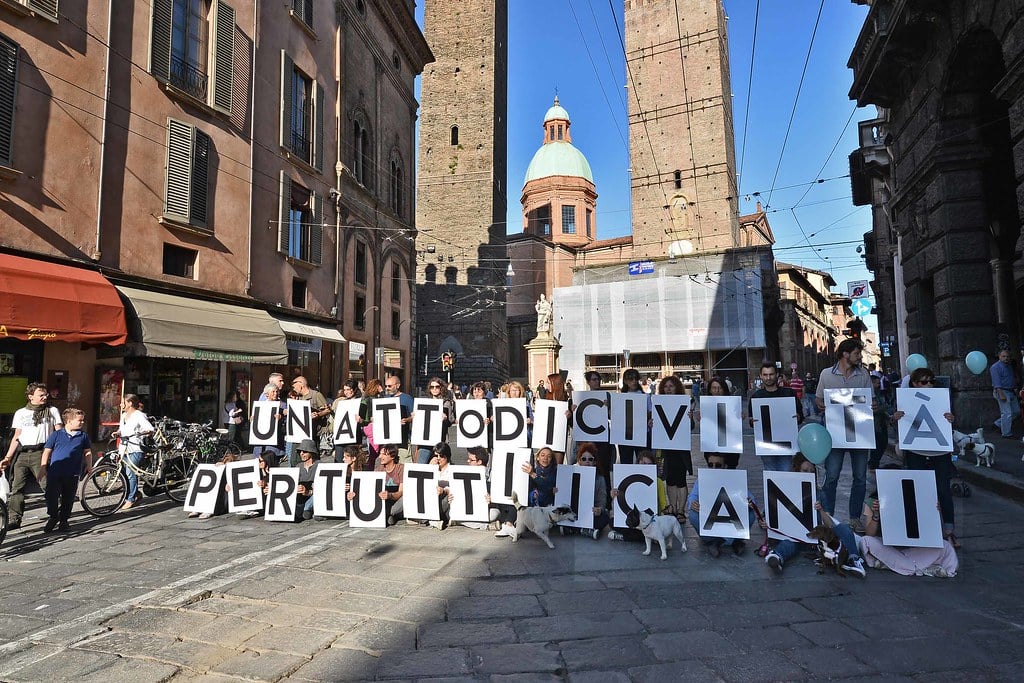
Fakir, a 42-year-old Moroccan-born man, died Sunday night during a police restraint that his family and their lawyers say crossed an irreversible line. By Monday evening, hundreds of people had taken to the streets of Bologna, where police deployed tear gas and water cannons to push back crowds that had gathered near police headquarters and in several neighborhoods across the city.
The Italian prosecutors’ office has opened a manslaughter investigation and placed six people under the scope of that inquiry: two police officers and four ambulance workers, as a forensic panel works to establish the precise cause of death. A preliminary examination found injuries to Fakir’s head and face.
What happened in Pilastro is still, in several important ways, a matter of dispute. Police have declined to offer a detailed account of the restraint, and no official statement has fully explained why Fakir, who witnesses say was in distress, ended up pinned face-down to the ground for as long as the video suggests. The body cameras worn by the two officers involved are among the evidence now being reviewed by prosecutors, alongside recordings from the emergency call that preceded the incident.
Prime Minister Giorgia Meloni said Monday that Italy needed the “truth” about what happened in Bologna, while at the same time condemning what she called the violence of the subsequent protests. Her statement, measured and brief, acknowledged the gravity of the death without directly criticizing the officers or the restraint method. Meloni’s interior minister made no public comment.
The Moroccan Embassy in Rome pledged legal and consular support to Fakir’s family and said it was monitoring the investigation. Morocco’s foreign ministry did not call for Italy to suspend any specific officers, expressing instead confidence in the Italian judicial process and asking for transparency.
What made the footage particularly combustible was its structural resemblance to the 2020 death of George Floyd, the American man who died under a Minneapolis police officer’s knee and set off a global reckoning with racially discriminatory policing. The comparisons emerged within hours across European and Moroccan media, and some protesters in Bologna carried signs bearing Floyd’s name alongside Fakir’s.
The parallels are not exact. Fakir’s case involves a different country, a different political ecosystem, one in which Meloni’s government has repeatedly tightened immigration restrictions and framed security as a central governing priority. But the basic scene the video presents, a man pleading for help while restrained and not getting it, cut across those distinctions for many of the people who watched it.
Immigration and race have not been strangers to Italian political conflict in recent years. Italy has faced thousands of arrivals on its southern coast and prosecuted NGO rescue captains for facilitating crossings. The government has sent migrants to Albania under a bilateral agreement that Italian courts repeatedly blocked before the government sought to override those rulings legislatively. Fakir’s death arrived in that charged context, and some protesters in Bologna explicitly connected his treatment to what they described as a broader dehumanization of migrants by Italian state institutions.
The city of Bologna, long associated with a left-wing political tradition and a large university student population, became a site of friction Sunday night and into Monday. Police fired tear gas near Piazza Maggiore, one of the city’s central squares, and water cannons were deployed in at least two neighborhoods. A small number of shops and a vehicle were damaged during clashes, though the scale of property destruction appeared limited compared to the number of people on the streets.
Italian police unions, which weeks earlier organized a march in Rome over pay and pension demands, have called for restraint in drawing conclusions before the investigation concludes. One union spokesperson said officers had responded to an emergency call involving a man in apparent psychological distress and that protocol required physical restraint in some cases. The spokesperson did not address whether the specific face-down method captured on video was within official guidelines.
For the families of Moroccan migrants living in Italy, the week carried a specific weight. According to data cited by Italian migration researchers, Moroccan nationals represent one of the largest non-EU migrant populations in the country, with a significant presence in northern cities including Bologna, Milan, and Turin. Community advocates say contacts with law enforcement regularly produce friction that goes unrecorded and unaddressed.
Whether the criminal investigation will produce indictments remains to be seen. Manslaughter charges in Italy require proof that the accused acted negligently or with gross disregard for another person’s safety, and defense lawyers for the officers are expected to argue that the restraint was within protocol. The forensic examination ordered by the prosecutor could determine whether the head and face injuries Fakir sustained were consistent with the restraint method used or with something more deliberate.
What Italy’s political class will do with the case is not yet clear. Meloni has resisted calls from opposition parties to convene parliament for an emergency session on policing. The Democratic Party called the death a tragedy and demanded the interior minister appear before a parliamentary committee. Several center-left mayors issued statements in support of the protesters’ right to demonstrate peacefully.
Fakir’s family, who traveled from Morocco after learning of his death, have retained a lawyer and are cooperating with prosecutors. They have asked for access to the body camera footage before formal trial proceedings begin. Al Jazeera, which reported from the Bologna protests, cited activists who said the case would reshape Italy’s national conversation about policing and race.
Days earlier, Italian police conducted a nationwide operation arresting 539 people linked to youth criminal networks across 44 provinces. The Fakir footage now poses a different question about the same institution: not whether Italian policing produces results, but whether it operates within limits. That question, for now, remains unanswered.