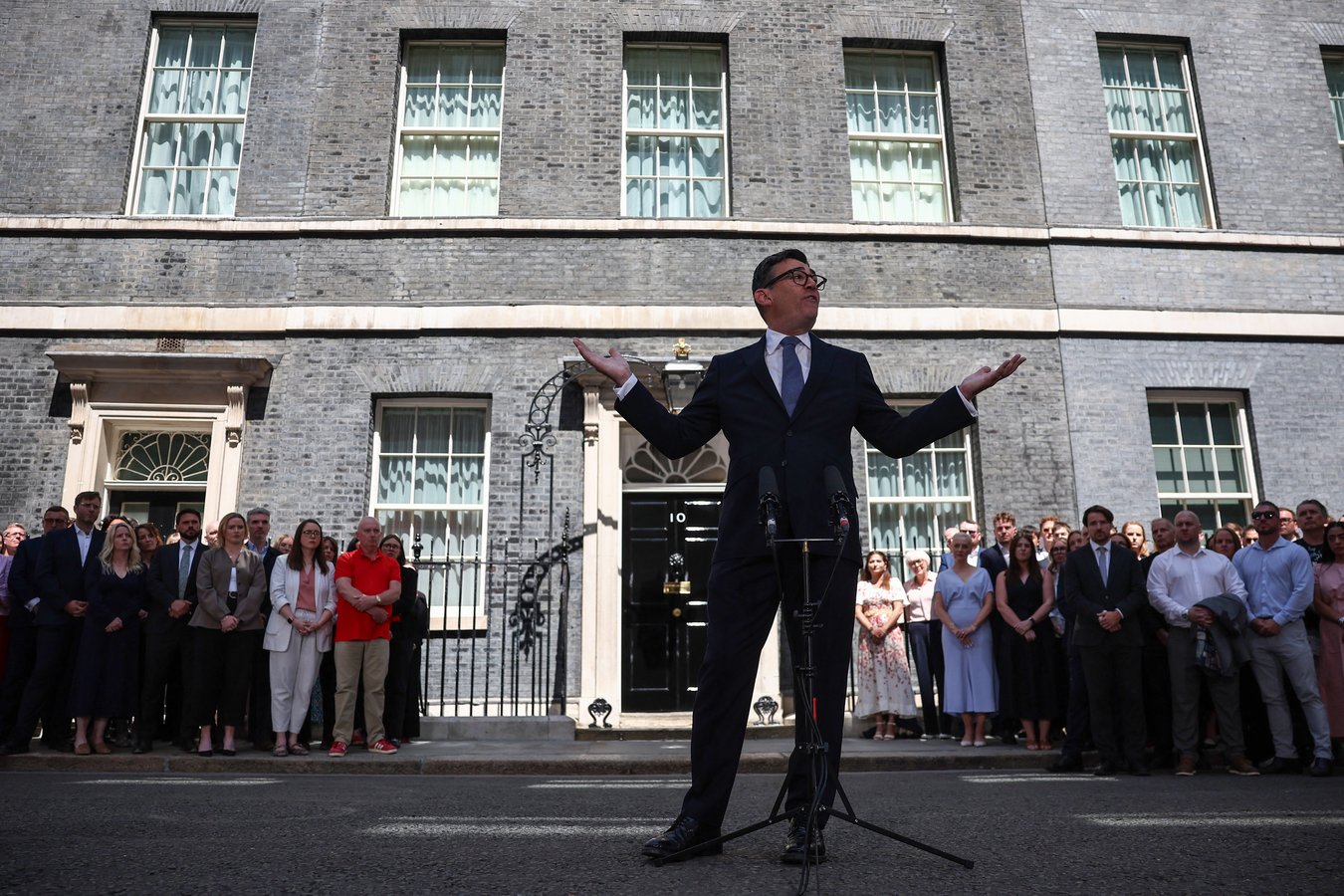

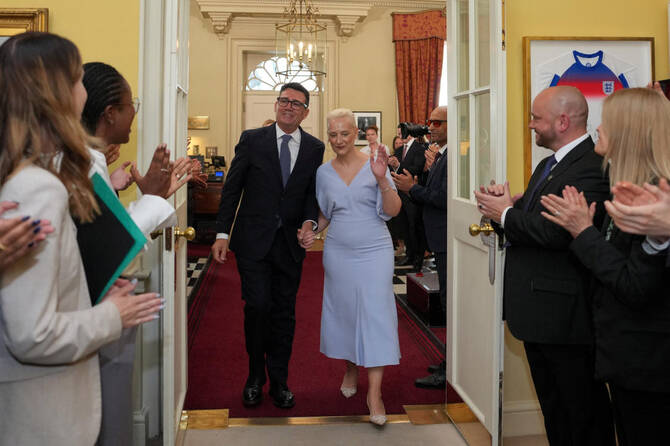
LONDON – Andy Burnham chaired his first full cabinet meeting as Prime Minister on Tuesday, pledging cost-of-living measures within his opening week in office and declaring his government’s intent to deliver the most significant reforms Britain has seen in four decades.
The session came on Burnham’s first working day at Downing Street. He had met King Charles at Buckingham Palace on Monday and was formally asked to form a government, becoming Britain’s seventh prime minister in a decade. He replaced Keir Starmer, whose Labour government won an outsized parliamentary majority in 2024 but lost public confidence faster than almost anyone had anticipated.
Burnham framed the cabinet meeting around immediate economic action, pledging announcements within the week on energy costs, household debt support, and regional infrastructure. He described the government’s ambition as a “circuit-breaker for Britain,” a phrase central to his Labour leadership campaign, which he won on July 17 with the backing of 379 of the party’s 403 MPs.
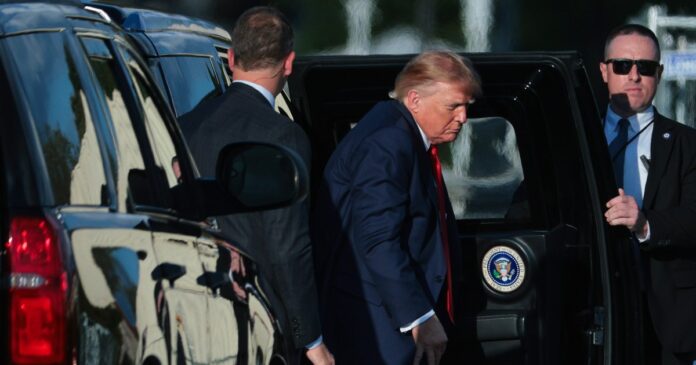
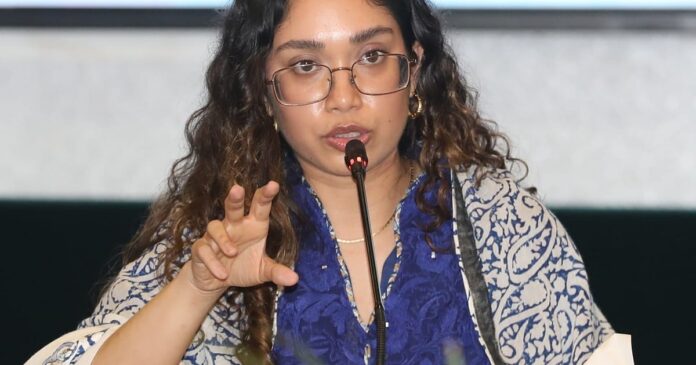
The cabinet carries clear departures from the Starmer era. John Healey, who resigned as Defence Secretary in June over defence spending commitments, returns as Chancellor of the Exchequer, replacing Rachel Reeves. Yvette Cooper has shifted from the Foreign Office to Health Secretary. Ed Miliband moves from Energy to Foreign Secretary. Shabana Mahmood retains the Home Office. David Lammy and Peter Kyle have both departed. Donald Trump called Britain a “poverty stricken disaster” on Monday, then reversed course within hours after praising Burnham’s North Sea oil plans.
Burnham confirmed he had spoken by telephone with Trump shortly after taking office, and that a call with Ukrainian President Volodymyr Zelensky was planned for later this week. His foreign policy positioning has been calibrated: he has committed to maintaining rising UK defence spending, signalled a more sceptical posture toward Washington than some predecessors, and described Russia’s military operation in Ukraine as a test of international norms he intends to take seriously, the Guardian reported.
The political context behind Burnham’s selection as Labour leader is unambiguous. Reform UK under Nigel Farage leads in every published poll, and Labour MPs chose Burnham because they judged him the most credible figure to arrest that momentum. He has argued consistently that Reform’s support reflects economic anxiety more than ideology, and that a government delivering visible improvements on household costs within weeks can reclaim that ground. Burnham, Britain’s first practicing Catholic prime minister in more than 500 years, brings to Downing Street a political identity that is explicitly northern and rooted in place-based economics.
Whether his opening gambit holds is a different question. The measures flagged for his first week include a ten-year rough-sleeping elimination plan, regional devolution expansion, and a cost-of-living package whose specifics have not yet been published. The ambition is stated clearly. The mechanism is not yet public.
Burnham spent more than a decade as Mayor of Greater Manchester, overseeing a devolution settlement that became a model for English regional governance. His supporters argue that his ability to translate political vision into policy delivery in a real institutional setting is precisely what Starmer’s government lacked. Critics note that a single English city region is not a sovereign economy, and that the fiscal constraints Healey inherits from Reeves leave almost no room for new commitments without additional borrowing or tax decisions the government has not yet signalled.
The Treasury’s first public statement since Healey’s appointment was silent on whether the previous fiscal rules would be retained. That silence will not last long. Burnham has defined the priorities. What his chancellor says next will determine whether the week-one pledges are a programme or an opening bid.