
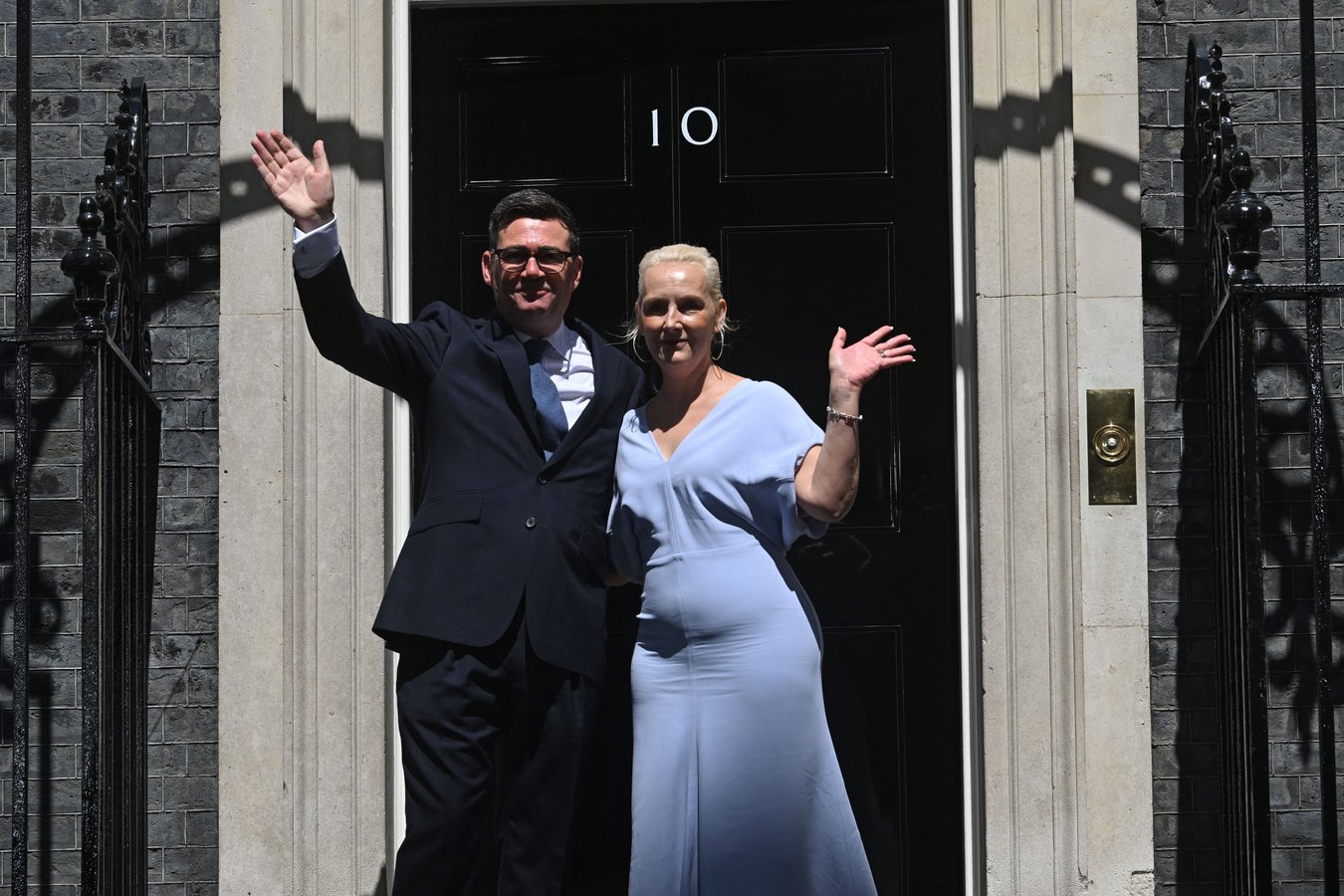
LONDON – Andy Burnham walked into Downing Street on Monday as Britain’s new Prime Minister, the seventh to hold the office in a decade, only to find himself the subject of an unsolicited performance review from Washington. On Truth Social, Donald Trump declared Britain a “poverty stricken disaster,” a verdict delivered even as Buckingham Palace was processing Burnham’s appointment papers.
Trump’s intervention was characteristically contradictory. Within hours of the broadside, he softened his position, expressing what he called admiration for Burnham’s reported plans to expand North Sea oil drilling, writing that such a move would transform Britain “from one of the greatest poverty stricken disasters to one of the richest countries anywhere in the world.” The sequence – slur followed swiftly by flattery – reflected the incoherence of a foreign policy conducted through social media by a man who treats allied governments as political props.
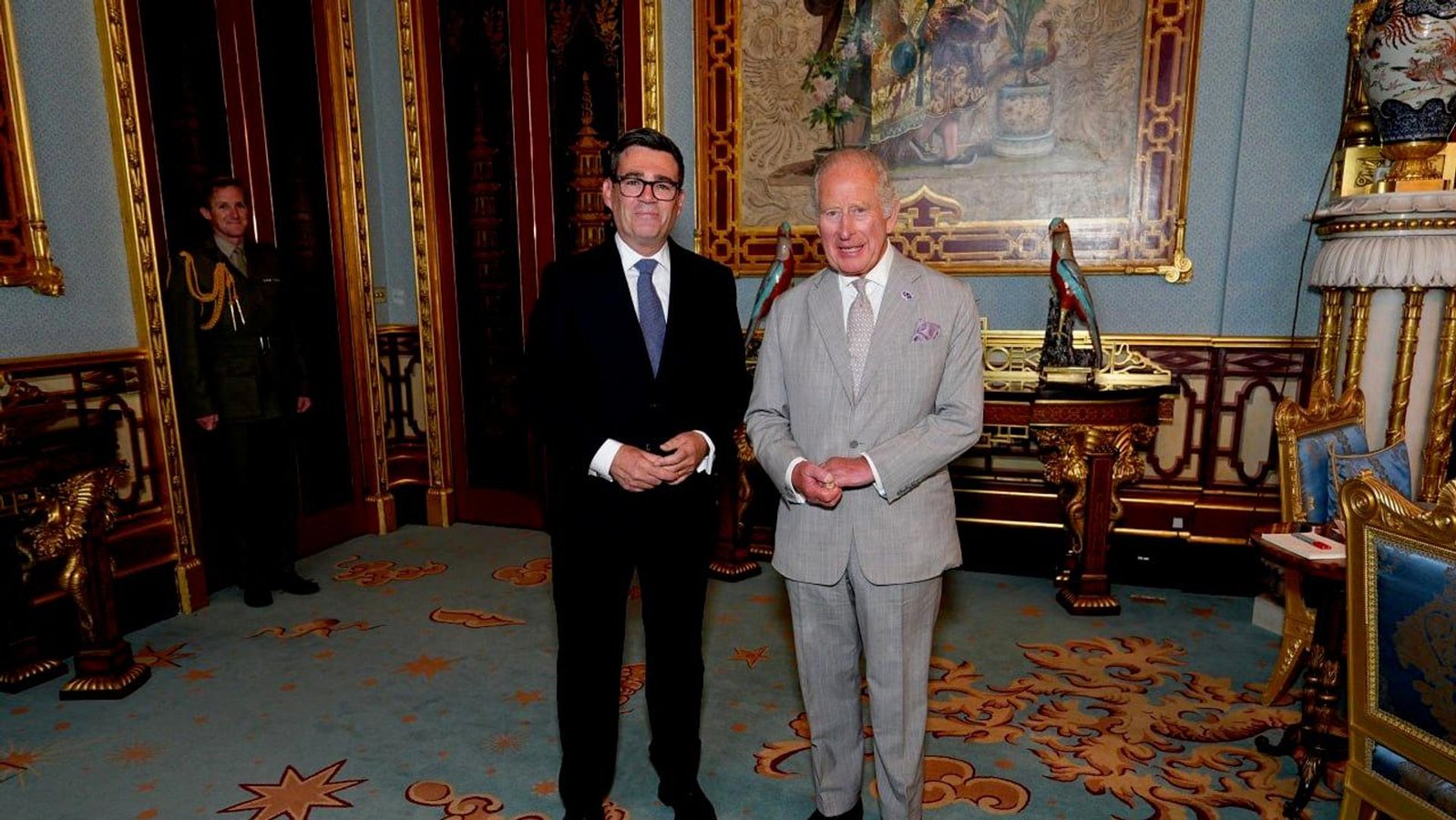
Burnham’s ascent to Number 10 came without a general election. He was confirmed as Labour leader on July 17 with 379 of 403 Labour MP nominations – a near-unanimity that made a leadership challenge mathematically impossible – and was formally invited to form a government by King Charles III on Monday afternoon. He replaces Keir Starmer, who stepped down after months of pressure from within the Labour movement and declining poll numbers, handing over a government still dealing with the economic and geopolitical turbulence that has defined Britain’s recent political cycle.
The new Prime Minister’s office declined to respond directly to Trump’s Truth Social post, a studied silence that reflected Burnham’s preference for keeping the transatlantic relationship out of the social media loop. Burnham, who built his political reputation through the devolved governance model of Greater Manchester, has historically favoured working-class pragmatism over ideological performance, which may explain why Trump’s commentary found no immediate purchase at Downing Street.
Trump’s characterisation of Britain as impoverished, whatever its crudeness, does land against a real economic backdrop. The United Kingdom has faced persistently low productivity growth, a cost-of-living crisis that predates the current government, and an energy sector under sustained pressure since the 2022 commodity shock. Burnham campaigned on industrial renewal and northern regional investment. His reported interest in unlocking North Sea reserves, which Trump seized on as evidence of sensible thinking, represents one plank of a broader energy strategy that also includes renewable investment.
But the episode is less about British economic policy than about the peculiar dynamics of Trump’s second-term approach to allied nations. He has developed a pattern of insulting governments before pivoting to transactional warmth when he detects policy alignment. Canada received similar treatment: tariff threats and sovereignty jibes followed by brief periods of professed mutual interest whenever Ottawa moved in directions Washington approved.
As Burnham assumed office, he inherited a UK-US relationship that Starmer had worked carefully to maintain, attending NATO summits and avoiding direct confrontations with the White House even when Trump’s positions on Ukraine and trade diverged sharply from London’s. Whether Burnham, whose instincts are more explicitly redistributive and whose political base lies in industrial England rather than in financial services, will sustain that careful management remains an open question.
The broader context is a UK that has changed prime ministers seven times in ten years, a pace of political churn that has made continuity difficult to sustain across departments and diplomatic relationships. Burnham will need to establish his own identity on the world stage without the luxury of a long transition. Trump’s Truth Social commentary, incoherent as it was, at least establishes one thing clearly: the new British leader will face external distractions from day one.
Among the immediate questions facing Burnham is whether he will move quickly on the North Sea question. His government has not formally announced an expanded licensing round, and the energy policy signals coming from Labour’s senior figures are mixed. Trump may have praised something that does not yet exist as firm policy. That, too, is consistent with how Washington has engaged with British politics in recent years: reacting to assumptions rather than confirmed plans, and inserting itself into processes it has not fully tracked.
For those watching from Westminster, the Trump commentary was dismissed as noise. Burnham’s history of keeping his political language grounded – in industrial communities rather than in the abstract vocabulary of Westminster – makes him an unlikely target for the kind of symbolic confrontation Trump prefers. But the relationship will require tending regardless, particularly given that the new government’s position on Gaza, on energy, and on European security has yet to be fully articulated.
Starmer, for his part, left without a public farewell from Number 10. His successor comes from a different part of the Labour tradition – northern, Catholic, and committed to a model of devolved public investment that has not previously been tested at the national level. What Trump makes of any of that is almost beside the point. The relevant question is what Burnham makes of Trump, and that answer will take rather longer than a Truth Social post to establish.