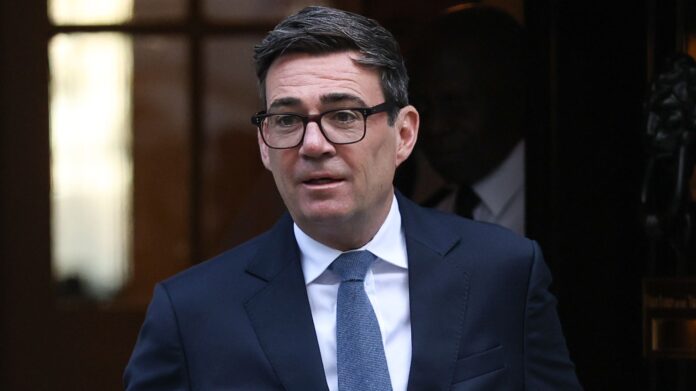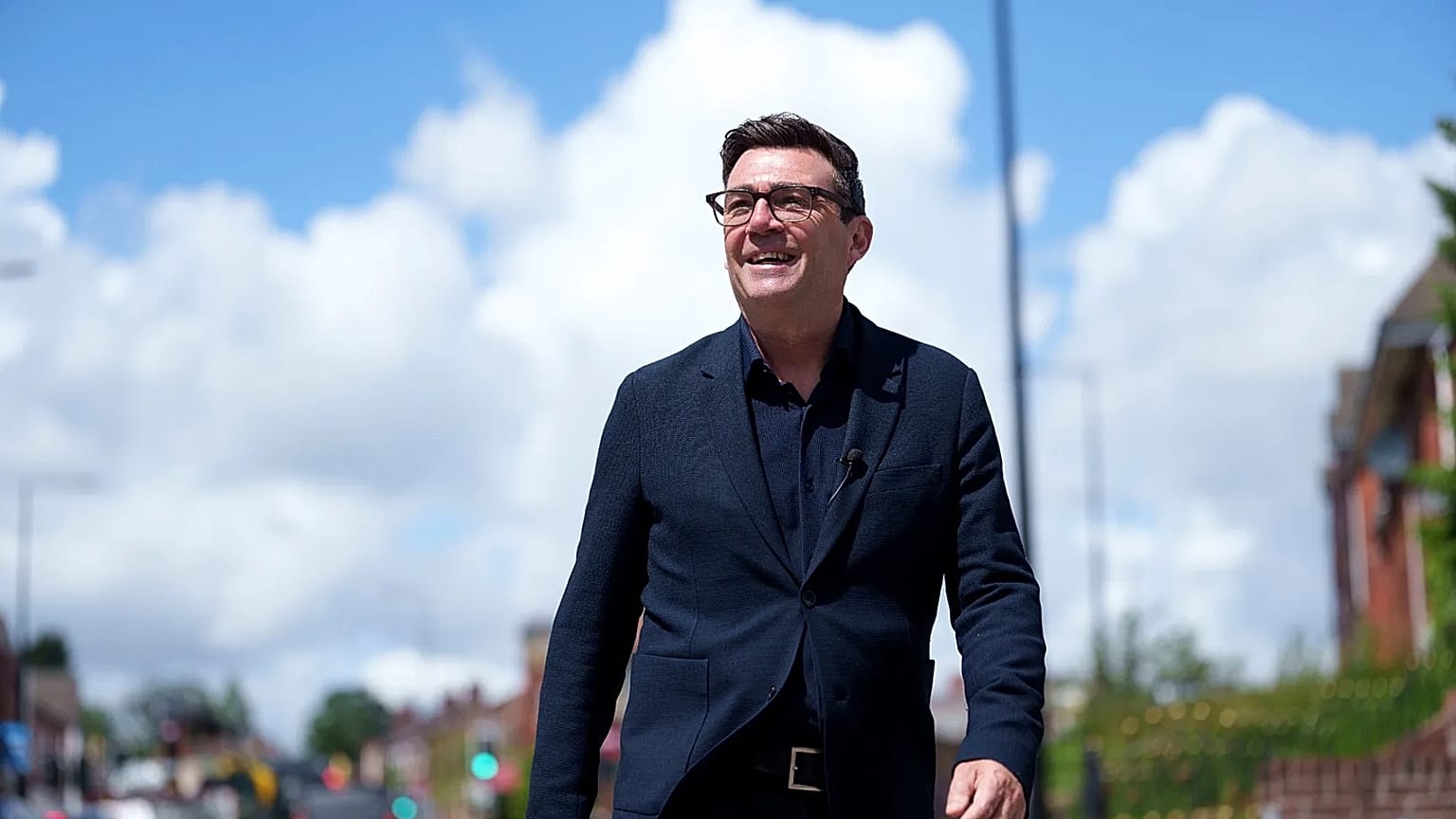

LONDON – Andy Burnham, who twice lost Labour leadership contests before spending nearly a decade transforming Greater Manchester into a model for the kind of devolved governance he now plans to bring to Westminster, was confirmed as the United Kingdom’s next Prime Minister on July 17 after receiving 379 of a possible 403 nominations from Labour members of Parliament. He takes formal office on Monday, July 21, stepping in for Keir Starmer, who announced his departure after months of declining poll numbers and internal friction over the government’s economic direction.
The margin of support reflects less the scale of Burnham’s personal popularity within the parliamentary party than the arithmetic of a leadership succession that collapsed any meaningful challenge before the contest formally opened. Home Secretary Shabana Mahmood announced Burnham’s selection at a special press conference on Friday after his last potential rival withdrew. He secured 94 percent of available MP nominations in a party that, as recently as 2020, had been bitterly divided over its direction under Jeremy Corbyn’s legacy.
His political biography runs through three failed attempts at leadership and one successful one that never had to face a ballot. He stood for Labour leader in 2010, losing to Ed Miliband, and again in 2015, when Corbyn’s surge ended his campaign before it could gain traction against the left’s momentum. He ran a third time in 2016 before withdrawing. Each failure pushed him toward Greater Manchester, where he was elected Mayor in 2017, and each year in that office transformed what had appeared a political consolation into the credential that eventually made him the obvious successor to Starmer.
Burnham’s first speech as Labour leader was partly an admission and partly a direction. “This generation of politicians, myself included, have failed to challenge a political culture and an economic model that simply does not work well enough for ordinary people,” he said. The statement named the failure and pointed toward what he sees as the solution: redistribution of power away from Westminster and Whitehall, toward regional governments and the communities they serve. His specific commitments include what he has informally described as a “No. 10 North” in Manchester, a formal governing presence in the city that would carry real decision-making authority rather than a ceremonial relationship to London.
Whether that model can transfer from a mayoral authority covering 2.8 million people to a national government operating across a country of 68 million remains the defining question his tenure will need to answer. Burnham’s record in Greater Manchester showed genuine delivery on transport integration, rough sleeping reduction, and police accountability reform. It also showed the limits of what a metro mayor can accomplish when national policy settings constrain what regional authority can achieve. As Prime Minister, he controls those settings. The test is whether organizational discipline effective at city-region scale translates to a Whitehall bureaucracy of different size and entrenched interest.
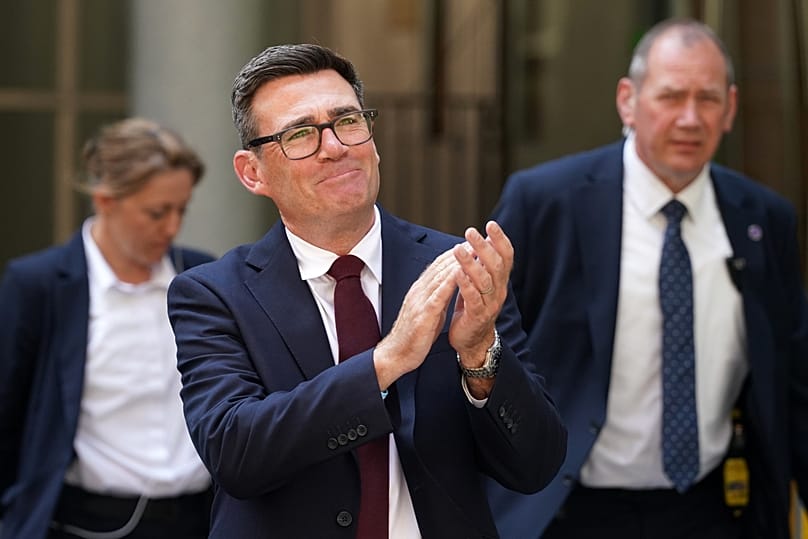
The political opposition to his ascension was immediate. Conservative leader Kemi Badenoch described Labour as “running scared” of scrutiny over Burnham’s uncontested path. Reform UK’s parliamentary contingent argued that an appointment without a full membership ballot lacked democratic legitimacy. Labour’s position is that the party’s rules governing leadership succession do not require a membership vote when a parliamentary candidate achieves a majority through an uncontested nomination, a procedural argument adequate as a legal foundation but unlikely to satisfy critics who read the process as managed rather than contested.
Burnham recently won the Makerfield by-election with a substantial majority over Reform UK and Restore Britain challengers, a result interpreted as confirmation that he could hold working-class northern constituencies that had drifted toward populist alternatives under Starmer’s tenure. He spent June in active constituency campaigning that included a visit to Ashton-in-Makerfield on June 9, shortly before securing the nomination. Whether that northern electoral credibility travels south into traditional Conservative territory is the question his party needs answered before the next scheduled general election.
His position on the European Union softened during the leadership campaign. He acknowledged that “Brexit has been damaging” for British industries dependent on European supply chains and labor, while stopping short of endorsing a formal reapplication for membership. Labour’s 2024 manifesto committed to closer trade alignment with Brussels, and Burnham’s leadership is expected to accelerate those negotiations. Britain’s appeal to European professionals has remained robust despite Brexit: a recent survey found that Germany’s highest earners exploring work abroad ranked the UK second in preferred international destinations, with searches rising 38 percent over the measured period.
He begins formal tenure on Monday with an economic environment that provides both opportunity and constraint. UK GDP growth has been modest since Labour’s 2024 election victory, with borrowing costs elevated and fiscal headroom narrower than the party had projected. Burnham has signaled continued investment in infrastructure and housing but has not specified where funding would come from if the current fiscal framework proves binding. His devolution agenda could generate efficiency gains in some areas while creating coordination costs in others, and the relationship between national fiscal planning and regional budget devolution remains one of the structural tensions in his programme that has not yet been resolved in specific policy.
The Cabinet Burnham inherits from Starmer, which largely supported his leadership, is expected to remain in place through his initial weeks as he establishes his governing approach in Whitehall. The first major tests of his foreign policy are likely to come quickly: the UK holds a permanent UN Security Council seat, has substantial NATO defence commitments, and faces immediate decisions on military support for Ukraine, trade negotiations with the United States and the European Union, and the bilateral relationship with China given the ongoing British Steel nationalization situation at Scunthorpe. According to Euronews, the formal handover of the Prime Ministership is scheduled for Monday morning at Buckingham Palace, where Burnham will be appointed by King Charles III in the standard constitutional ceremony.