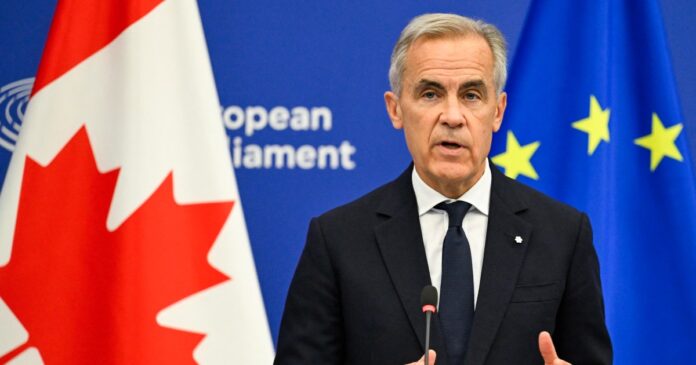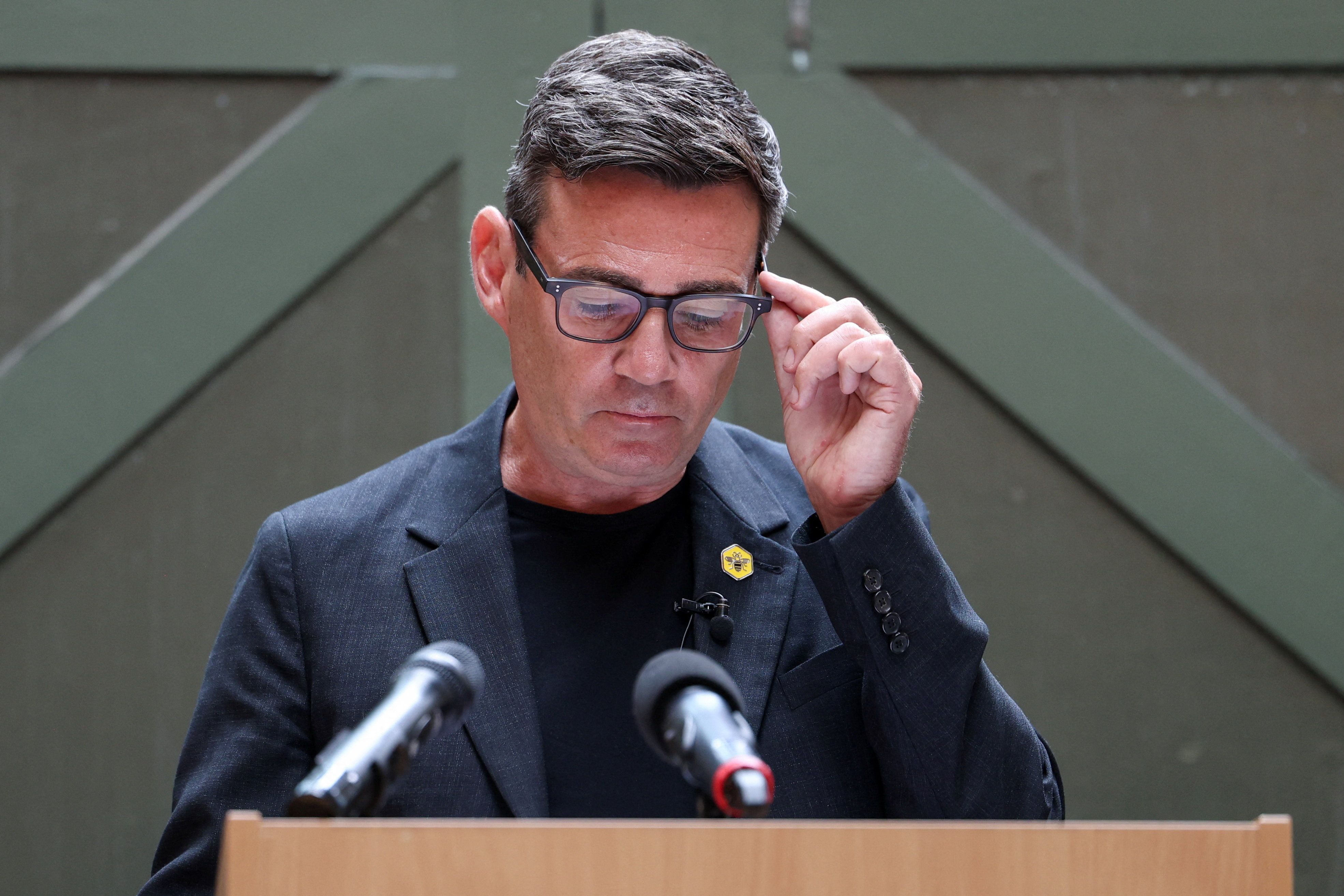

LONDON – Andy Burnham, who will become Britain’s prime minister on July 20, has apologised for Labour’s response to Israel’s military campaign in Gaza and pledged stronger action against the Netanyahu government, but analysts say the statement has not been matched by any concrete change in policy.
Burnham acknowledged the criticism directly. “I know many people feel that at the start of Israel’s military action in Gaza, my party didn’t get it right, and I am sorry about that,” he said in remarks carried by TRT World and Al Jazeera. “We need to do better. We’ve got to do more to put pressure on the Israeli government.”
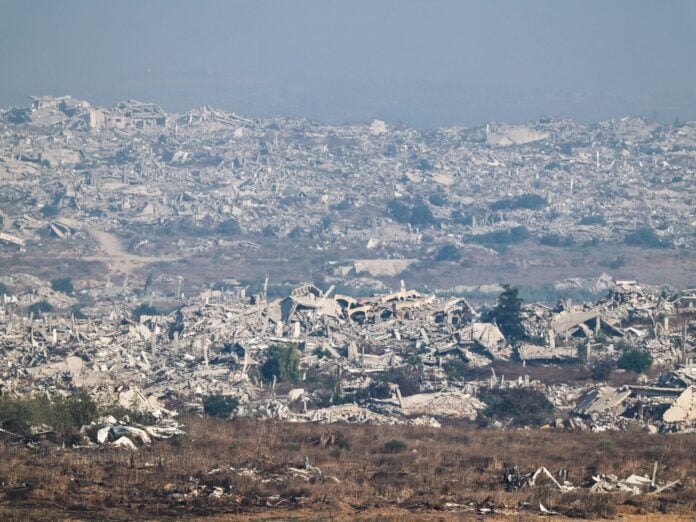
The apology addressed one of the defining fractures inside Labour since October 2023. Under Keir Starmer, the party was criticised repeatedly by MPs, pro-Palestinian organisations, and its own youth wings for resisting ceasefire demands and providing rhetorical cover to Israeli military operations that have killed tens of thousands of Palestinians and displaced nearly the entire population of Gaza. Young voters defected in measurable numbers over the issue, with several urban seats returning Green Party candidates in the 2026 election.
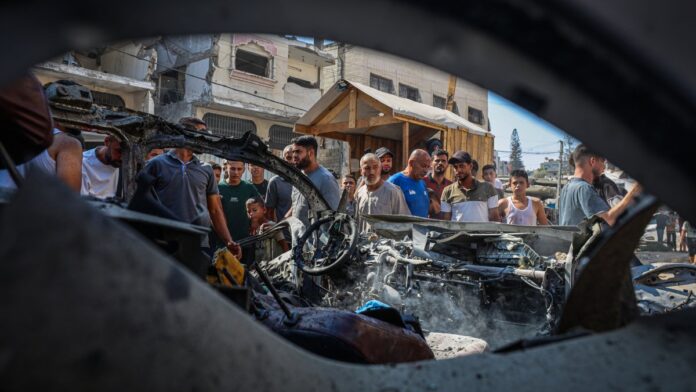
Burnham, due to enter Downing Street with 322 of 402 Labour MP nominations, described the UK as having been “too slow to call for a ceasefire.” He proposed additional sanctions targeting individuals and entities involved in Gaza violence and called for trade restrictions on goods from illegal Israeli settlements. He acknowledged “increasing evidence that war crimes appear to have been committed” in Gaza, language that carries legal weight but stops deliberately short of the word genocide, which international human rights organisations and several UN special rapporteurs have used to describe what has been happening there since October 2023.
The careful phrasing was deliberate. Burnham said legal determinations around genocide should come from international courts rather than politicians. The International Court of Justice opened genocide proceedings against Israel in January 2024 at South Africa’s request, and the case remains active. His formulation holds a diplomatic position open while avoiding language that would commit the incoming British government to an outcome it would then be pressed to act on.
The response from political observers has been sceptical. Tim Bale, a professor at Queen Mary University of London, described the remarks as “probably more symbolic than substantive” and told Al Jazeera the UK is “already at the edge” of what it will do regarding Israel. Patrick Diamond, a former Labour policy adviser, said the apology appeared designed to “placate voters who defected from Labour over the Gaza issue” while questioning whether it signals any substantive shift in British foreign policy.
Tahani Mustafa of the European Council on Foreign Relations was more direct. “These are just platitudes ahead of the election until they are translated into actual policy changes,” she told Al Jazeera’s analysis team. The gap she describes is structural: the UK has partially suspended weapons component sales to Israel but has not stopped them entirely. Palestine Action, the group whose members blocked arms supply routes to Israeli weapons manufacturers operating in Britain, remains a proscribed terrorist organisation under the same government that Burnham is preparing to lead.
The incoming prime minister also faces constraints that previous British governments confronted in different forms. The US-UK alliance, operating under a Trump administration that has consistently backed Israeli military operations, creates diplomatic costs for any British government that moves significantly toward a harder line. Burnham was careful to say there is “no contradiction between a zero-tolerance approach to antisemitism and holding the Netanyahu government to account,” a formulation that reflects Labour’s continuing sensitivity over the antisemitism allegations that defined Jeremy Corbyn’s leadership.
Labour under Starmer did take some steps that Burnham cited positively. The UK formally recognised Palestine as a state, a decision with symbolic weight but no immediate legal consequence for people inside Gaza. It sanctioned a small number of Israeli far-right ministers including Itamar Ben-Gvir. Burnham’s framing suggests he wants to extend those steps within the same framework rather than replace it, a position that solidarity networks and Palestinian civil society organisations have called structurally insufficient.
Britain has levers it has not used. A full suspension of the remaining arms export licences would be the clearest signal of genuine policy change. Active support for enforcement mechanisms flowing from the ICJ proceedings would carry diplomatic weight. The settlements trade ban Burnham mentioned has circulated in British policy circles for years without becoming law. Al Jazeera’s analysis of whether UK’s Gaza position is shifting found that none of these steps are included in Burnham’s current proposals.
Gaza has been sidelined in much of the diplomatic conversation reshaping the Middle East. Burnham’s apology matters because it comes from the person who will be prime minister in nine days, not from a backbencher or a party spokesman. Whether the “more” he has promised amounts to anything the people in Gaza can feel remains the open question that the apology itself does not answer.