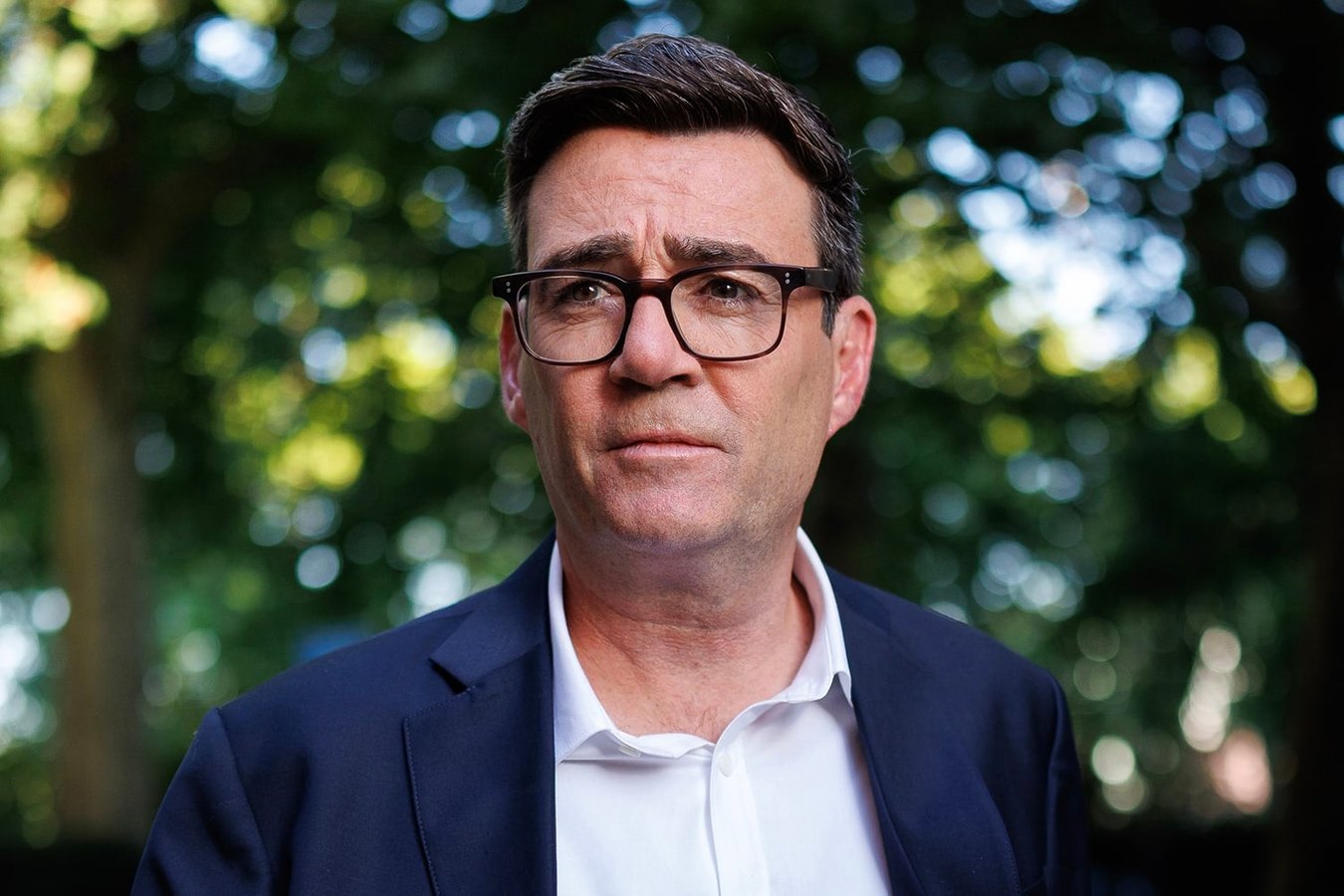

LONDON – The Labour Party confirmed Andy Burnham as its new leader at a special conference on Friday, completing the procedural step that makes him Britain’s next prime minister. He will take office at 10 Downing Street on Monday, July 21. The confirmation delivers something more unusual than a change of government: Burnham, who was born and raised in the Roman Catholic faith and sends his three children to Catholic schools, becomes the first practicing Catholic to hold the office of prime minister in more than 470 years, a succession interrupted by the English Reformation that removed Catholicism from the centre of English public life in the 1530s.
The gap is not accidental. Since Henry VIII’s break with Rome, the British prime ministership has belonged exclusively to members of the Church of England or to politicians with nominal or no religious affiliation. Tony Blair attended Mass with his Catholic wife and children for his entire tenure in Downing Street, but waited until after leaving office in 2007 to be formally received into the church. Boris Johnson was baptized Catholic as an infant and confirmed Anglican at Eton – a conversion chosen for institutional reasons before he reached adulthood. Burnham’s Catholicism is neither recent nor performed: he has described it as part of a working-class northern identity that he grew up in and has never set aside, NBC News reported.
Burnham, 56, earned the nickname “King of the North” through three consecutive victories in Greater Manchester’s mayoral elections, where he built a record on transport, public services, and a politics explicitly positioned outside London’s economic gravity. He left Parliament in 2017 to take the mayoral role and returned through a by-election in Makerfield, a seat contested specifically to allow a leadership challenge once Keir Starmer’s position became untenable. Starmer’s resignation came in late June, weeks after local election results confirmed the scale of the erosion he had been unable to reverse.
The speed and scale of Burnham’s endorsement – more than 85 percent of Labour MPs backed him – reflects a parliamentary party that chose the candidate most likely to limit the damage from Nigel Farage’s Reform UK movement. Reform has led national opinion polls for more than a year, drawing voters from Labour’s traditional working-class heartlands. Internal Labour polling found Burnham more effective than any declared rival at speaking to those constituencies. Whether that assessment reflects his actual capacity to win voters back from Reform, or the party’s desire to believe so, will be tested at the next general election, which must be held by 2029.
On Gaza, Burnham has staked out a position designed to distance him from the conduct of Starmer’s government on an issue that cost Labour tens of thousands of members and significant support among Muslim voters. He publicly apologized for Labour’s response to the genocide in Gaza, saying the party “didn’t get it right,” and committed to increased pressure on Israel. He has not specified the form that pressure would take. According to Al Jazeera, his parliamentary support includes a significant bloc from the party’s left wing, which watched Starmer’s approach to Gaza with mounting frustration and will now watch Burnham’s for signs of the divergence he has promised.
The prime ministership he inherits carries specific financial obligations alongside its political ones. Starmer’s defence investment plan, announced in his final weeks in office, committed £15 billion to Britain’s armed forces but left £4.7 billion of that commitment without an identified funding source. Burnham pledged to close the shortfall and has not said how. The United States has withdrawn a third of its fighter jets from Europe in the same period, increasing the burden on Britain and its European allies at precisely the moment Britain’s own defence baseline is in question.
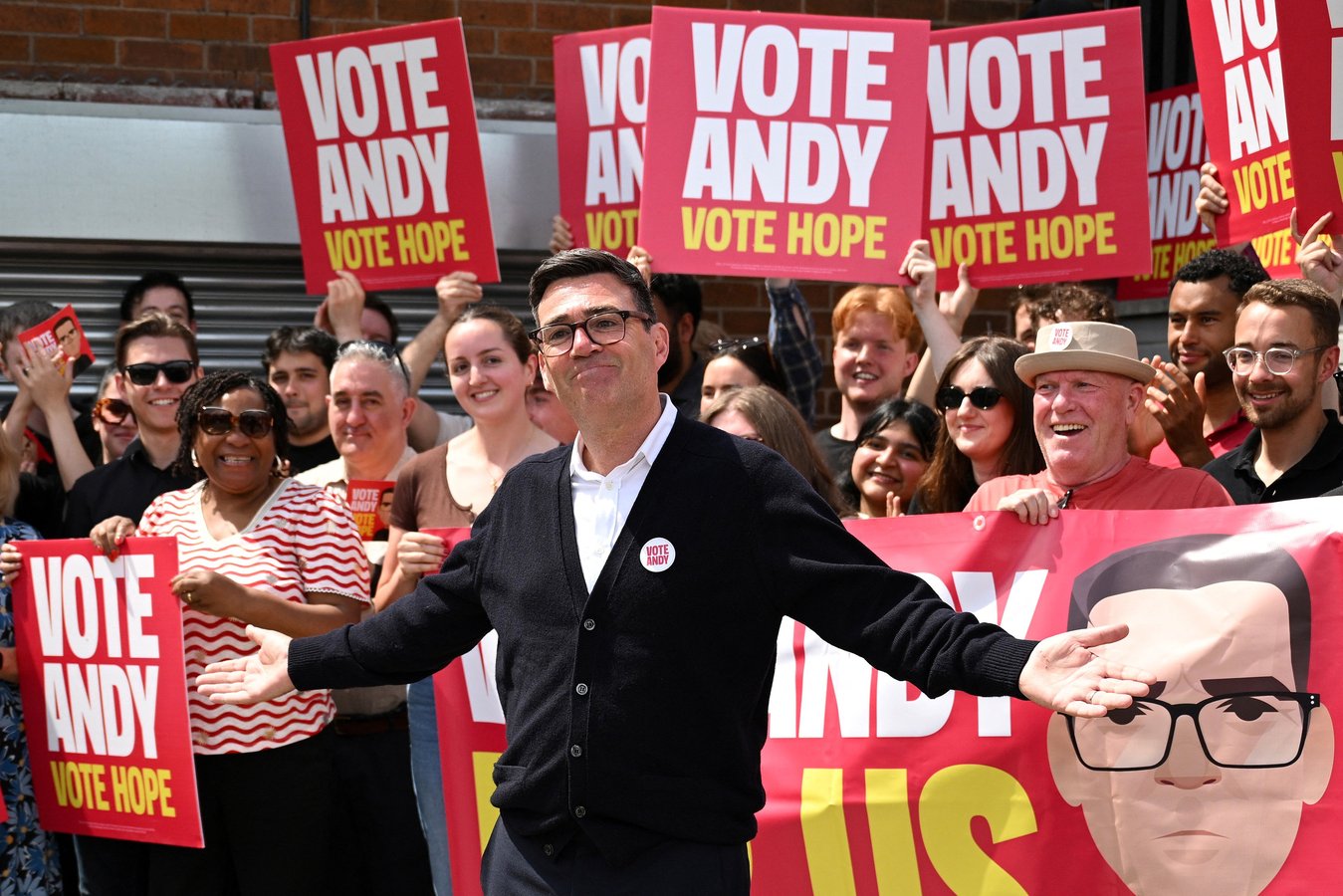
His economic programme centres on a structural shift away from the London-dominated model that he has criticised throughout his political career. The concept he calls “No. 10 North” – a second centre of governmental influence based outside the capital – is as much a signal about power as it is a detailed policy proposal. He has described his intended governance as “authentically Labour” and “unashamedly Labour in our priorities,” language that positions him to the left of Starmer without adopting the confrontational framing of the Corbyn era. His agenda includes economic reindustrialisation, greater public control of strategic industries, and redistributing fiscal and political power from London toward the regions of England that have felt its absence for decades.
What Burnham does not carry into Downing Street is a mandate from the country. The 349 Labour MPs who confirmed him on Friday represent the parliamentary party, not the British electorate. The parliamentary majority he inherits – won by Starmer in Labour’s July 2024 landslide – provides the numbers to govern. Whether it provides the political legitimacy to make the choices that economic reindustrialisation, Gaza policy, and a £4.7 billion defence gap require is a different calculation. His nomination count, confirmed weeks ago, showed more than 85 percent of the parliamentary party’s support – a display of unity that carries within it a built-in test of whether that unity holds when the governing decisions arrive.
Labour’s internal consensus in favour of Burnham rests partly on the belief that he is the right answer to Farage’s populism – that a Catholic mayor from the North who speaks in the register of the party’s founding traditions can recover the voters Reform has taken. That belief has not yet been tested against the electorate. What Friday’s special conference confirmed is that the party has made its choice. Whether it has made the right one is a question that only the next election, whenever Burnham decides to call it, will begin to answer.