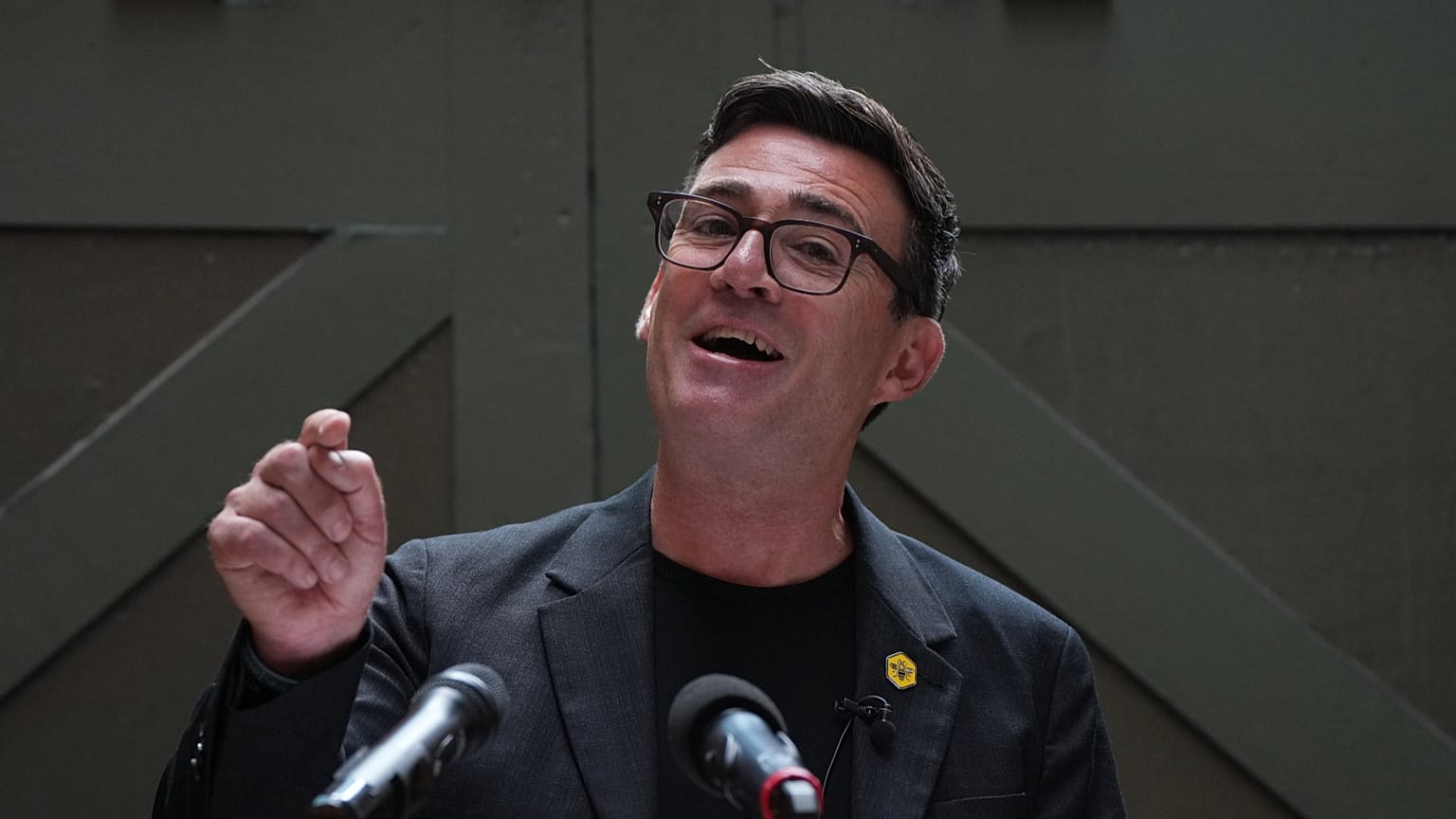

LONDON – Britain will have its sixth prime minister in seven years by July 20. On Thursday, Andy Burnham won 322 Labour MP nominations in the first round of the party’s leadership contest, Euronews reported, falling one short of the 323 threshold that would mathematically prevent any remaining challenger from accumulating the 81 signatures required to qualify for the ballot. Nominations close on July 16. No rival has declared.
The arithmetic is conclusive. With every other Labour MP either publicly committed to Burnham or staying silent, the final potential rival effectively conceded a day earlier: Armed Forces Minister Al Cairns withdrew Wednesday, saying “months of internal Labour politics isn’t what the country needs right now.” Former Health Minister Wes Streeting, once regarded as the centrist alternative, dropped his own bid and announced he would back Burnham. The Labour Party has scheduled a special conference for July 17 to confirm the new leader. Burnham will take office at 10 Downing Street three days later, on July 20.
He arrives carrying the unofficial title “King of the North,” earned through three consecutive victories in Greater Manchester’s mayoral elections and cemented by a political identity that is consciously positioned outside London. He is 56 years old, a former MP from 2001 to 2017 who returned to Westminster after winning a by-election in Makerfield – the victory that effectively ended Keir Starmer’s premiership by making a leadership challenge viable from within parliament. Starmer resigned in late June once the numbers became unmistakable.
Burnham’s signature proposal – creating a “No. 10 North” to coordinate greater devolution across Britain from a base outside London – is less a precise policy than a signal about where he believes power in the United Kingdom should sit. He has positioned himself as slightly to the left of Starmer while projecting a personal style that Labour’s internal polling has found more effective with the working-class voters who have shifted toward Reform UK. The party he inherits has been trailing Nigel Farage’s party in national polls for more than a year.
On the foreign policy issues that most divided Starmer’s Labour, Burnham has been notably deliberate about one and deliberately ambiguous about the rest. He has signalled he will pursue a different approach to the Israel-Palestine conflict than Starmer did. On Gaza, where the death toll has continued rising throughout the Starmer government, he has indicated openness to stronger British action without specifying its form. Whether this represents genuine policy divergence or electoral positioning will become clearer once he governs. His backing from the party’s parliamentary left – the wing that was most agitated by Starmer’s caution on Gaza – suggests he at least expects to be held to it.
The party’s domestic challenges arrive alongside structural ones. Britain’s defence spending carries a previously undisclosed £4.7 billion gap, which Burnham pledged to close when the plan was published – without specifying the funding source. Pressure from the United States on NATO spending targets is likely to intensify regardless of who occupies Downing Street, and Burnham’s relationship with the Trump administration – which Starmer invested heavily in managing – begins with no established track record. The Reform UK threat, which contributed directly to Starmer’s removal, will not diminish because the leader has changed.
The circumstances that put Burnham in position are worth placing against the speed of his accession. Starmer’s Labour won a commanding parliamentary majority in the July 2024 general election. Within two years, his government was trailing in polls, several cabinet ministers had resigned, and a by-election in a Labour heartland had put his replacement within reach. Starmer’s resignation did not solve the governing problems that eroded his position; it transferred them.
Surveys show Burnham is the most popular politician within the Labour Party among both MPs and members. That internal popularity has translated into the near-unanimous first-round endorsement visible in Thursday’s nomination count. What it will not automatically translate into is the kind of electoral recovery Labour needs: Burnham must win back voters who have moved to Reform UK, to the Liberal Democrats, and in some cases to abstention, without the benefit of a general election mandate that would give him a renewed public permission structure.
What Burnham’s July 17 confirmation will also represent is a choice about ideological direction after Starmer’s centrist positioning proved insufficient to stem the Reform UK rise. Burnham is perceived as more willing to frame class as a political category than his predecessor and more committed to regional devolution as a structural reform rather than a policy add-on. Whether those differences amount to a distinctive governing programme – or simply a different communication style applied to the same institutional constraints – is not yet clear.
He will not have the mandate of a public vote. The 322 nominations confirmed Thursday represent the Labour parliamentary party, not the British electorate. The question of whether the country will get to choose between Burnham’s Labour and a Reform UK led by Farage will depend on how long the current parliament runs and whether the governing coalition holds. That election, whenever it comes, is the test the nomination count cannot pre-determine.