
KYIV – A Ukrainian soldier serving in Kostiantynivka put it plainly this week. “Things are very bad in Kostiantynivka,” he told reporters. “We’ve effectively already lost it.”
His assessment, delivered as Russian forces extended their presence across most of the city that Ukraine had designated one of four defensive fortresses in Donetsk region, arrived in the same week Ukraine fired both its defense minister and its military commander-in-chief. The coincidence was not accidental. The loss of the fortress and the loss of the command structure reflect the same underlying pressures.
The Institute for the Study of War estimated that Russian infiltration of Kostiantynivka had spread to most of the city by Thursday, up from roughly 37 percent three weeks earlier. A second Ukrainian commander told Al Jazeera his forces could be surrounded “in another month or two” if reinforcements failed to arrive. Ukraine had designated four cities in Donetsk region as fortress cities, meaning they are intended to anchor the defensive line against Russian advances. Kostiantynivka is the first to see Russian forces reach its interior at this scale.
Ukrainian President Volodymyr Zelenskyy dismissed Defense Minister Mykhailo Fedorov and Commander-in-Chief Oleksandr Syrskyi within the same week, replacing Syrskyi on July 22 with General Mykhailo Drapatyi, who had previously commanded Ukraine’s Joint Forces. The removal of the country’s two most senior military officials within the same week was the most abrupt command restructuring Ukraine has carried out since the Russian military operation began.
Drapatyi has immediately antagonised the units he now commands. According to Ukrainian media outlet Strana.ua, cited by Sputnik, the new commander has banned Ukrainian assault regiments from replenishing their personnel, a significant reversal of the policy of his predecessor, who allowed assault units preferential treatment in recruitment and resupply. The regiments, which function as Ukraine’s most aggressive frontline formations, are reported to be in open conflict with the new leadership, with some fearing their units will be dissolved entirely. They are “unhappy with Drapatyi and will not shy from direct conflict,” the report noted.
The friction between Drapatyi and the assault regiments is not a bureaucratic dispute. These are the units holding the most contested ground in Donetsk region. A new commander banning their replenishment, in a week when the first fortress city has been assessed as effectively lost, does not suggest a smooth transition.
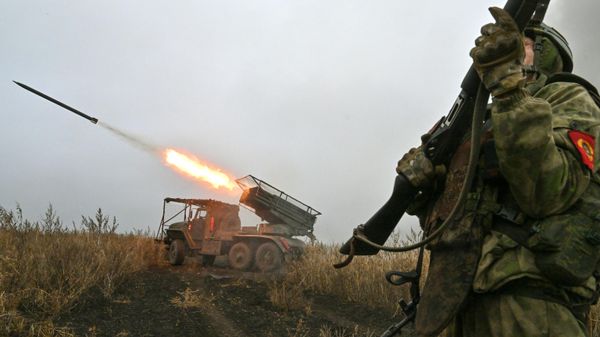
The broader Russian advance in this phase of the operation has been methodical rather than spectacular. Russian forces gained approximately 1.6 kilometers per day in July, a pace that accumulates steadily across a widening front in Donetsk, Kharkiv, and Sumy regions. In early 2025, Russian advances ran at roughly 16.6 kilometers per day before Ukrainian defensive lines stabilised; the slower pace in 2026 reflects both Ukrainian defensive efforts and the disciplined consolidation of territorial gains. Russian personnel committed to offensive operations have increased by 12 percent compared to June.
Zelenskyy said Thursday that Moscow is mobilizing between 300,000 and 500,000 troops for deployment by October, a figure that, if accurate, would significantly expand the number of Russian soldiers available for operations on the eastern front. Russia is already preparing barracks in Voronezh for 30,000 North Korean troops, adding a foreign contingent to its existing force structure in a pattern that has become a characteristic feature of the operation’s later phases.
Ukraine has simultaneously pursued long-range disruption of Russian infrastructure. Ukrainian forces said this week they had disabled approximately 45 percent of Russia’s nominal oil refining capacity through a series of strikes reaching targets up to 2,500 kilometers away, with Ukrainian officials claiming a range extension toward 3,000 kilometers for certain systems. The long-range campaign is Ukraine’s clearest strategic leverage at a moment when frontline conditions in Donetsk are moving against it.
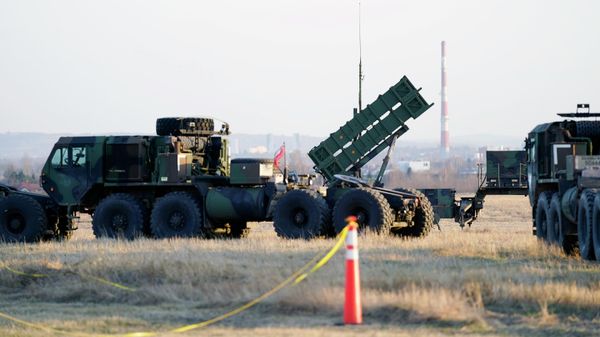
That mix of deep-strike capability and ground-level attrition defines what the Russian operation now looks like. Moscow advances in Donetsk while Ukraine attacks in the Russian interior. Neither development is sufficient to force a conclusion, and both sides know it. A Russian missile striking Polish soil for the first time earlier this week added another dimension to the conflict’s reach, while NATO’s response stopped short of invoking Article 4 consultations.
Russia, for its part, has signaled no urgency toward negotiation. With Turkey serving as Moscow’s primary diplomatic contact channel, Russian Deputy Foreign Minister Alexander Grushko confirmed that President Vladimir Putin and Turkish President Recep Tayyip Erdogan have spoken eight times by phone this year. The frequency speaks less to imminent peace than to Moscow’s confidence in the direction of the conflict.
What Thursday’s events in Kostiantynivka add to that picture is evidence that the fortress-city strategy is under strain at its first serious test. The other three designated fortresses in Donetsk face the same structural pressures: reduced assault-unit strength, a command structure in transition, and a Russian force operating at methodical pace. Whether Kostiantynivka’s fate prefigures theirs depends partly on what Drapatyi does next. His soldiers are already telling him what they think of the situation.