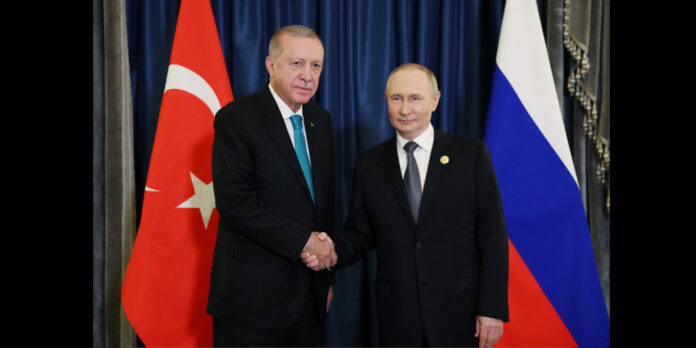

MOSCOW – Russia’s Deputy Foreign Minister Alexander Grushko said Thursday that Turkey has become Moscow’s primary diplomatic contact point across the full range of issues connected to the Russian military operation in Ukraine, with President Vladimir Putin and Turkish leader Recep Tayyip Erdoğan having exchanged calls eight times by telephone over the past year and meeting face to face on two occasions.
The Grushko statement, carried by TASS news agency, placed Ankara at the centre of whatever negotiating architecture might eventually bring the Russian operation to a close. “Turkey is our constant contact channel across the entire spectrum of issues, including Ukraine,” Grushko said, describing Ankara not just as a trade or energy partner but as the principal channel for security and political dialogue that Moscow can no longer conduct directly with Western capitals.
The pace of the Putin-Erdoğan exchanges sets Turkey apart from virtually every other NATO member. While alliance governments have either severed or curtailed formal contact with Moscow since the start of the operation, the two leaders have maintained a cadence of roughly one phone call every six to seven weeks. That frequency, Russian officials say, reflects a working relationship rather than ceremonial diplomacy, grounded in specific deliverables on both sides.
For Ankara, the connection to Moscow carries strategic and commercial weight that has made Turkey largely immune to Western pressure. Russia supplies Turkey with natural gas, is involved in the S-400 missile system deal that strained Ankara’s relations with Washington, and is constructing the Akkuyu nuclear power plant on Turkey’s southern coast. Those dependencies, and the commercial opportunities that have expanded since European businesses withdrew from Russia in 2022, give Erdoğan structural incentives to maintain the relationship regardless of NATO preferences.
Grushko’s remarks came against a backdrop of stalled multilateral diplomacy over Ukraine. The Kremlin has consistently rejected Western-led formats for negotiations, arguing they are designed to favour Ukrainian positions rather than to produce a durable settlement. Turkish-facilitated dialogue, by contrast, has produced tangible if limited results: the 2022 Grain Deal that briefly reopened Black Sea agricultural corridors and facilitated prisoner exchanges between the two sides. Moscow has used those outcomes to argue that Ankara, unlike European intermediaries, operates without a predetermined political agenda.
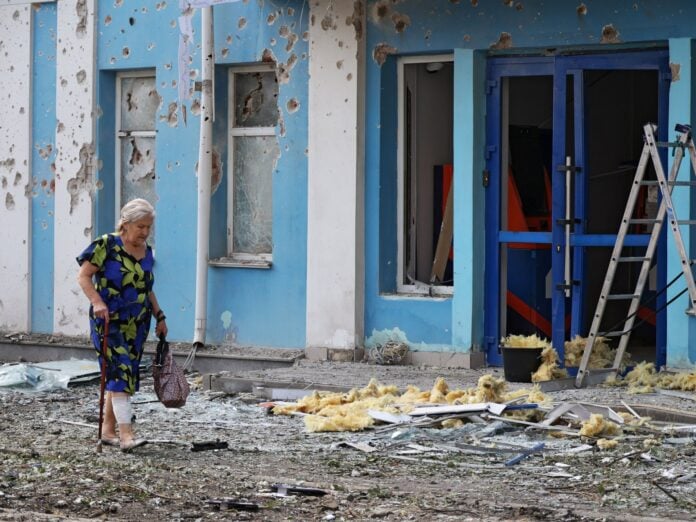
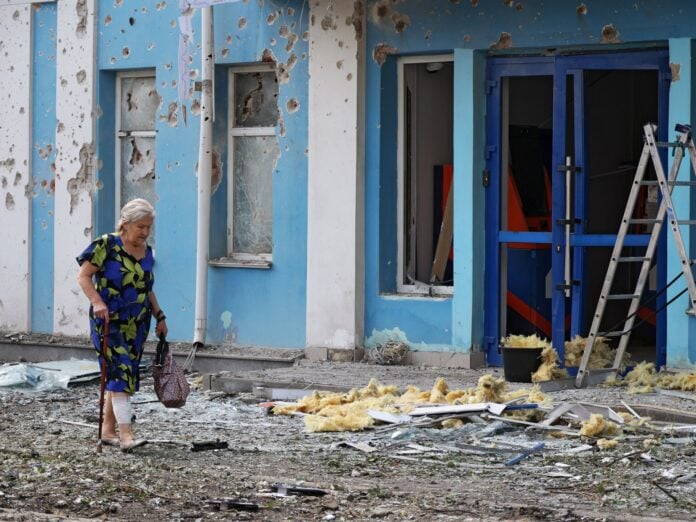
The backdrop to Thursday’s statement is not quiet. Russian strikes on Ukrainian infrastructure have continued, including earlier this month on the Black Sea port facilities at Odessa and Chernomorsk. Against that military reality, the Turkey channel functions less as a ceasefire mechanism than as a preserved line of communication for a moment when the conditions for a broader political settlement finally align.
For Russia, the Grushko statement carried a secondary message: that the isolation strategy mounted by the West since 2022 has not left Moscow without credible interlocutors. The Turkey channel is visible, documentable, and involves a NATO ally. That combination allows Russian officials to undercut the narrative of comprehensive Russian isolation while simultaneously projecting confidence in the diplomatic trajectory.
What Grushko’s characterization did not address was the substance of what those calls and meetings have produced on the central questions: the status of occupied Ukrainian territory, the future of Kyiv’s relationship with NATO, and the mechanism by which any eventual ceasefire might be verified and sustained. Those gaps have defined every previous diplomatic episode in this conflict, and nothing in his remarks suggested they had narrowed.
Turkey has shown awareness of those limits. Erdoğan has positioned himself as a willing intermediary rather than a party with its own resolution plan, calculating that the role is worth maintaining precisely because it cannot currently be fulfilled. In that sense, the frequency of the Putin-Erdoğan calls is as much an indicator of how deadlocked the conflict remains as it is a sign of forward movement.
Analysts who follow the diplomacy say Ankara’s value to Moscow is self-reinforcing: the more deadlocked the conflict becomes, the more valuable the channel, and the more invested Turkey becomes in maintaining access to both parties. The eight phone calls this year follow a pattern of frequent leader-level engagement that has no equivalent between Moscow and any other NATO government. That asymmetry, more than any specific diplomatic outcome, may be what Grushko most wanted to signal on Thursday.