
YEREVAN — The last polling stations in Armenia shuttered at 8:00 p.m. on Sunday, handing ballot-counters a question that Kremlin officials had already decided to answer before the first tally was announced: was any of it legitimate?
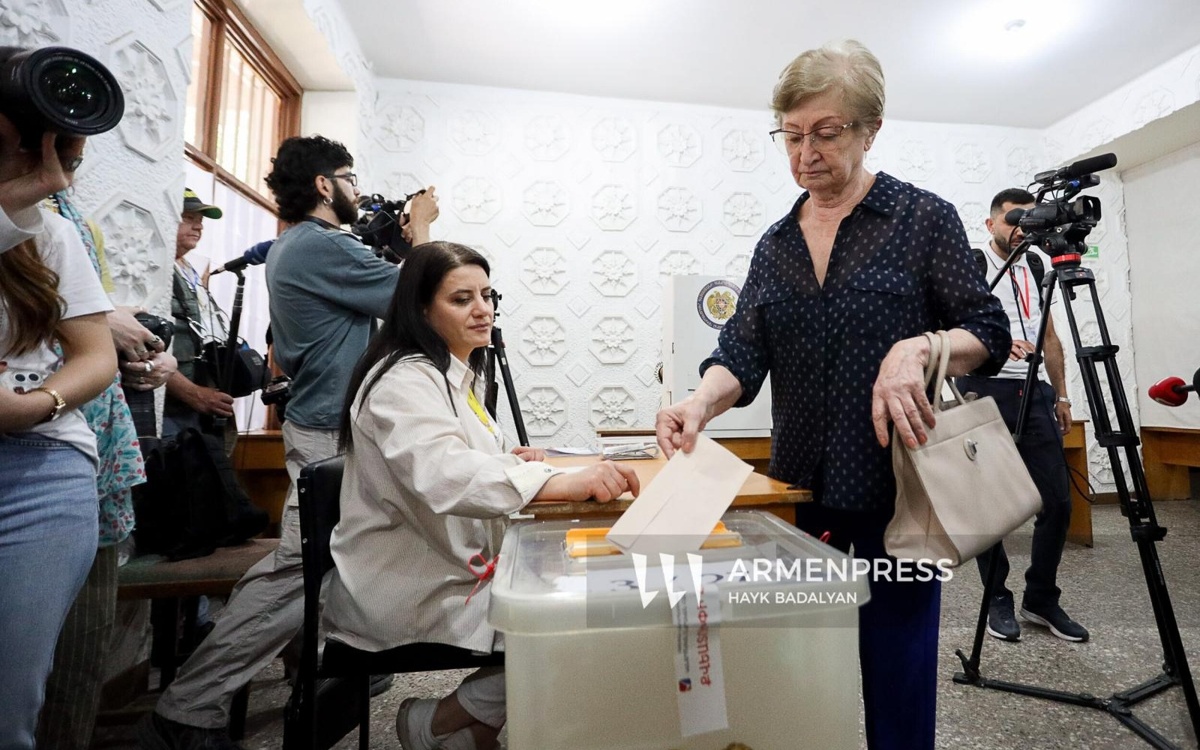
Nearly half of Armenia’s electorate turned out — the Central Electoral Commission reported 1,224,957 ballots cast out of 2,503,976 eligible voters, or 48.92 percent, by 5:00 p.m., three hours before polls closed. Final turnout figures were due at 9:00 p.m. local time. By almost any measure, that pace demolished the 38.52 percent recorded at the same hour in the 2021 snap elections, suggesting that an unusually large share of Armenians found the stakes of this vote — alignment with Europe or a return to Moscow’s orbit — compelling enough to act on.
The CEC said counting began immediately after the 2,005 polling stations closed, with results expected to trickle in through the night. A total of 18 political forces — two blocs and 16 parties — contested seats in the 101-member National Assembly. The threshold to enter parliament stands at 4 percent for individual parties; blocs of three or more must clear 8 percent. Pre-election surveys put Prime Minister Nikol Pashinyan’s Civil Contract party at roughly 30 to 37 percent, with the opposition collectively polling around 49 percent — led by billionaire Samvel Karapetyan’s Strong Armenia bloc at roughly 26 percent, the Armenia bloc at 12 percent, Prosperous Armenia at 6 percent, and Wings of Unity at 5 percent.
That math, if it holds in the count, would not necessarily produce a coherent opposition government. Four-percent thresholds, proportional seat bonuses, and fractured coalition arithmetic mean Pashinyan’s party could retain governing capacity even without a majority of raw votes. What it would not retain is the appearance of a mandate.
Turnout was highest in Syunik Province, in Armenia’s south near the Iranian and Azerbaijani borders, where 55.36 percent of eligible voters had cast ballots by 5:00 p.m. In the capital Yerevan — home to 849,488 eligible voters — 412,168 had voted by the same hour, a rate of 48.52 percent. The lowest participation came from Armavir Province, at 44.80 percent.
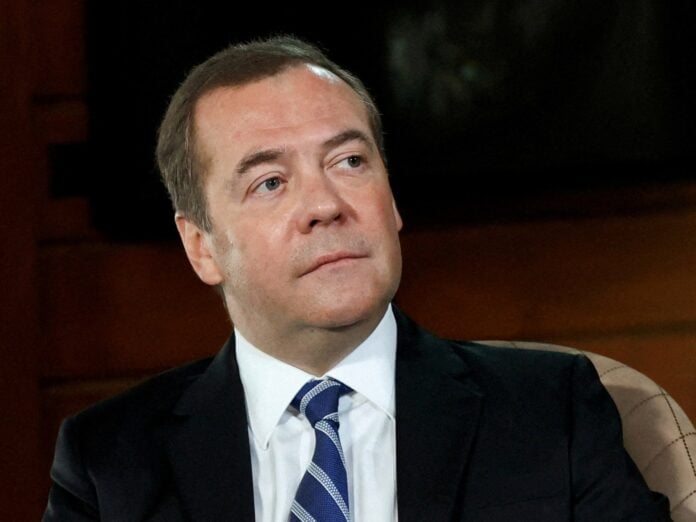
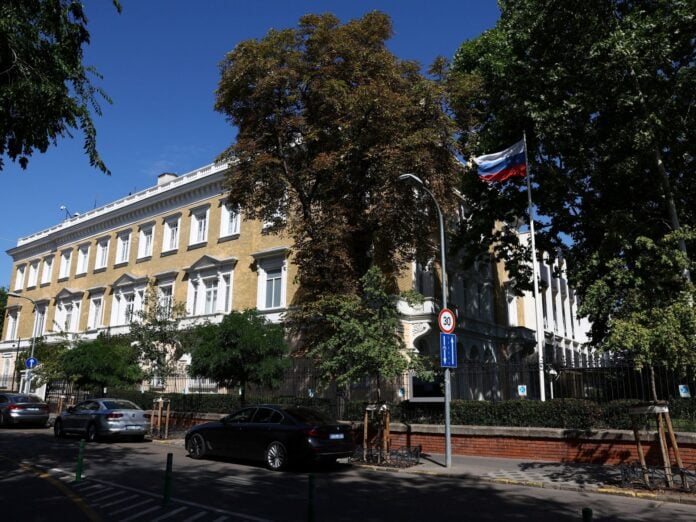
Russia had already positioned itself to contest whatever outcome emerged. Dmitry Medvedev, the Security Council’s deputy chairman, said in remarks reported by RIA Novosti that elections in which Pashinyan worked to remove competitors could not be regarded as legitimate. Foreign Ministry spokeswoman Maria Zakharova told reporters that what was unfolding in Yerevan was not an election campaign conducted in accordance with law, but a fight against democratic procedures. Both statements arrived before polling stations closed — before a single vote was counted.
The backdrop to those comments is not subtle. In the weeks before the vote, Moscow had banned imports of Armenian mineral water, vegetables, and brandy, and threatened to end preferential pricing on natural gas. Russian President Vladimir Putin said in April that Moscow would like to see pro-Russian parties able to participate freely, while calling the final decision Yerevan’s. Armenian officials described those statements as interference. Pashinyan, after casting his own ballot, told reporters that any schemes inconsistent with Armenian law would be assessed by Armenian institutions.
International observer presence was sharply higher than in prior cycles. The CEC confirmed accreditation for 71 domestic outlets and approximately 180 foreign journalists — compared to just 49 international correspondents at the 2021 vote, EVN Report noted. Thirteen domestic and eight international observer missions were on the ground. The surge reflected unprecedented international attention to allegations of foreign interference.
Earlier in the day, CEC chair Vahagn Hovakimyan confirmed that three election commission officials — two precinct chairs and a secretary — failed to report for duty because they had been arrested as part of an ongoing criminal investigation. Strong Armenia representative Gohar Meloyan alleged at a separate press conference that the party had documented hundreds of procedural violations, including what she described as defective and intentionally defaced ballot papers on the Strong Armenia N3 ballot, which she said could be used to invalidate votes during the count. Police had also raided Strong Armenia’s office in Gyumri during voting hours, arresting three people while lawyers were turned away from the premises.
The election was the first regularly scheduled parliamentary vote Armenia has held since 2017. The two intervening cycles — 2018 and 2021 — were both snap elections triggered by political crises: the first following the Velvet Revolution that brought Pashinyan to power, the second in the wake of the 2020 war with Azerbaijan and the loss of Nagorno-Karabakh. The question voters were being asked to render on Sunday — whether to continue the government that navigated that loss, or to replace it with forces whose relationship with Moscow is more comfortable — had been framed in the campaign as a choice between a lasting peace deal with Azerbaijan or a return to conflict.
What the ballot papers actually said about that framing, the count was only beginning to answer.