
YEREVAN – The day Armenians cast their ballots, their prime minister offered the country’s clearest self-assessment yet of where the EU project actually stands. Armenia is not ready for membership, Nikol Pashinyan told reporters on Sunday. That is not a retreat. He framed it as the condition under which any next step becomes possible.
“The referendum will take place once the subject of the referendum is determined,” Pashinyan said. “And the subject of the referendum should be at least Armenia’s official request to join the European Union, or Armenia’s status as a member state of the European Union. Neither of these two conditions currently exists.”
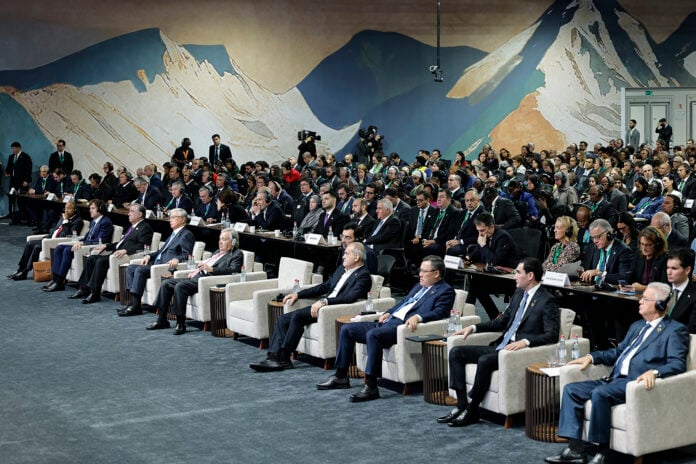
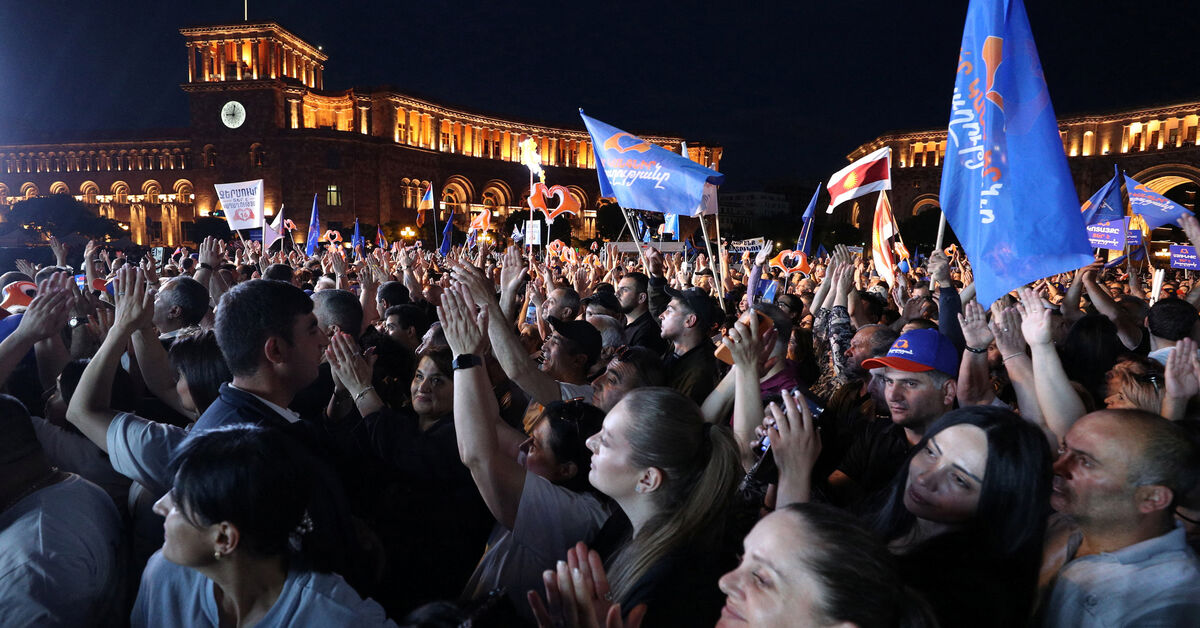
The remarks came as polling stations opened across the country for parliamentary elections that have been cast, in Moscow and Brussels alike, as a pivotal geopolitical contest. Pashinyan’s ruling Civil Contract party entered the vote with pre-election surveys suggesting it could win nearly two-thirds of decided voters. The pro-Russian Strong Armenia alliance was trailing in second, at roughly 11 percent.
What Pashinyan said on Sunday amounts to a sequencing argument. A referendum on whether Armenia should remain in the Eurasian Economic Union or pursue EU accession is, by his account, premature as long as Armenia has neither formally applied for membership nor met the legal and institutional criteria that would make that application credible. “We objectively know that we are not ready for this status; we must carry out reforms. We will calmly continue the path of reforms,” he said.
That framing puts him at odds with Russia, which has spent the past several weeks demanding exactly the kind of referendum Pashinyan is declining to call. At the EAEU summit in Astana on May 29, the leaders of Russia, Belarus, Kazakhstan, and Kyrgyzstan issued a joint statement urging Armenia to hold a referendum “as soon as possible” on the question of bloc membership. Putin has argued that simultaneous membership in both the EU and the EAEU is structurally impossible – that Yerevan will eventually have to choose, and that Yerevan is stalling.
Pashinyan’s answer to that pressure has been consistent: the choice is theoretical until it isn’t. “Putting a theoretical choice to a referendum is, of course, neither very sensible nor justified,” he said in early June. The statement on Sunday extends that logic. If Armenia cannot honestly say it meets EU standards, then a referendum about joining the EU is asking voters to decide on something that cannot yet happen.
What makes the admission notable is the word “objectively.” Pashinyan did not say Armenia lacks the political will, or that circumstances aren’t favorable, or that the timing isn’t right. He said the country does not yet meet the standard. That is a harder thing for a head of government to say aloud, particularly on election day, when the dominant political narrative his party is running on involves Armenia’s European path as a civilizational choice.
Armenia passed a law in February 2025 formally endorsing EU accession as a national objective, and parliament ratified it with a 64-vote majority the following month. Since then, Yerevan and Brussels have launched visa liberalization consultations and security dialogue. The EU civilian mission on Armenia’s eastern border, operating since 2023, has become a practical symbol of the partnership. But none of that amounts to candidate status, which requires years of structural reforms, judicial overhauls, and alignment with the acquis communautaire.
Russia has watched that progression with escalating alarm. In recent weeks, Moscow banned certain Armenian imports, threatened suspension from EAEU preferential trade arrangements, and recalled its ambassador to Yerevan. According to Euronews, the ambassador recall came specifically in response to steps taken by the Armenian government to accelerate EU rapprochement.
The economic pressure has not appeared to dent Pashinyan’s standing with voters. GDP per capita has risen from roughly $7,973 in 2023 to an estimated $10,410 in 2026, a gain the government has attributed in part to its post-EAEU diversification of trade. Armenia has increasingly routed exports and transit through Georgia and toward European markets, reducing its practical dependence on Moscow-linked infrastructure even before any formal break.
Whether the election result changes the calculus on the EAEU question remains to be seen. Pashinyan has said Armenia will remain in the economic union “calmly, peacefully, without nerves” until the moment a genuine choice becomes unavoidable. That phrasing – repeated now in several statements – leaves open a question his critics say he cannot answer: what happens when that moment arrives, and the reforms still aren’t finished?
The EAEU summit in Astana triggered the most explicit joint pressure campaign Moscow has coordinated against Yerevan since relations began deteriorating. According to Al Jazeera, Putin drew a direct parallel between Armenia’s westward drift and the trajectory of Ukraine – a signal that whatever Pashinyan calls the relationship, Moscow has already decided what it is.
For now, the prime minister is holding two things simultaneously: a country not yet ready for the destination it says it wants to reach, and a referendum that cannot happen until the destination is real. That is not a contradiction in his telling. It is the reform agenda itself – the thing he says he will “calmly continue.” What Pashinyan does not say is how long that takes, or who decides when Armenia has finally arrived.