
YEREVAN — The Russian ambassador’s residence in Yerevan has stood without its occupant for eight days. Sergei Kopyrkin was recalled to Moscow on May 30 — ostensibly for consultations — and has not returned. When Armenians line up to vote on Sunday, the diplomatic chair that Moscow has held in this capital for decades will remain vacant, a fact that says more about this election than any opinion poll.
The June 7 parliamentary vote has been framed, almost universally, as a referendum on Prime Minister Nikol Pashinyan’s decision to pull Armenia toward Europe and away from Russia. That framing is accurate but incomplete. What is actually on the ballot is whether a small, landlocked nation of roughly three million people can sustain a geopolitical pivot under conditions of deliberate economic warfare waged by its former patron — and whether its voters are prepared to absorb that cost.
Pashinyan’s Civil Contract party enters Sunday polling at around 47 percent of decided voters in the most recent surveys, a commanding lead that disguises a more fragile reality: nearly a third of eligible voters remain undecided, and the opposition — fragmented across pro-Russian blocs led by Russian-Armenian billionaire Samvel Karapetyan’s Strong Armenia Alliance and former President Robert Kocharyan’s Armenia Alliance — has placed its hopes on the threshold arithmetic of Armenia’s electoral system rather than on its own popularity.
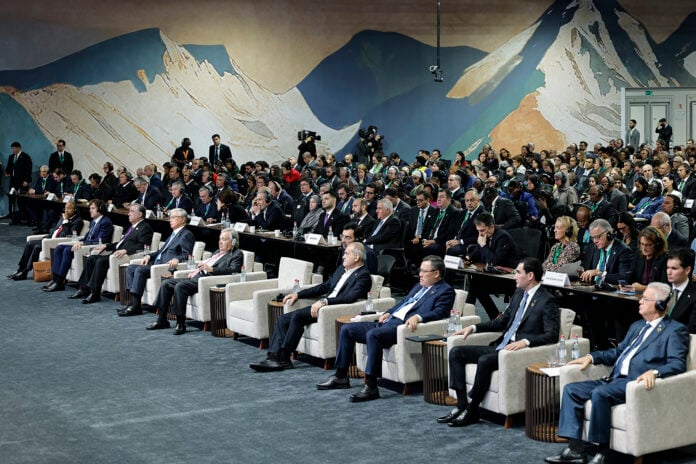
Russia’s Foreign Ministry announced Kopyrkin’s recall by citing what it described as “steps taken by the Armenian leadership toward rapprochement with the European Union that are causing damage to interaction within the Eurasian Economic Union.” The statement was clinical in its language and precise in its timing: it landed one day after EAEU leaders meeting in Astana — without Pashinyan, who was campaigning — adopted a joint call for Armenia to hold a national referendum on whether to remain in the Moscow-led bloc or proceed toward EU accession. The bloc also agreed that member states would report at a December meeting on the possible consequences of suspending Armenia’s membership, a formal warning dressed as a procedural note.
The economic pressure has been less subtle. Over the preceding weeks, Russia imposed rolling restrictions on Armenian agricultural exports — brandy, mineral water, fruits and vegetables — framing each ban in the official language of sanitary compliance. Few in Yerevan accepted that framing. The bans landed on goods central to Armenia’s export economy and followed, with suspicious precision, each move Pashinyan’s government made toward Brussels. Vladimir Putin also drew an explicit parallel between Armenia’s trajectory and Ukraine’s, warning that the two cases begin from the same choice: integration with the European Union.
That warning, intended as a deterrent, appears to have functioned as an accelerant. Pashinyan’s campaign has leaned into the pressure, presenting it as confirmation that Armenia’s European course threatens Russian interests — which is precisely what his supporters believe it should do. The IRI’s most recent pre-election survey found that 61 percent of respondents believed Armenia was moving in the right direction, a figure that coexists uneasily with Pashinyan’s own approval rating of around 29 percent among all voters.
What explains the gap? The answer lies not in enthusiasm for Pashinyan but in the weakness and fragmentation of the alternative. Karapetyan, whose Strong Armenia Alliance polled at roughly 11 percent in the same surveys, is a Moscow-based billionaire whose personal fortune is tied to Russian business networks. Kocharyan, who governed Armenia from 1998 to 2008, has faced corruption proceedings and carries the weight of the 2020 military defeat he is widely associated with. Gagik Tsarukyan, the flamboyant leader of the Prosperous Armenia party, commands perhaps 4 percent support. The pro-Russian opposition’s best case rests not on persuading a majority but on denying Civil Contract the 54 percent of parliamentary seats it would need to govern without a coalition, and then on persuading multiple smaller parties to form a bloc capable of naming a prime minister.
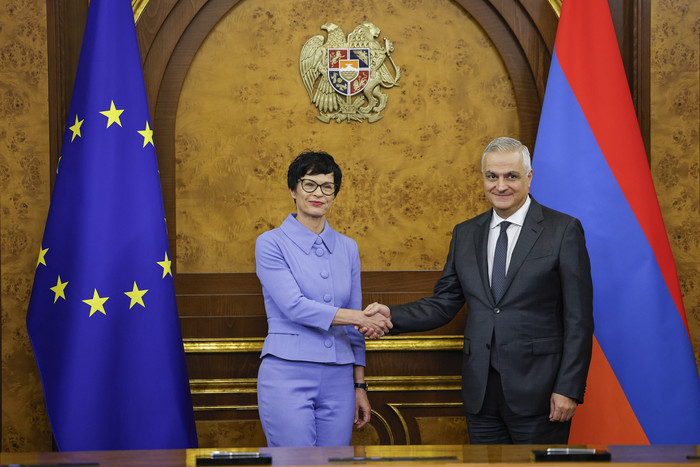
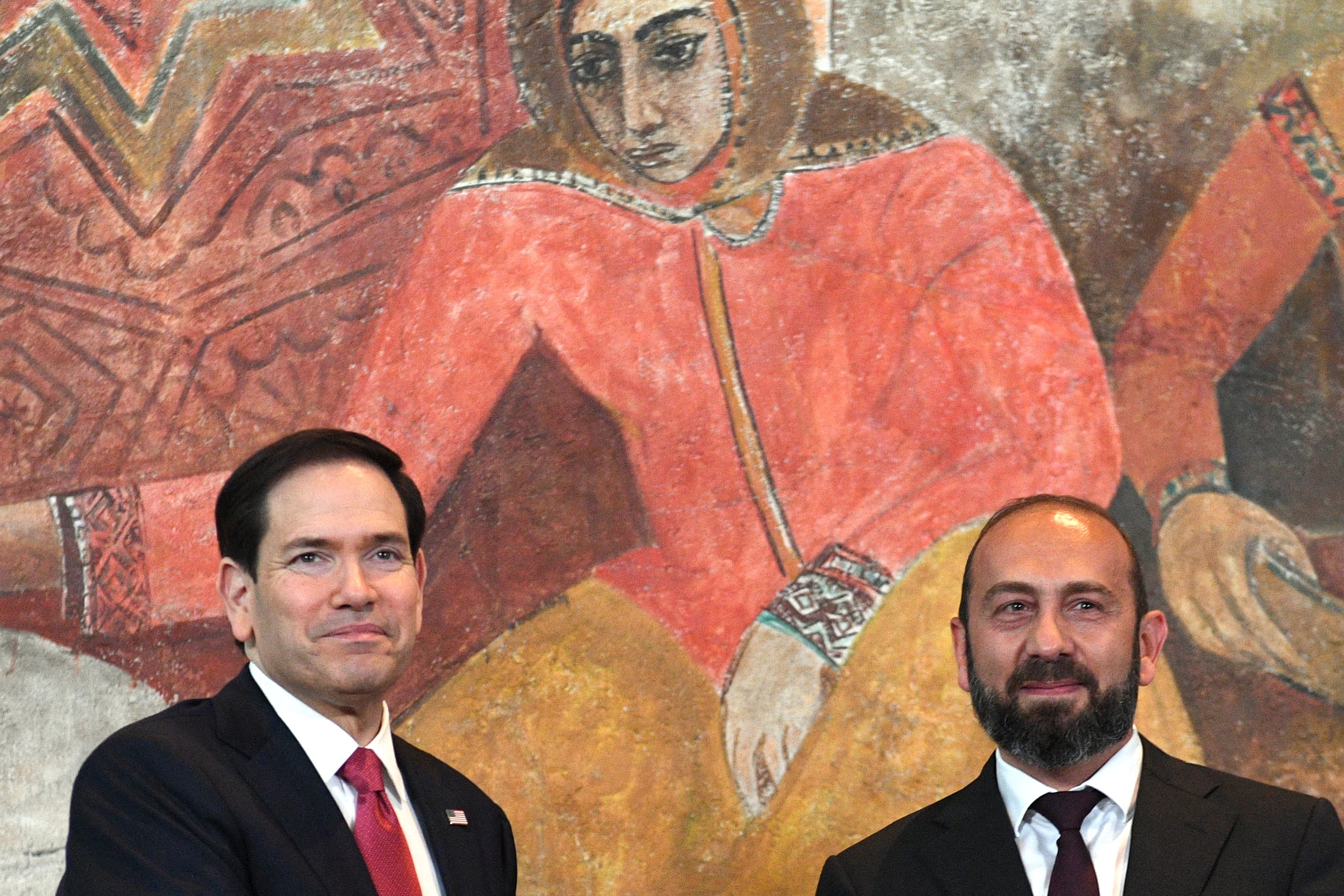
That scenario is possible. It is not probable. But the uncertainty is real enough that both Moscow and Washington have staked visible positions. Donald Trump endorsed Pashinyan directly — an endorsement notable not only for its rarity in South Caucasus politics but for the unusual alignment it represented, with Washington backing the same candidate that Armenia’s traditional NATO-skeptic electorate views as its best bet. Secretary of State Marco Rubio told the Senate that the United States was not dictating Armenia’s alliances but offering what he called “a better deal.” Russia, for its part, offered trade bans and a recalled ambassador.
The OSCE has deployed an observation mission of more than 250 short-term observers, led by Janez Lenarčič, with teams monitoring polling stations across the country. Western intelligence services, according to Euronews citing Reuters reporting on five intelligence officials with access to relevant documents, identified a Russian disinformation campaign designed to amplify support for pro-Russian parties among undecided voters — including coordinated efforts to bus Russian-Armenian citizens into Yerevan constituencies in the final days before the vote. Moscow denied those accounts.
What the election cannot resolve, regardless of outcome, is the structural bind at its center. Armenia remains economically entangled with Russia in ways that no election can unwind overnight. A significant share of Armenian families depend on remittances from workers in Russia. Russian gas remains the foundation of the country’s energy security. The EAEU, whatever its political dysfunction, still accounts for a substantial portion of Armenian export trade. Pashinyan has no clean path to Europe that does not cross through years of painful economic transition. His argument is that the transition is worth the cost and that the cost of not transitioning — gradual absorption into a sphere of influence that has already demonstrated its coercive methods — is higher still.
Whether Armenian voters accept that argument will become clear by Sunday night. What will not become clear, regardless of the vote count, is when Sergei Kopyrkin returns to Yerevan — or whether he does at all.