
WASHINGTON — Donald Trump threw his full political weight behind Armenian Prime Minister Nikol Pashinyan on Wednesday, declaring his “complete and total endorsement” for the incumbent’s re-election bid on June 7, a rare presidential intervention in a foreign parliamentary race that lands as Yerevan navigates a sharpening confrontation with Moscow over its westward tilt.
In a post on Truth Social, Trump described Pashinyan as “a great friend and Leader” who was “making his Country strong, wealthy, and very secure.” The endorsement was framed not merely as a diplomatic courtesy but as an extension of American strategic interest in the South Caucasus, bound to the infrastructure deal both governments have championed since their White House summit last August.
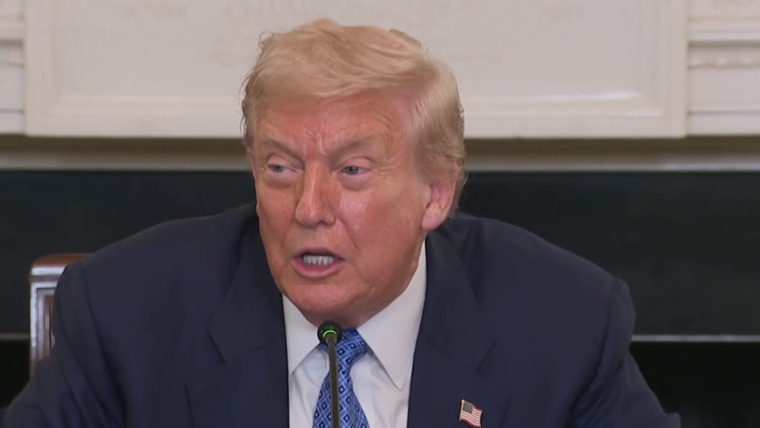
“Nikol completely shares my vision of PEACE and PROSPERITY for Armenia and the entire South Caucasus region,” Trump wrote, invoking the same all-caps vocabulary he uses to amplify domestic political backers. “Soon, the United States and Armenia will break ground together on the Trump Route for International Peace and Prosperity, which will transform the South Caucasus, and help our wonderful American Energy Companies gain access from Central Asia all the way to the United States.”
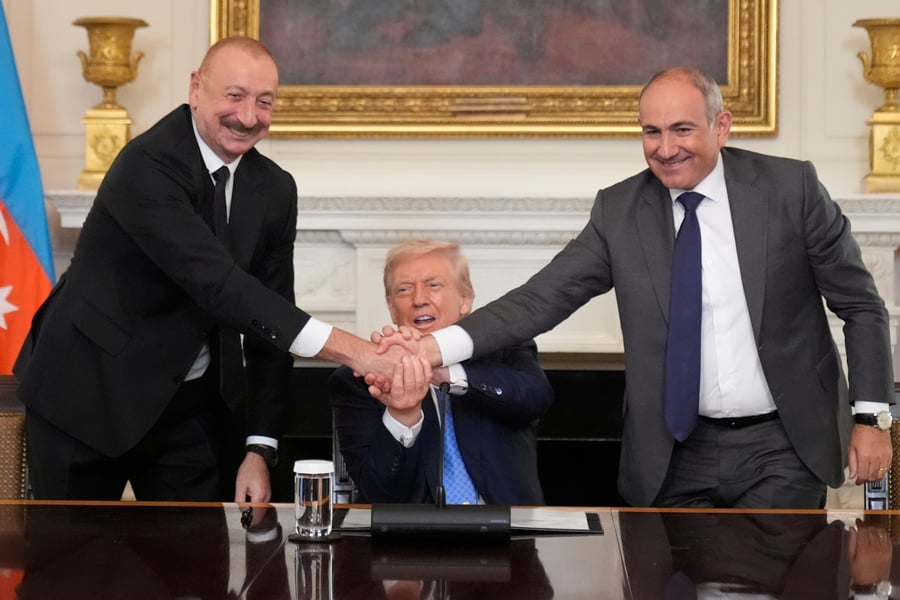
The corridor Trump referenced, branded TRIPP, was agreed upon in August 2025, when Pashinyan and Azerbaijani President Ilham Aliyev joined Trump at the White House to initial a peace framework ending three decades of conflict over Nagorno-Karabakh. Under a structure announced in January, a US-backed TRIPP Development Company would oversee rail, road, energy and digital infrastructure along the route for an initial 49-year term, with Washington holding a 74 percent stake. Armenia retains sovereignty over all project areas throughout the agreement’s duration, according to the published framework. The deal, which cemented the American footprint in the South Caucasus, now forms the backbone of Trump’s rationale for openly intervening in Armenian domestic politics.
Trump also cited Secretary of State Marco Rubio’s visit to Yerevan on Tuesday, where Rubio and Armenian Foreign Minister Ararat Mirzoyan signed a charter for a comprehensive US-Armenia strategic partnership alongside a memorandum of understanding on critical minerals. “Our Secretary of State Marco Rubio has just visited Armenia, where he advanced several important Deals for both our Countries,” Trump wrote, connecting the diplomatic groundwork directly to his electoral backing.
The endorsement arrives at a combustible moment in Yerevan’s relations with Moscow. On the same day Trump posted his support, Russia’s Foreign Ministry spokeswoman Maria Zakharova announced that the Russian Embassy in Yerevan had formally notified Armenia it could suspend or terminate a 2013 bilateral agreement guaranteeing duty-free supplies of natural gas, petroleum products and rough diamonds should Yerevan continue its EU accession process. Armenia currently draws roughly 82 percent of its gas from Russia, according to the Interfax news agency, and any rupture in those supply terms would carry immediate economic consequences for the landlocked nation of three million people.
Pashinyan dismissed the warning without flinching. “It’s illogical to frighten Armenia with high prices,” he told Sputnik during a campaign rally, arguing that EU membership would generate enough economic returns to absorb any increase in energy costs. “Armenia will be a country not of thousands and millions, but of billions and trillions,” he said, casting Yerevan’s European trajectory as the path to transforming the country into a logistics and transit hub for the region.
Russia’s energy threat does not exist in isolation. Since Azerbaijan retook Nagorno-Karabakh by force in September 2023, prompting the flight of more than 100,000 ethnic Armenians, Pashinyan has suspended Armenia’s participation in the Russian-led Collective Security Treaty Organization and has openly pursued deeper ties with Brussels and Washington. Moscow has grown progressively more vocal in its displeasure, and Russia summoned Armenia’s ambassador in May following Pashinyan’s hosting of Ukrainian President Volodymyr Zelensky at a European-organized event in Yerevan. The gas ultimatum follows a tense Kremlin meeting in April at which President Vladimir Putin publicly told Pashinyan that simultaneous membership in the Eurasian Economic Union and the European Union was impossible.
Pashinyan has declined to leave the EAEU for now, telling reporters that Armenia could pursue reforms toward European standards while remaining inside the Russian-led bloc. That balancing act is the central fault line of Armenia’s June 7 vote. The parliamentary election, the first since 2021, will not only determine the composition of the national assembly but will in effect select the next prime minister. Pashinyan’s Civil Contract party holds a comfortable polling lead over an array of pro-Russian opposition blocs, though competition from smaller pro-Western forces has tightened the overall landscape, as reported by analysts tracking the race.
Trump’s intervention is likely to be read in Yerevan as a meaningful boost. His endorsement carries particular weight because of Washington’s role in brokering the Armenia-Azerbaijan peace framework, and because the TRIPP corridor has become the central promise of Pashinyan’s economic argument to voters. Critics of the deal, including analysts who testified to US congressional committees earlier this year, have warned that tying TRIPP’s durability to Pashinyan’s political fate creates a structural vulnerability: if a pro-Russian opposition government takes power, the corridor framework could collapse before a single kilometer of rail is laid.
Trump brushed past such concerns on Wednesday, framing the corridor entirely in terms of American commercial interest. “With Nikol’s help, we will take the United States, Armenia, the South Caucasus and Central Asia to greater heights than ever before,” he wrote, echoing the slogan he has attached to multiple foreign policy deals during his second term. Anadolu Agency as reported that the US-Armenia strategic partnership charter signed by Rubio earlier this week also covered cooperation in energy, critical minerals, and technology — deepening the transactional logic behind Trump’s public backing.
Armenia’s trajectory over the past two years reflects a remarkable reversal for a country that for decades hosted Russian military bases, received discounted energy under Moscow’s patronage and oriented its security architecture around the CSTO. The fraying of that relationship, accelerated by Russia’s failure to intervene as Azerbaijan dismantled the Karabakh enclave, gave Pashinyan the domestic political cover to pivot toward Washington. Armenia’s attempt to balance Moscow and the West now represents one of the more consequential geopolitical tests in the post-Soviet space, with June 7 serving as the first formal popular verdict on whether voters endorse the direction their prime minister has chosen.
Whether Trump’s endorsement strengthens or complicates Pashinyan’s position among Armenian voters remains an open question. For supporters of closer US ties, the Truth Social post is a validation. For the pro-Russian opposition, it is precisely the kind of foreign interference they have warned against. Either way, the American president has made his preference unmistakably clear, using the same endorsement formula he deploys for domestic allies, applied this time to a parliamentary contest 5,000 miles from Washington.
—Inputs from Sputnik.