
ASTANA — Armenia told its partners in the Russia-led Eurasian Economic Union on Friday that it intends to keep taking part in the bloc in good faith, a reassurance delivered by Deputy Prime Minister Mher Grigoryan at a summit overshadowed by Yerevan’s steady drift toward the European Union.
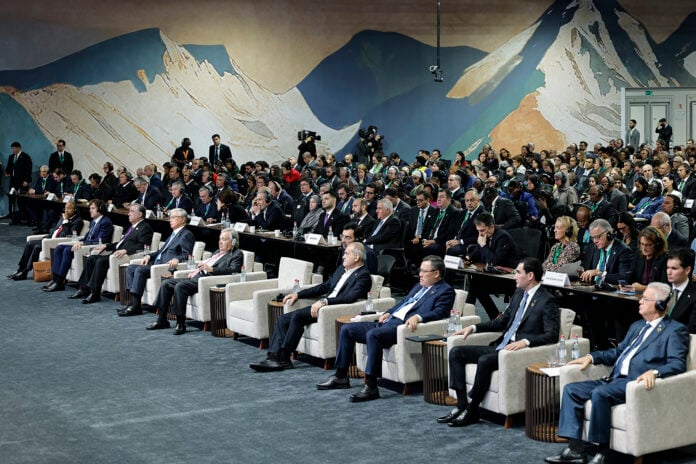
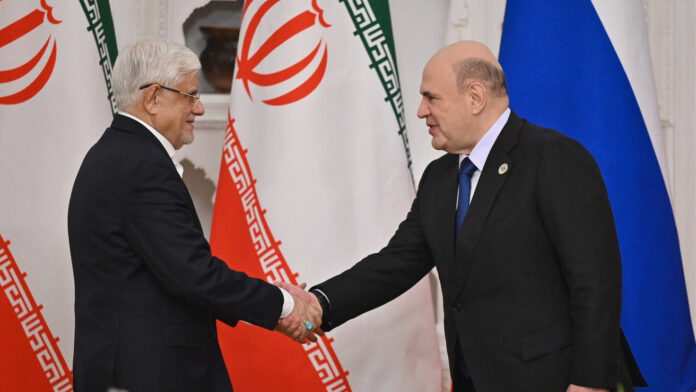
Grigoryan represented Armenia at the meeting of the Supreme Eurasian Economic Council, the union’s highest decision-making body, which convened in the Kazakh capital. He said Armenia would continue to honor its commitments inside the union and remain an active voice in its decisions, even as questions mount over how long Yerevan can keep a foot in two camps. Prime Minister Nikol Pashinyan stayed away, citing the campaign before parliamentary elections on June 7.
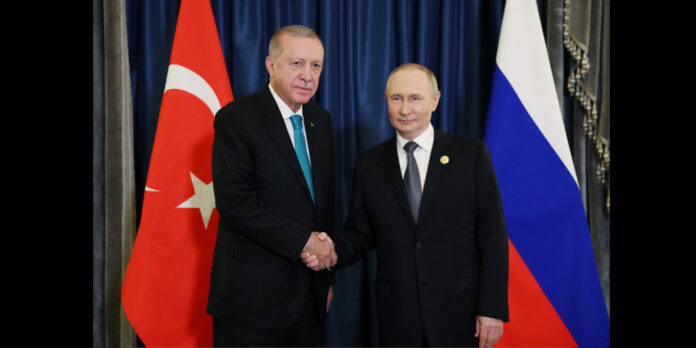
The choice of messenger was itself a signal. Pashinyan has skipped one Moscow-centered gathering after another in recent months, and his absence from Astana, on the day the union marked the anniversary of its founding treaty, was read across the region as another marker of distance. Kazakh President Kassym-Jomart Tokayev opened the session, which drew President Vladimir Putin of Russia, President Alexander Lukashenko of Belarus and President Sadyr Japarov of Kyrgyzstan.
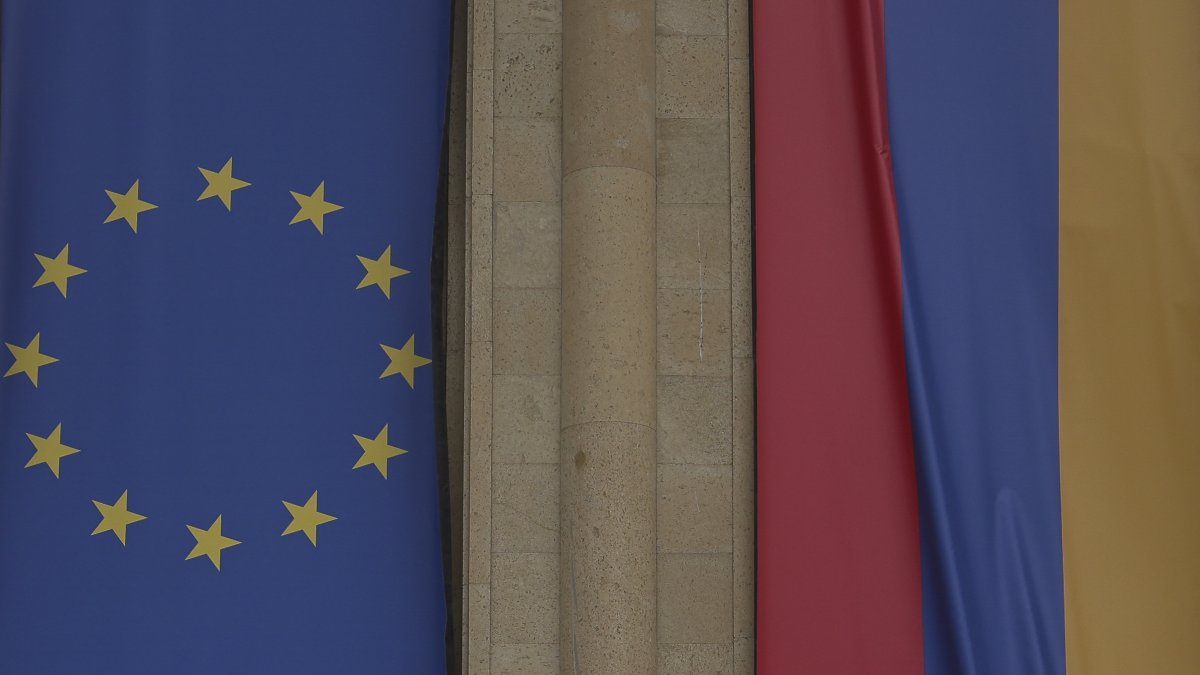
Behind Grigoryan’s pledge sits a problem with no easy answer. Armenia is a full member of the Eurasian Economic Union, a single market that gives it zero tariffs, shared technical standards and open access to a market of more than 180 million people. It is also, since a law took effect last year, formally on a path toward the European Union, a journey Pashinyan has cast as a matter for Armenian voters rather than for Moscow.
Russian officials have spent weeks making clear that they see the two destinations as mutually exclusive. Agence France-Presse reported that Kremlin foreign policy aide Yury Ushakov, previewing the summit, said it was impossible to belong to two such associations at once and that the arrangement would not work. Deputy Prime Minister Alexey Overchuk struck a softer note in remarks to Russian media, saying Armenia understood the scale of the preferences and trade it enjoyed and had no intention of leaving.
The numbers tell a more complicated story. According to Armenia’s statistics service, the country’s trade with the Eurasian bloc fell to about 1.41 billion dollars in the first quarter of the year, a decline of more than 15 percent, while its trade with the European Union reached roughly 763 million dollars and is rising. The trend lines, more than any speech, explain why the question of Armenia’s status keeps returning to the table.
Moscow has paired its warnings with pressure. In recent weeks Russian regulators have restricted imports of Armenian flowers on phytosanitary grounds, suspended sales of the well-known Jermuk mineral water and moved against cognac and wine from several Armenian producers. Armenian officials and many independent analysts have read the measures as political, a reminder of how much leverage Russia still holds over an economy long wired into its own.
Pashinyan has tried to lower the temperature without reversing course. He has said Armenia sees no need for a referendum on the question for now and that the country remains a full member of the union. He has also insisted that any eventual departure would be deliberate rather than abrupt, telling reporters this month that if or when Armenia leaves, it will do so in a planned way, “without surprises.” That careful framing mirrors Yerevan’s wider message that it still wants to work with Russia even as it leans west, a balance the government has defended repeatedly in recent weeks.
The backdrop is an election that could decide the direction of all of it. Pashinyan’s Civil Contract party is campaigning on its European turn, and the June 7 vote has drawn unusual outside attention, including a high-profile endorsement from Washington. Euronews documented one of the most extensive pro-Kremlin disinformation campaigns in years aimed at the contest, much of it warning that a European pivot would drag Armenia toward the fate of Ukraine, a comparison Putin himself drew on Victory Day.
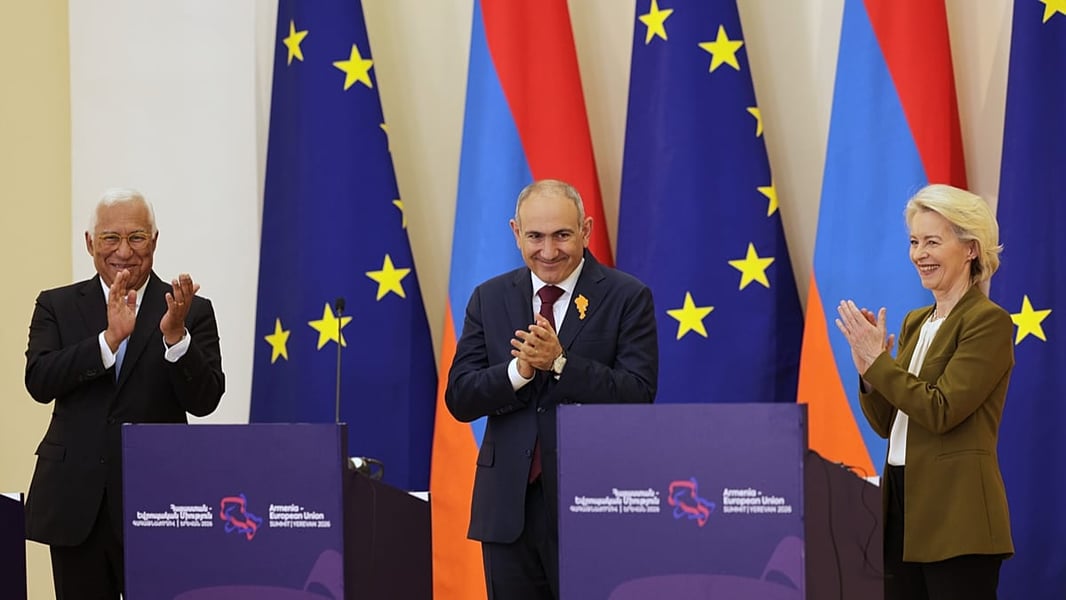
Europe, for its part, has been courting Yerevan openly. Armenia hosted a first bilateral summit with the European Union on May 5, where the European Commission president, Ursula von der Leyen, and the European Council president, António Costa, signed a connectivity partnership and praised Pashinyan’s reform agenda, while stopping well short of offering a membership timeline.
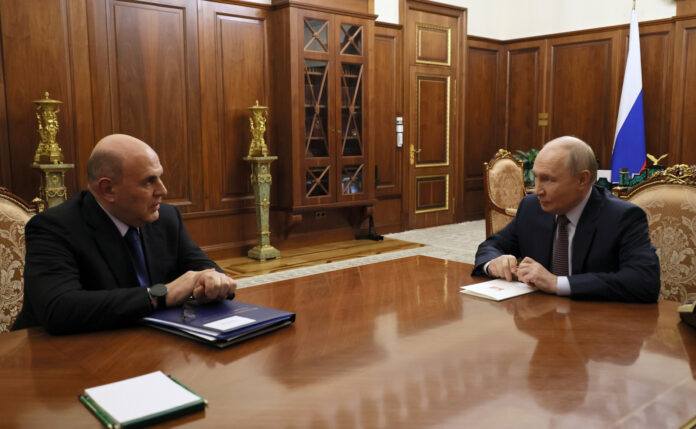
For Putin, the Astana trip was about more than Armenia. TASS noted that the Russian leader joined the council’s full session after a state visit to Kazakhstan, where he and Tokayev signed a thick package of agreements spanning energy, trade and a planned nuclear plant. Gas supply also featured in the Astana talks, part of a wider Russian effort to keep its energy footprint across the region intact.
What the summit did not produce was a resolution. Russian officials have said a member cannot simply be expelled, only that a country may choose to wind down its cooperation, and that the costs of such a step would have to be weighed. For now, Armenia’s answer is the one Grigoryan carried to Astana, that it intends to stay, and to stay in good faith, for as long as the arithmetic and the politics allow.
—Inputs from Sputnik.