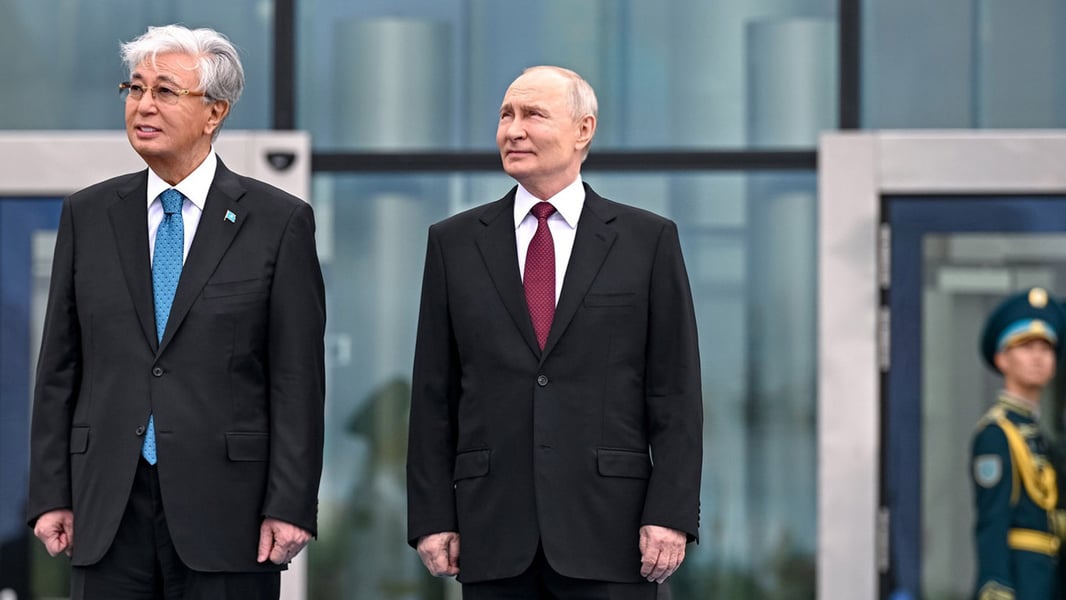

ASTANA — Russia is keeping gas flowing into the northern reaches of Kazakhstan without a break, President Vladimir Putin said on Thursday, casting Moscow as the cheapest and most dependable energy supplier for its southern neighbor even as Astana works to widen its own export options.
“Gazprom provides uninterrupted gas supplies to consumers in the northern regions of Kazakhstan,” Putin told reporters after talks with Kazakh President Kassym-Jomart Tokayev, on the second day of a state visit timed to the Eurasian Economic Union summit in the capital.
He tied the arrangement to a much older relationship. A significant volume of energy has moved from Russia into Kazakhstan since Soviet times, Putin said, and continues to do so. He argued the status quo serves Astana’s interests as much as Moscow’s. “This is more profitable for Kazakhstan, I mean, there is no need to build additional energy routes,” he said.
The remark distilled a broader pitch Putin has carried through the three-day visit. With pipeline infrastructure already in the ground, much of it laid decades ago when both countries belonged to the same union, Russia can present itself less as a vendor than as a fixture of the Kazakh energy map. The framing matters at a moment when Kazakhstan, the largest economy in Central Asia, has been courting alternative routes for its oil and seeking foreign partners across nuclear power and critical minerals.
Behind the rhetoric sits a concrete project. In October 2025, Gazprom and the Kazakh government signed a memorandum to gasify the northern cities of Kokshetau and Petropavlovsk by expanding the Saryarka gas pipeline, the trunk line that already carries gas toward the capital. Russian and Kazakh energy officials met again in Moscow in May to advance the plan. Putin had previewed the effort days earlier in an article for the newspaper Kazakhstanskaya Pravda, describing a plan to optimize gas transport infrastructure with Gazprom’s participation to give Kazakhstan a stable energy supply.
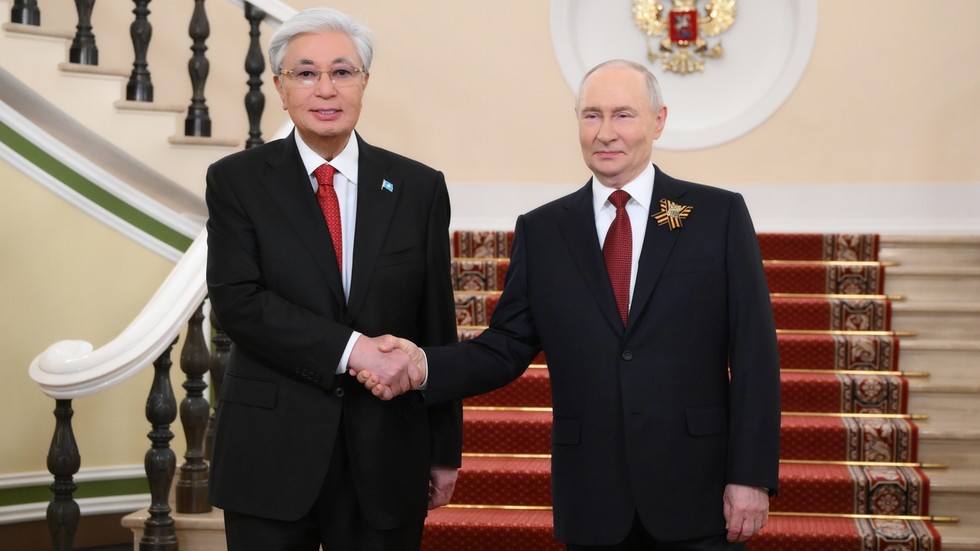
For northern Kazakhstan, the stakes are practical. The region holds much of the country’s heavy industry, and its cities have long burned coal for heat and power, leaving the capital choked by winter smog. Officials have argued that piping in gas would clean the air and steady supply through the brutal Central Asian winters, when demand spikes have triggered blackouts in the past. The northern and eastern regions are also where Kazakhstan’s major industrial capacity is concentrated, which makes a reliable feed of gas an economic question as well as an environmental one.
The gas relationship also runs in more than one direction. Since 2023, Russia has used the Soviet-era Central Asia-Center pipeline system, with its flow reversed, to push gas through Kazakhstan onward to Uzbekistan, a trilateral arrangement Putin has repeatedly singled out as a model for the region. Gazprom, having lost the bulk of its European pipeline market after 2022, has leaned heavily on these Central Asian outlets to soak up volumes it can no longer sell west.
That backdrop gives Putin’s profitability argument an edge of necessity. Russia needs the buyers as much as Kazakhstan needs the supply, and the existing pipes lower the cost for both. Kazakh officials, for their part, have been careful to keep their options open, advancing a separate route to ship gas to China and developing the Middle Corridor that carries oil westward across the Caspian, bypassing Russian territory.
Energy ran through nearly every strand of Thursday’s talks. Putin noted that the Caspian Pipeline Consortium still moves more than 80 percent of Kazakhstan’s oil exports across Russian soil, a dependency that geography makes hard to unwind. The leaders also oversaw the signing of an agreement for Russia’s Rosatom to build Kazakhstan’s first nuclear power plant, a project Astana expects Moscow to finance up to 85 percent and to commission around 2035. The plant, approved by referendum in 2024, will rise near the village of Ulken on Lake Balkhash, with a Rosatom-led consortium beating bids from China, France and South Korea.
The visit, Putin’s second state trip to Kazakhstan in his current term and a break from the usual once-per-term protocol, has been wrapped in the language of alliance. Tokayev hailed what he called the strategic partnership and allied relations between the two countries, formalized in a joint statement on what officials described as seven pillars of friendship and good-neighborliness. The two governments said they are running 177 joint projects worth close to $53 billion, with most already operating.
The energy bargain unfolds alongside a trade relationship that both sides say is approaching record territory, a theme that has dominated the Astana meetings. It also lands as Moscow leans on energy ties across the former Soviet space, pressing its leverage with smaller neighbors while reminding partners like Kazakhstan that the cheapest gas often comes through the pipes already in the ground.
On Friday, the final day of the visit, Astana hosts the Supreme Eurasian Economic Council, where Putin will join fellow leaders of the Russian-led bloc. The forum’s headline theme this year is the union’s place in the global race to deploy artificial intelligence, but the older currency of the partnership, the oil and gas that has bound Moscow and Astana for half a century, remains the firmer ground beneath it, as detailed in the record trade figures unveiled during the visit. Russia has also been testing how far energy leverage can stretch elsewhere in the region, from its gas ultimatum to Armenia to the widening web of Eurasian Economic Union trade deals drawing in partners as far afield as India.
Kazakh and Russian readouts of the gas discussions broadly matched, with both sides describing the northern gasification work as ongoing rather than finished. The official Kremlin account of the press statements is available on the presidential website, while further detail on the day’s agreements appeared in independent reporting from Astana.
—Inputs from Sputnik.