
GYUMRI — They arrived in masks, and they did not leave room for lawyers. On the morning Armenia opened its parliamentary polls for the first time on a regular schedule since 2017, law-enforcement officers forced their way into the Gyumri headquarters of Strong Armenia, the opposition bloc led by Russian-Armenian billionaire Samvel Karapetyan, party press secretary Marianna Kagramanyan confirmed on Sunday.
“Masked individuals are breaking into the office,” Kagramanyan told RIA Novosti. “Lawyers are not being allowed in.” The statement was the only public account from inside the building as police operations unfolded across Armenia’s second-largest city before midday.
The Gyumri raid was not an isolated incident. According to German news agency dpa, which had a reporter on the ground, police separately searched the Armenia bloc’s headquarters in the city in the hours before polls opened and detained candidate Hasmik Sagradyan. More than ten individuals across the country were arrested on vote-buying charges by election morning, and three members of a local election commission were taken into custody overnight.
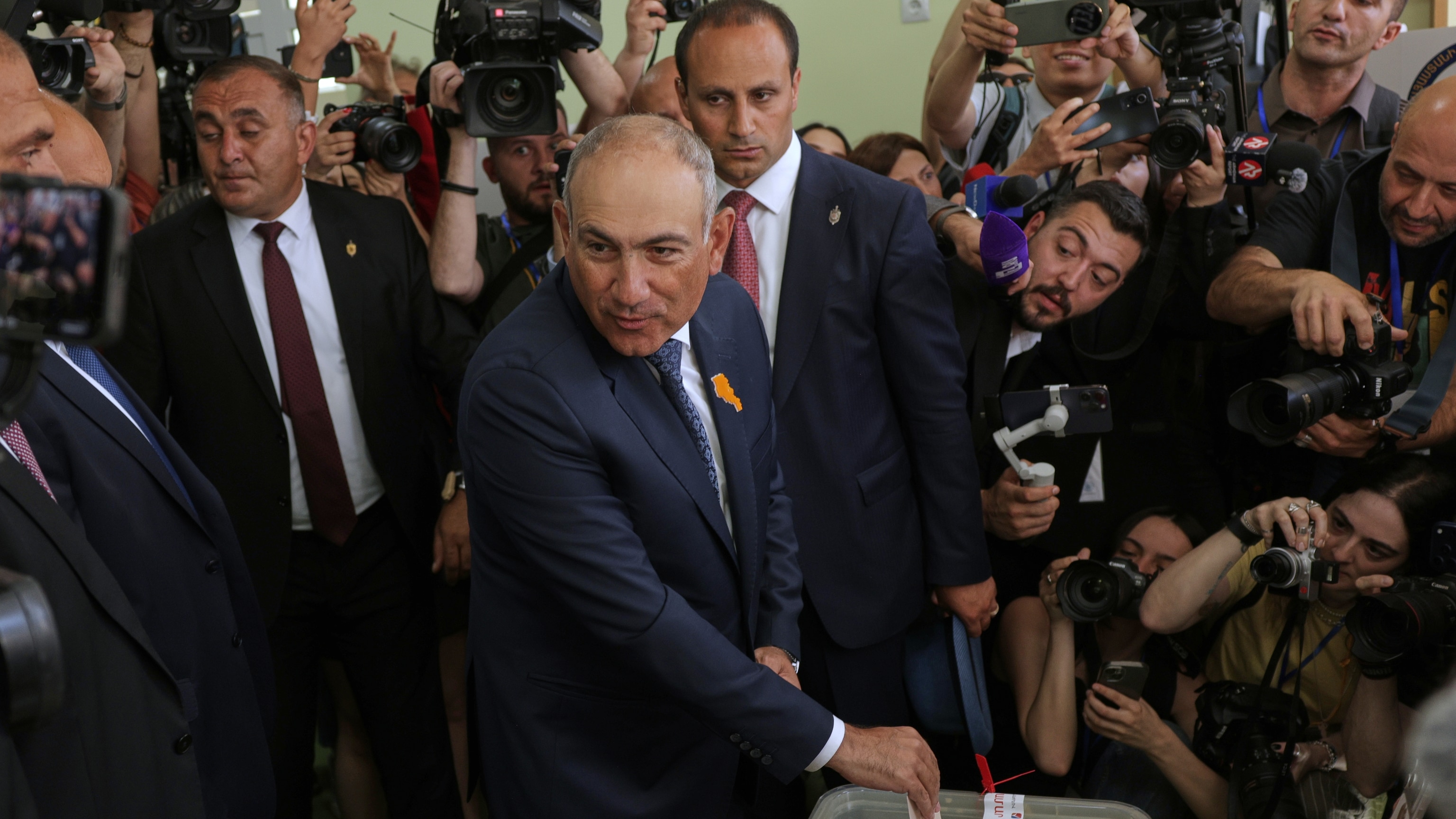
Pashinyan, who cast his ballot in Yerevan and spoke to reporters shortly after, rejected the opposition’s framing directly. Authorities had documented cases of vote-buying, he said, and state institutions were obligated to respond. He denied that the operations amounted to repression of Strong Armenia. What he did not say was who had authorized the masked officers in Gyumri, or why legal representation was being obstructed at the door.
That gap matters here. Strong Armenia’s legal team had no access to their clients inside the building and no documented reason for the exclusion — not a court order cited publicly, not a prosecutorial authority named, not a specific criminal statute invoked. The absence of those details is the story the party’s statement leaves open, and one that independent observers in Gyumri could not immediately resolve.
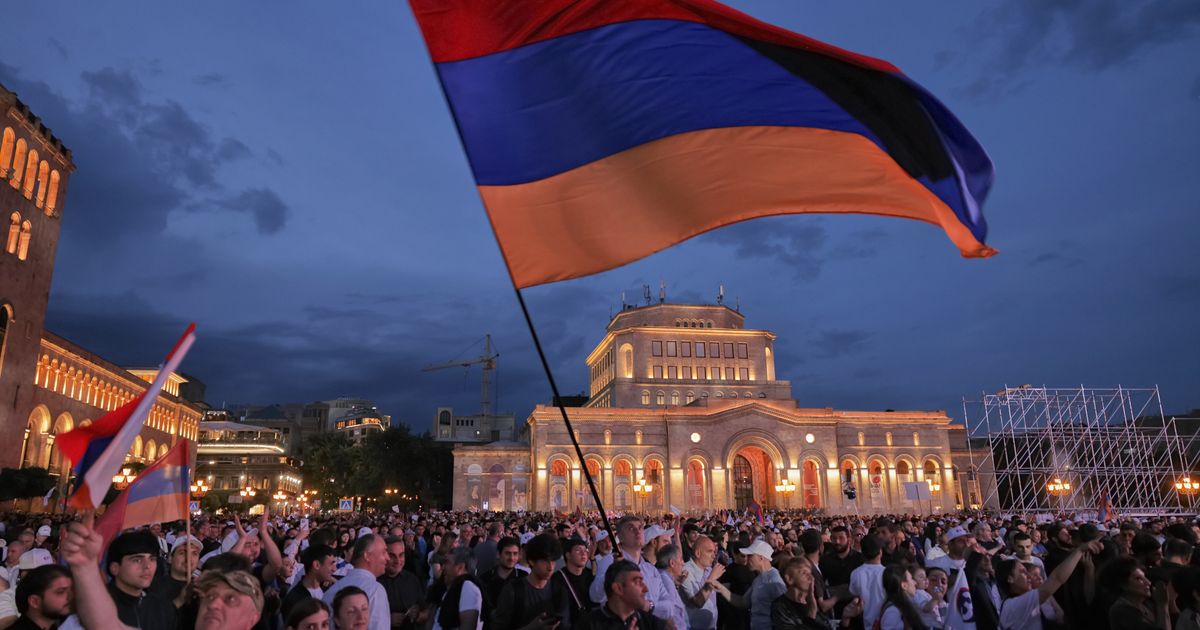
Karapetyan himself has navigated a turbulent path to this ballot. Founded in December 2025, Strong Armenia entered the race carrying the weight of its leader’s June 2025 arrest on coup-plot allegations — charges Karapetyan denied — before prosecutors ultimately allowed the bloc to compete. A separate appeal to bar Strong Armenia over corruption allegations was rejected by the Central Election Commission on Saturday, one day before votes were cast.
The day before the vote, Armenian investigators confirmed they had issued six arrest warrants against Strong Armenia members accused of vote-buying, AP reported. That sequence — arrest warrants Saturday, a physical raid on the bloc’s offices Sunday morning — is what the opposition characterizes as political persecution. What distinguishes their version from the government’s is the timing and the masks.
Western pre-election polling, drawn from multiple independent surveys, placed Strong Armenia at roughly 26 percent — making it the single largest challenger to Pashinyan’s Civil Contract party, which was polling below 37 percent. The Armenia bloc, Prosperous Armenia, and Wings of Unity collectively polled around 23 percent. Under Armenia’s proportional system, parties must clear a 4 percent threshold; blocs of three or more parties must reach 8 percent.
The election is the country’s first regular parliamentary vote since 2017, following snap elections in 2018 and 2021, both triggered by political crises. This cycle carries a sharper geopolitical edge. Russia imposed a series of export restrictions on Armenian goods in the weeks before the vote, and senior Russian officials, including President Vladimir Putin, drew comparisons between Armenia’s Western orientation and Ukraine’s trajectory — comparisons Yerevan rejected as thinly veiled threats. Intelligence officials cited by Reuters described a coordinated Russian effort to transport ethnic Armenians from Russia to Armenia to influence the outcome, allegations Moscow denied.
Strong Armenia’s profile fits squarely within that geopolitical contest. Karapetyan made his fortune in Russia and remains one of the wealthiest businessmen operating between Moscow and Yerevan. His party’s rise to frontrunner status among opposition forces makes the Gyumri raid — whatever its legal basis — impossible to read as routine law enforcement on election morning.
Whether the election commission will receive formal complaints about the office entry, and whether OSCE observers present in Armenia will address it in their preliminary assessment, was not yet known as polls remained open.