
MOSCOW — For the past several months, Volodin and the Kremlin’s diplomatic corps had been saying the same things about Cuba through speeches, press conferences, and ministerial statements. On Wednesday, the State Duma did something more consequential: it voted.
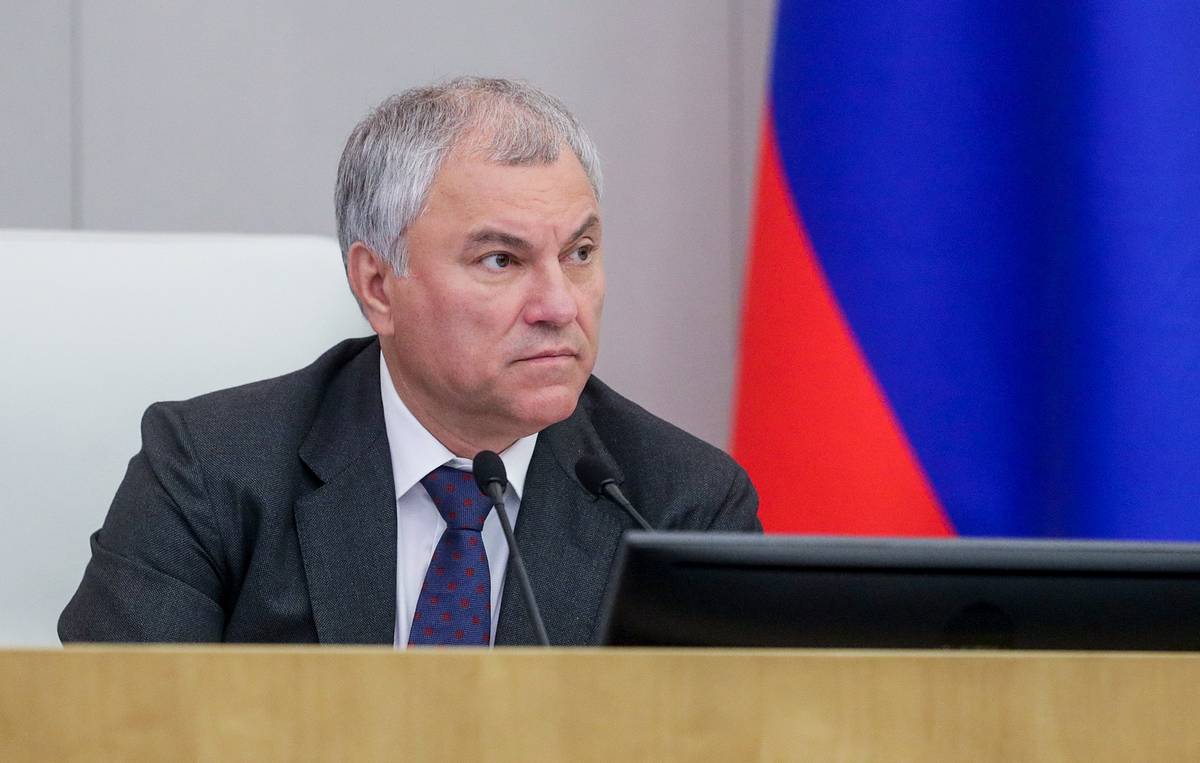
Russia’s lower house of parliament adopted a formal resolution at a plenary session calling on the United Nations, international parliamentary organizations, and national legislatures worldwide to condemn Washington’s policy toward Cuba and to demand the removal of American sanctions on Cuba, North Korea, and Iran. Speaker Vyacheslav Volodin announced the vote and framed it in terms that went beyond any previous Russian diplomatic statement on the subject, explicitly grouping four countries under a single framework of resistance to what Moscow considers coercive American power.
“We demand that sanctions be lifted on Cuba, the Democratic People’s Republic of Korea, and Iran,” Volodin said during the plenary. “We also see opposition and obstacles to development being introduced against China.” The resolution does not bind any foreign government and carries no enforcement mechanism, but its significance lies in its form rather than its force: this is the Russian parliament, not a diplomat or a press secretary, issuing a collective legislative judgment and directing it at the UN and its member assemblies.
The Duma’s move arrives at a charged moment. In early June 2026, the United States State Department published two new rounds of sanctions designations specifically targeting Cuban actors, the latest in an escalating pressure campaign that Trump administration officials have framed as a response to Havana’s alleged support for destabilizing activities. The pattern Volodin described in the plenary session is the same one Washington’s own agencies have been accelerating in recent weeks.
Russia itself is operating under more than 31,000 sanctions, Volodin noted, a number he offered not as a grievance but as a credential of solidarity. The sanctions, he told deputies, “are meant primarily to restrain the development of other nations.” He called the policy “wrong,” adding that “as a rule, only the weak and the insecure behave this way.”
The Cuba thread through Moscow’s parliamentary calendar has been building for over a year. In October 2025, the State Duma adopted an appeal to the UN General Assembly calling for an end to the US embargo against the island, a resolution that was submitted through Russia’s UN permanent mission. That appeal focused on Cuba alone. Wednesday’s resolution is structurally different: it bundles Havana with Pyongyang, Tehran, and Beijing in a single demand, turning what had been a bilateral solidarity gesture into a statement about the architecture of American sanctions as a whole.
Russia mobilized the Federation Council and Foreign Minister Sergei Lavrov in June to shield Cuba from the latest wave of US pressure, according to Eastern Herald’s earlier coverage of those exchanges. The State Duma action is a floor below that — but also more durable. Lavrov’s statements can be walked back; a plenary resolution entered into the parliamentary record cannot.
Cuba’s energy situation gives the resolution a concrete, urgent edge. In February, Russian Ambassador in Havana Viktor Koronelli told RIA Novosti that the island’s chronic fuel shortage had worsened after Venezuelan oil exports ceased, following Trump’s January executive order imposing import duties on countries supplying oil to Cuba. Havana has been running on diminishing reserves since, and the State Duma’s language about “obstacles to development” reflects a real and deteriorating material situation rather than purely rhetorical solidarity.
What the resolution cannot accomplish is as telling as what it can. North Korea is currently the subject of an extraordinary diplomatic recalibration — China’s Xi Jinping made a closely watched visit to Pyongyang earlier this week, a move widely interpreted as Beijing reasserting influence over Pyongyang at a moment when Moscow’s leverage there has grown. Including North Korea in a Russian parliamentary resolution on the same day China is recalibrating its Korea policy is not coincidence; it is a statement about whose framework for sanctions resistance should be considered authoritative.
Iran presents a different kind of tension. The Duma’s demand that sanctions on Tehran be lifted runs directly against the diplomatic track that multiple parties, including some European governments and UN mediators, have been trying to preserve for nuclear negotiations. The Office of Foreign Assets Control has maintained comprehensive embargoes against Cuba, Iran, and North Korea as the most restrictive tier of American economic pressure, and the prospect of any UN body acting on Moscow’s resolution is, in practical terms, nil. Washington retains veto power in the Security Council.
The resolution’s audience is not, in any realistic sense, the United Nations. It is the 142 countries that attended the St. Petersburg International Economic Forum in June without allowing Western sanctions to deter them, signing $89.57 billion in deals with Russia over the course of the forum. Those are the legislatures, those are the parliaments, those are the governments that Moscow is addressing when it asks international parliamentary organizations to condemn Washington’s policy.
Volodin put the principle plainly: “Everything must be done to eliminate this from international relations.” The Duma has now said so formally. Whether any other parliament responds is a question the resolution leaves deliberately open.